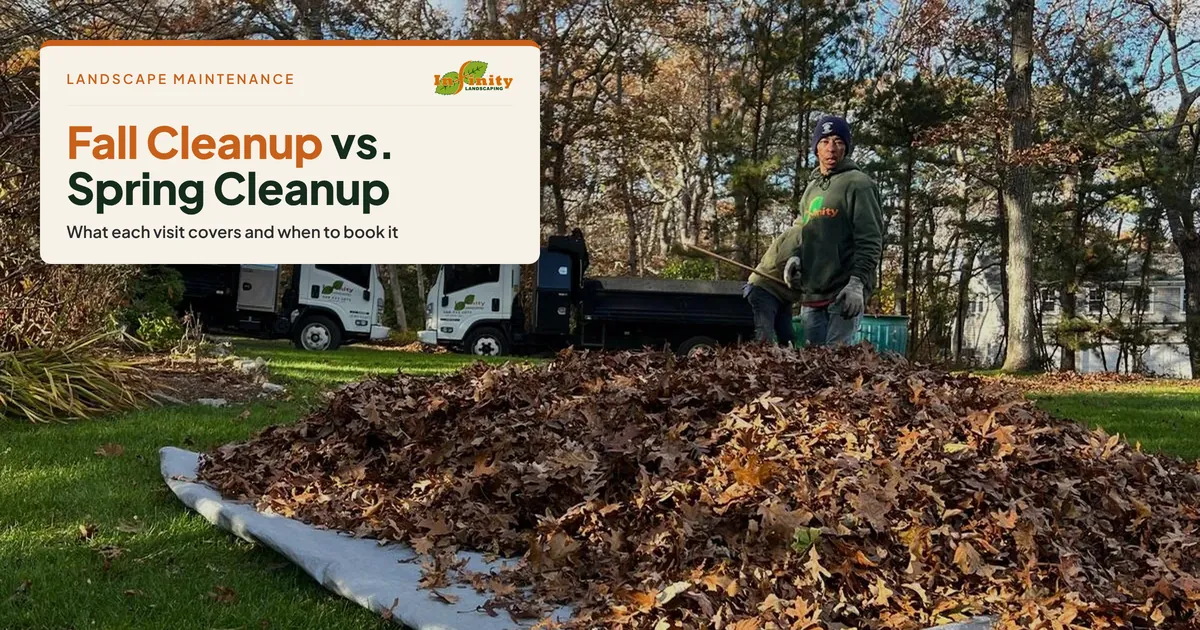
TL;DR: A fall cleanup clears leaves, cuts back spent plants and gets lawns and beds ready for winter. A spring cleanup clears what winter left behind and gets the property ready to grow. On Martha’s Vineyard, fall work runs from late October through November and matters most for lawn health, because matted leaves under snow can smother turf. Book the fall visit before you close the house and the spring visit by March.
The oaks and maples on Martha’s Vineyard drop most of their leaves in late October and November. That is when a fall cleanup earns its place on the calendar. A fall cleanup is the end-of-season visit that clears leaves and debris from lawns and beds, cuts back spent plants and readies the property for winter.
A spring cleanup is the other bookend. It clears what winter left behind and gets lawns and beds ready to grow.
Skip the fall visit and a thick mat of leaves can sit on the lawn all winter. When the snow melts, those spots often come up gray, flattened and slow to green.
Many of the homes we look after are second homes, and their owners leave the island before the last leaves are down. So the question we hear most is which visit matters more and when to book each one. Infinity Landscaping, a Martha’s Vineyard landscaping and hardscaping company, runs both every year from Edgartown to Aquinnah. Below you’ll find a side-by-side comparison, a fall checklist for seasonal homes and the island details that change the plan.
What Is the Difference Between a Fall Cleanup and a Spring Cleanup?
A fall cleanup protects a Martha’s Vineyard property going into winter: it removes leaves from lawns and beds, cuts back spent perennials and finishes the season’s mowing. A spring cleanup restarts the property after winter: it clears storm debris, edges beds, adds mulch and gets the lawn ready for its first cut.
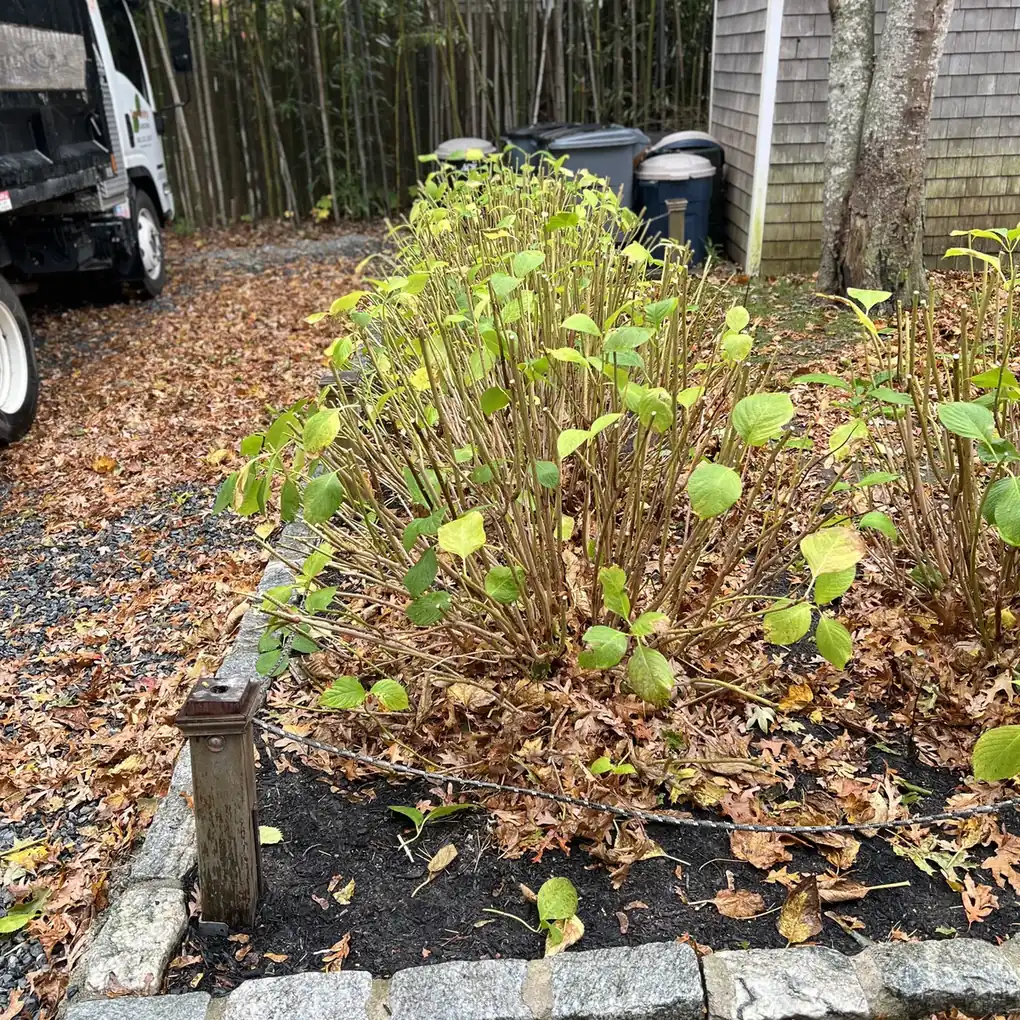
Think of fall as protection and spring as presentation. The tasks overlap, but the goals don’t.
| Fall cleanup | Spring cleanup | |
|---|---|---|
| Main goal | Protect lawns and beds through winter | Get the property growing and ready for arrivals |
| Timing on the Vineyard | Late October through November, after most leaves drop | April for heavy work, May for mulch and finishing before Memorial Day |
| Lawn work | Remove leaf cover, final mow | Rake matted grass, clear plow gravel and salt from edges |
| Bed work | Cut back browned perennials, pull annuals, tidy borders | Cut back grasses and stems left for winter, edge beds, mulch |
| Typical debris | Leaves, spent stems, fallen limbs | Storm limbs, wind-blown leaves, salt crust |
| If you skip it | Leaf mats can smother turf under snow | Beds look tired and the first mow starts on a messy lawn |
Our recommendation for most Vineyard properties is to book both. If only one fits this year, make it the fall visit. A spring crew can clear debris quickly, but it can’t undo a winter of turf smothered under wet leaves, and patches that don’t regrow have to be reseeded.
What Does a Fall Cleanup Include on Martha’s Vineyard?
A fall cleanup on Martha’s Vineyard usually covers leaf removal from lawns, beds and hardscapes, perennial and annual cutbacks, a final mow and hauling the debris away. Irrigation winterization, gutter cleaning and burlap wrapping are often booked alongside it as separate items.
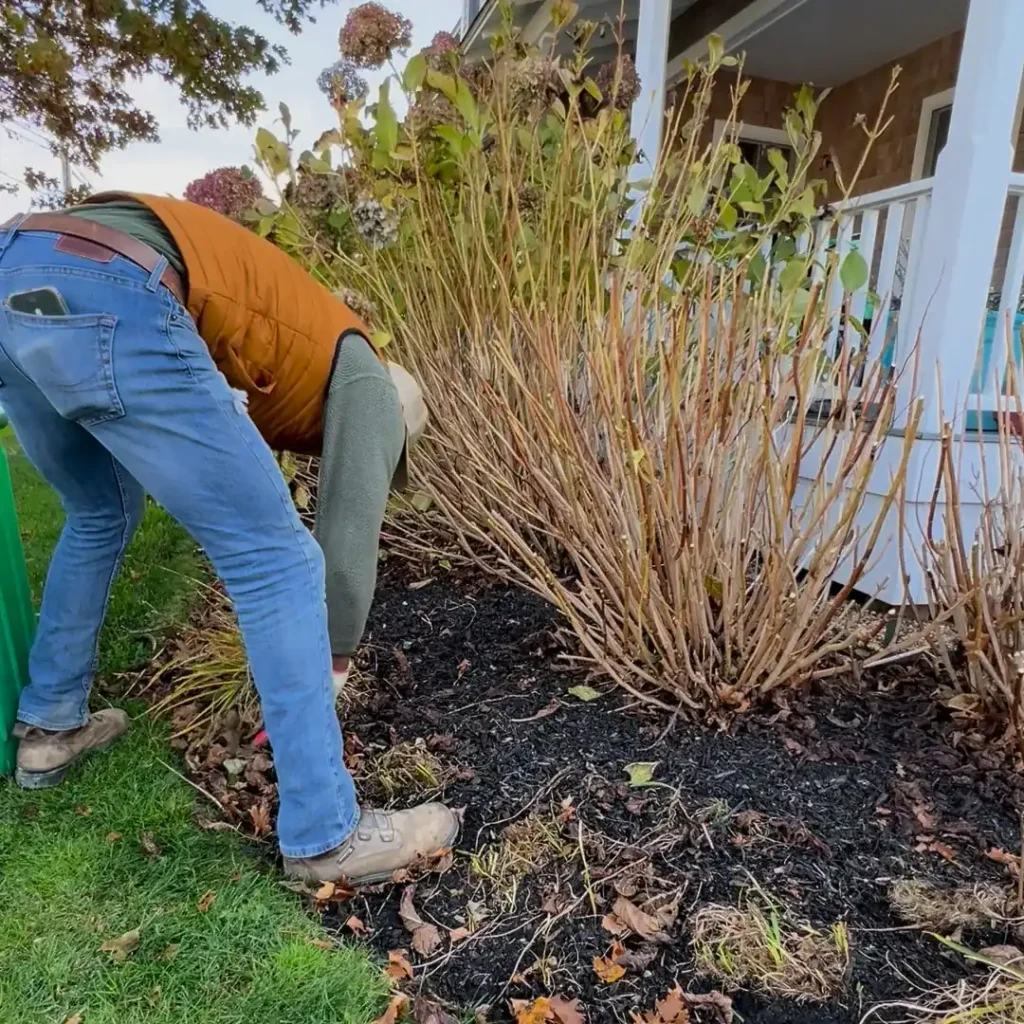
Use this as a closing checklist for a seasonal home:
- Clear leaves from the lawn first, then from beds, driveways, patios and decks.
- Cut back perennials once their stems have browned and pull spent annuals. Seedy annuals such as cleome and cosmos are worth pulling now, since fall removal cuts down on unwanted reseeding.
- Bag or haul diseased stems and leaves rather than composting them on site.
- Mow a final time once the grass stops growing, so a tall canopy doesn’t flop under snow.
- Top up thin mulch in exposed beds to insulate roots against winter wind.
- Walk the property for broken or hanging limbs over the roof, driveway and paths, and flag big tree work for an arborist.
- Book the extras a closed house needs: irrigation winterization, gutters, and burlap for exposed boxwood or rhododendron.
- Decide what stays standing. Ornamental grasses and some seed heads give birds food and shelter through winter.
Diseased material matters more than people expect. Iowa State Extension notes that most home compost piles don’t get hot enough to kill pathogens or weed seeds, so infected stems should leave the property.
Ask any crew to put the scope in writing before the work starts. It should name the areas being cleared and how many visits are planned. The quote should also say how late-dropping leaves are handled, where the debris goes and which plants stay up for winter. Our fall cleanup service is quoted that way, because a property you won’t see again until May shouldn’t hold surprises.
When Should You Schedule a Fall Cleanup?
On Martha’s Vineyard, schedule a fall cleanup for late October through November, after most of the oak and maple leaves have come down. Open properties usually finish in one visit. Lots that back onto oak woods often need a second pass later in the season for leaves that drop late.
Timing is a trade-off. Go too early and the trees keep dropping onto a lawn you just cleared. Wait too long and early snow can lock wet leaves onto the grass until spring.
Seasonal owners face a different problem. If you close the house in mid-October, most leaves will still be on the trees. Book the cleanup for after you leave instead of squeezing it into your last weekend. We can handle it while you’re off-island.
To set that up, send a few current photos, your access arrangements and the date you plan to return. Point out anything you planted this year so it gets extra care going into its first winter.
Should You Remove Leaves From Your Lawn Before Winter?
Yes, when the leaves cover most of the grass. A light scatter on a Martha’s Vineyard lawn can be mowed in and left to break down. A layer you can barely see grass through should be raked or blown off before winter, because matted leaves under snow hold moisture against the turf.
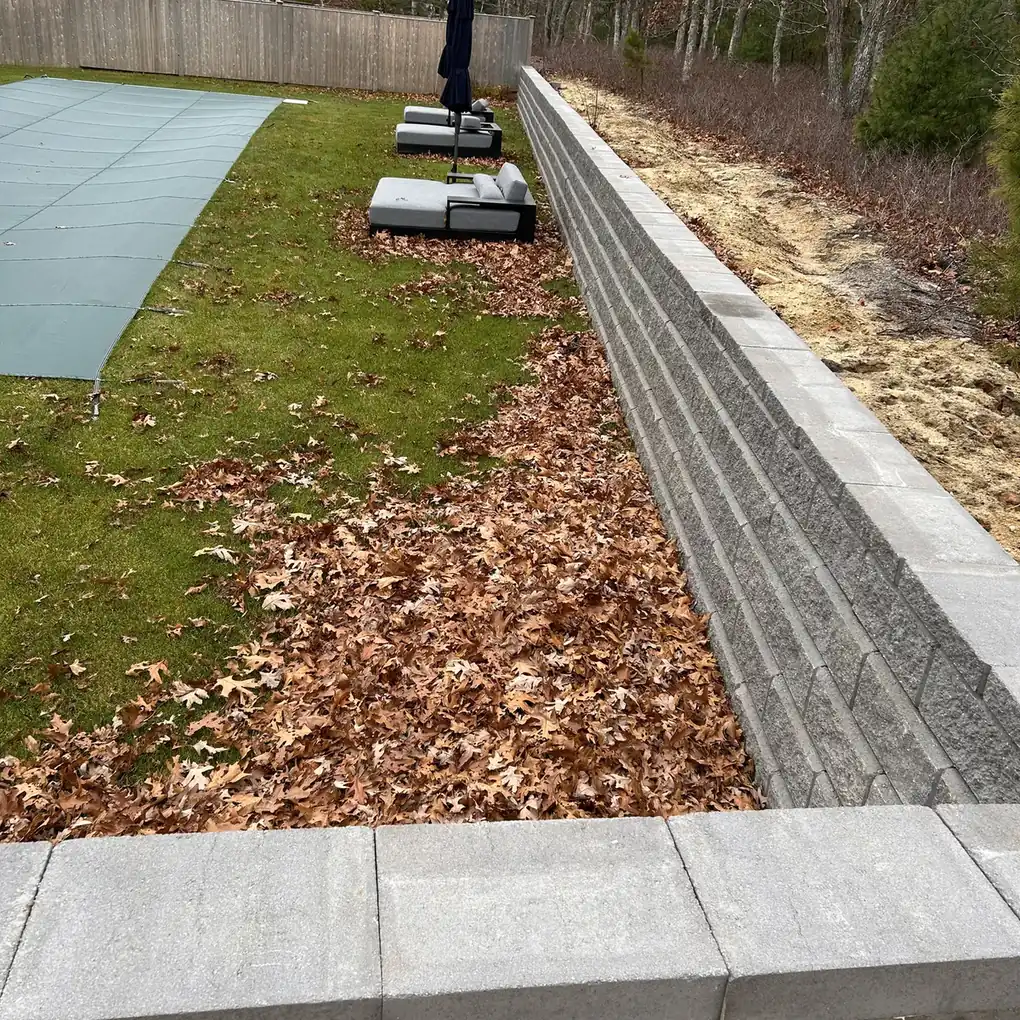
Utah State University Extension offers a simple rule. If a lawn is around 50% covered, mow the leaves up and leave them. Once it is nearly covered, remove them, since they can smother the lawn under snow. Mowed leaves need to be chopped small enough to fall between the grass blades, which can take more than one pass on a thick layer.
Snow mold is the main risk. Iowa State lists raking up fallen leaves in the fall among the steps that keep it in check. UMass Extension describes gray snow mold showing up after snowmelt as circular patches 1 to 3 feet across of straw-colored or gray turf.
Beds are a different case. A thin layer of leaves can stay over winter, but piled deep over perennial crowns it can smother them. For feeding, aeration and seeding, see our fall lawn care guide.
What Does a Spring Cleanup Include?
A spring cleanup on Martha’s Vineyard clears winter storm debris, cuts back grasses and perennial stems left standing for winter, prunes dead wood, edges beds and spreads fresh mulch. It usually runs in two waves: heavy cleanup in April, then mulch and finishing work in May.
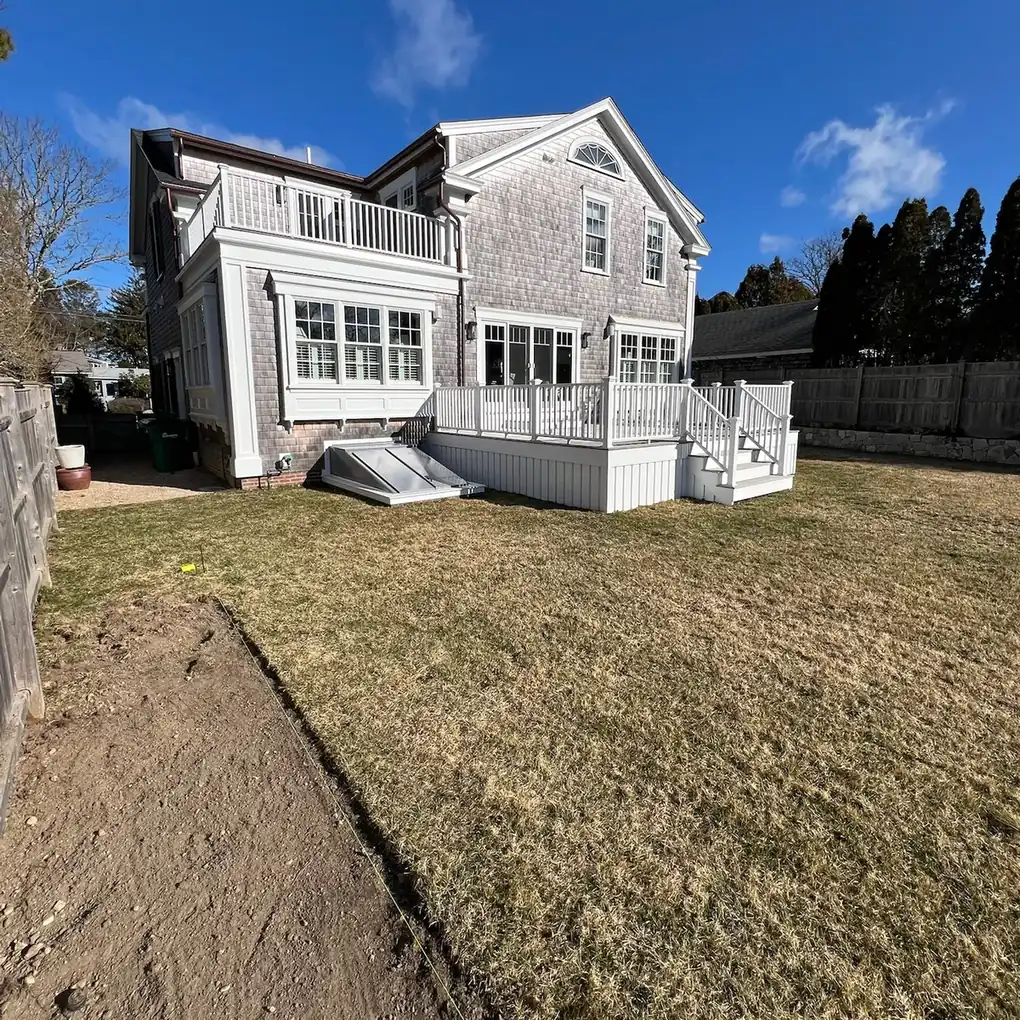
April deals with what the wind brought in. Branches, oak leaves from the woods, plow gravel on lawn edges and salt crust near the water come off first.
May is about how the property looks on arrival day. We spread a 2 to 3 inch layer of double-shredded bark mulch, plant annuals, start irrigation systems and do a final detail pass ahead of Memorial Day. Our spring cleanup service page lists the full scope, from debris removal to the first mulch.
Snow mold patches usually recover once they dry out. UMass notes that in most cases only the leaves are killed and regrowth comes from the plant crowns. A light raking helps, and patches that stay brown get reseeded.
Book spring work in February or March. The weeks before Memorial Day fill fast, and properties with a fixed arrival date get scheduled first.
Island Conditions That Change the Cleanup Plan
Winter on the Vineyard is windy more than it is snowy. Gales off the water carry salt, snap weak limbs and strip mulch from exposed beds. That is why our fall visits include a walk for hanging limbs near the house and a mulch top-up on the windward side.
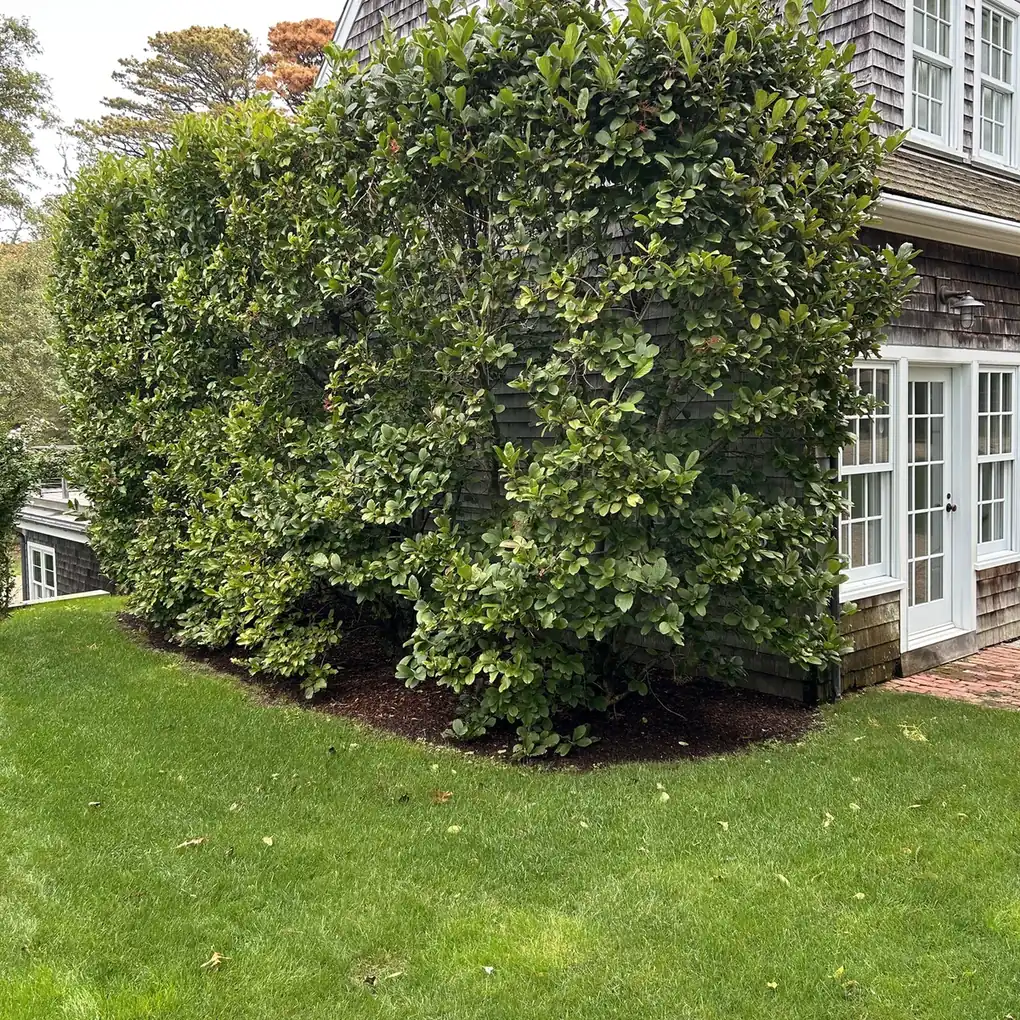
Lots that back onto oak woods keep collecting leaves after the crew leaves. We treat maintained lawns and formal beds differently from wooded edges and naturalized areas, where a lighter touch is fine. Clearing every leaf out of the woodland edge wastes time and leaves the soil bare.
Seasonal schedules shape everything: owners often close up in October and come back in late May or June. The fall visit happens at an empty house, and the spring visit has to finish before the first guests arrive.
Large trees are their own job. Storm-damaged limbs high in a canopy, or anything near wires, belong to an arborist rather than a cleanup crew.
Doing It Yourself or Hiring a Crew
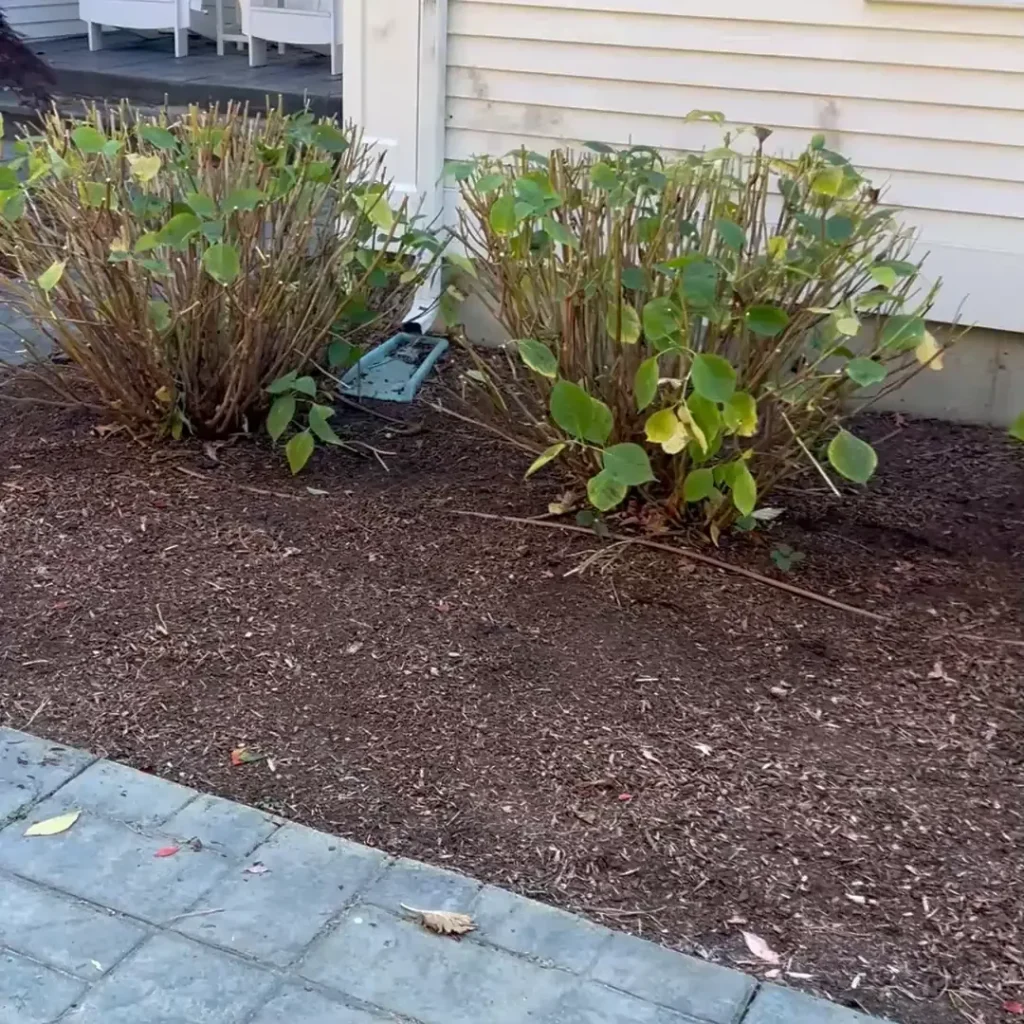
A small, open lot with a few trees is a reasonable weekend project. A mulching mower handles light leaf cover, and a rake and tarp handle the rest. Once perennial stems turn brown, hand pruners can take them down to within a few inches of the ground.
Getting rid of the debris is the harder part on an island. The Martha’s Vineyard Refuse District, which serves Edgartown, West Tisbury, Chilmark and Aquinnah from its transfer station at 750 West Tisbury Road, recycles leaves and brush. Oak Bluffs and Tisbury residents should check with their town for drop-off rules.
Hiring a crew makes sense for big lawns under oaks and for owners who are off-island. It also saves hauling a trailer of leaves across the island yourself. We bring the blowers, vacuums and trucks and work to a planned number of visits. Leaves and plant debris go to island compost facilities.
Planning Both Visits Around Your Calendar
Fall and spring cleanups do different jobs. The fall visit protects lawns and beds through a wet, windy island winter, and the spring visit gets the property growing and ready for arrival day. If you can only book one, book fall.
Plan the fall cleanup for after leaf drop, even if you have already left the island, and put the spring cleanup on the calendar in February or March. Write down which plants should stay standing and where the debris should go, so nothing gets decided on the fly.
We can handle both visits while you’re away. Request a free quote or call (508) 333-1071, and tell us your closing and arrival dates.
Frequently Asked Questions
How long does a fall cleanup take?
Most open properties on Martha’s Vineyard need one fall cleanup visit once the leaves are down. Wooded lots under oaks often need a second, lighter pass later in the season for leaves that drop late. The written scope should state how many visits are planned so you know what to expect.
Is it too late for a fall cleanup in December?
A December fall cleanup still helps if the ground is open and the lawn isn’t under snow. The goal is to get heavy leaf cover off the grass before snow can press it down for weeks. Once lasting snow arrives, stop. The remaining leaf work moves to the spring cleanup.
Should perennials be cut back in fall or in spring?
Perennials can be cut back in either season, and most gardens do best with a mix. Iowa State Extension notes that leaving stems and seed heads until early spring helps native pollinators. Diseased plants, floppy perennials over walkways and seedy annuals are better removed in fall.
Can a fall cleanup be done while I’m off-island?
Yes. Infinity Landscaping does many fall cleanups at closed seasonal homes. Send current photos, access arrangements and your return date, and the crew works to the written scope while you’re away.
What happens to the leaves you haul away?
Infinity Landscaping hauls leaves, twigs and plant debris from Martha’s Vineyard properties to island compost facilities, where they are recycled into compost. Diseased plant material is kept out of home compost piles on the property.
What is the difference between a spring cleanup and regular landscape maintenance?
A spring cleanup is a one-time reset after winter: debris removal, cutbacks, bed edging and mulch. Regular maintenance is the recurring work through the season, such as mowing, edging, weeding and shrub care. Many properties book both through one landscape maintenance program.