TL;DR: The best window box ideas for Martha’s Vineyard start with exposure. Sunny boxes suit geraniums, petunias, verbena and trailing lantana. Shady boxes suit impatiens, begonias, coleus and fuchsia. Salt and wind call for tough plants like dusty miller, lavender and thyme. Use potting mix, not garden soil, plan for daily watering or drip irrigation, and place any feeder right at the window so birds can’t build up speed.
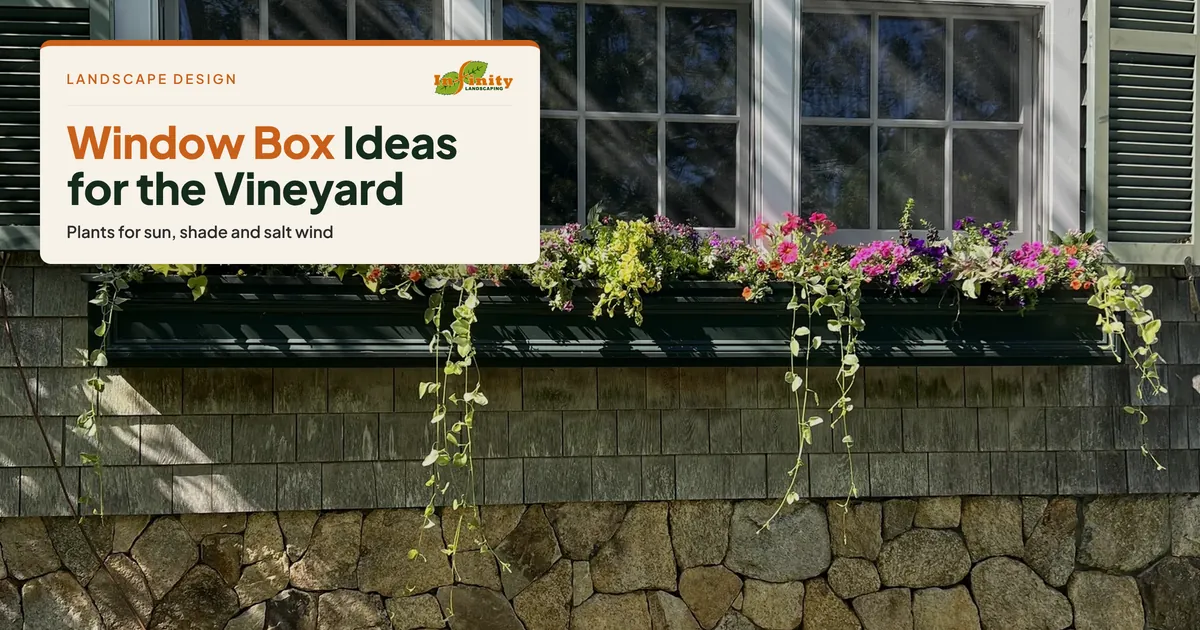
Window box ideas on Martha’s Vineyard have to survive more than a magazine photo. A box on a shingled cottage in Oak Bluffs bakes in afternoon sun. One on a waterfront house in Chilmark takes salt spray and wind. A box on a seasonal home may go a week without anyone there to water it.
That’s why good window boxes start with the site, not the plant list. Exposure decides what will thrive. Watering decides whether it survives August. The way the box is hung decides whether your siding survives the box.
This guide covers plants by exposure and ideas beyond flowers. It also covers watering when you’re away, birds, a plan by season and a short install checklist.
Infinity Landscaping, a Martha’s Vineyard landscaping company, plants and cares for window boxes across the island. We also change them over each season for owners who are off-island.
What Plants Work Best in Martha’s Vineyard Window Boxes?
The best plants for Martha’s Vineyard window boxes depend on sun and exposure. Full-sun boxes do well with geraniums, petunias, verbena, trailing lantana and licorice plant. Part-shade boxes suit impatiens, tuberous begonias, coleus and fuchsia. Boxes facing salt and wind need tougher plants such as dusty miller, lavender, thyme and santolina.
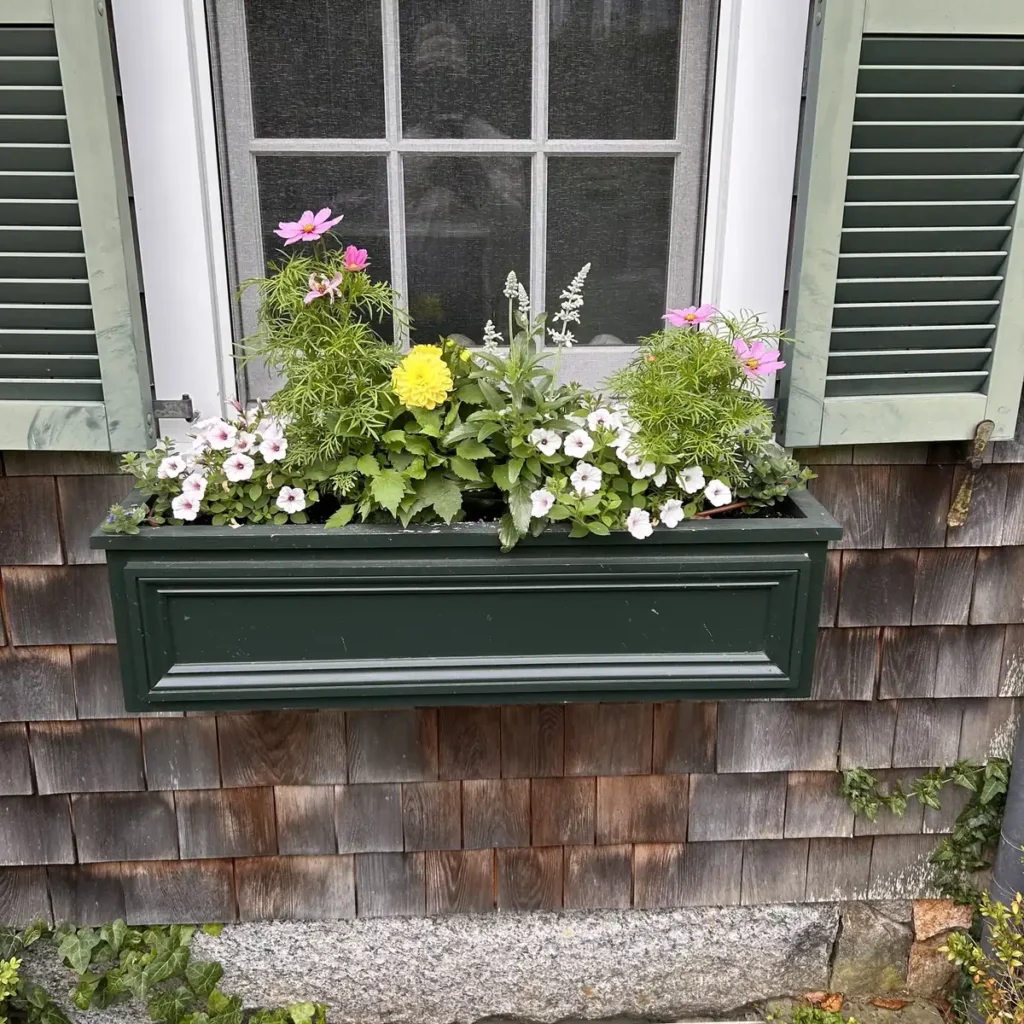
Clemson Extension’s guide to hanging baskets and window boxes sorts container plants into sun and shade lists. It notes that trailing lantana tolerates hot, dry, windy spots and that petunias need ample water and feeding to thrive. Clemson writes for South Carolina, so treat its bloom times as a guide and expect a shorter season here.
For coastal exposure, UMass Extension’s guide to plants for coastal landscapes lists salt-tolerant groundcovers and herbs. Dusty miller is marked as suited to direct coastal exposure. Lavender, thyme, santolina and yarrow are also on its coastal list.
Design the box like a small border: Clemson recommends planting much closer than in a bed, with trailing plants at the edges and upright plants at the center or back. Keep the tallest plants low enough that they don’t block the window.
Window Box Ideas for Martha’s Vineyard by Exposure: Sun, Shade, Salt and Wind
Use this table to match plants to the side of the house the box hangs on. South and west walls usually get the most sun on the Vineyard. North walls get the least.
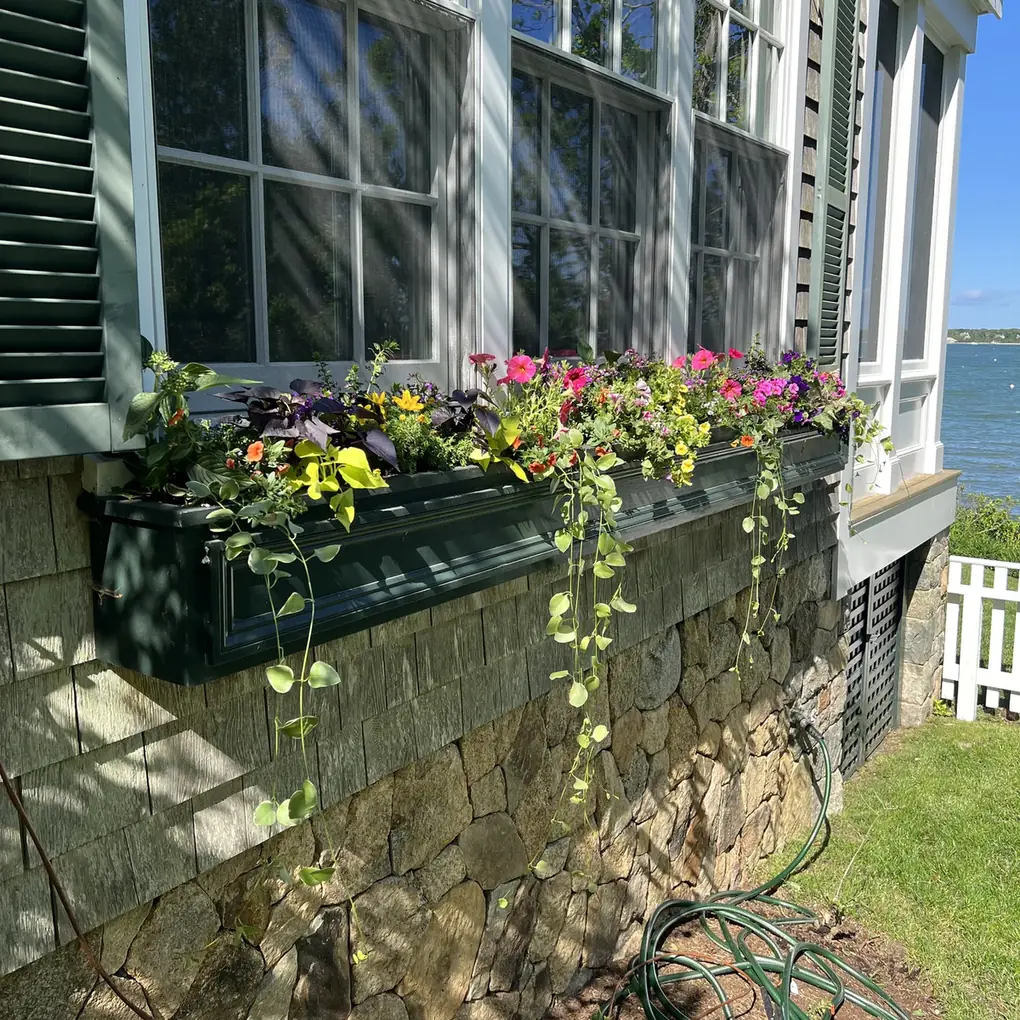
| Exposure | Thrillers (upright) | Fillers | Spillers (trailing) | Notes |
|---|---|---|---|---|
| Full sun, sheltered | Geranium, verbena | Petunia, sweet alyssum | Trailing lantana, licorice plant, fan flower, variegated periwinkle | Petunias need ample water and feeding |
| Part shade | Coleus (shade types), tuberous begonia | Impatiens | Trailing fuchsia | Keep impatiens and fuchsia evenly moist |
| Salt spray and wind | Lavender, santolina | Dusty miller, thyme | Trailing lantana | Choose small, compact plants; wind dries boxes fast |
| Fall | Ornamental pepper | Ornamental kale | Licorice plant | Kale holds color after frost |
| Early spring | Pansies, violas | Pansies | Variegated periwinkle | Pansies like cool weather |
On waterfront houses, we recommend at least one silver or gray-leaved plant in every box. Dusty miller and licorice plant read well from the street and shrug off the salt and sun that scorch softer annuals.
What Can You Put in Window Boxes Besides Flowers?
You can fill window boxes with herbs, foliage plants, ornamental vegetables and seasonal greens instead of flowers. Thyme, oregano and rosemary do well because they like to dry out between waterings. Coleus, licorice plant and dusty miller give color through leaves. Ornamental kale and peppers add color into fall.
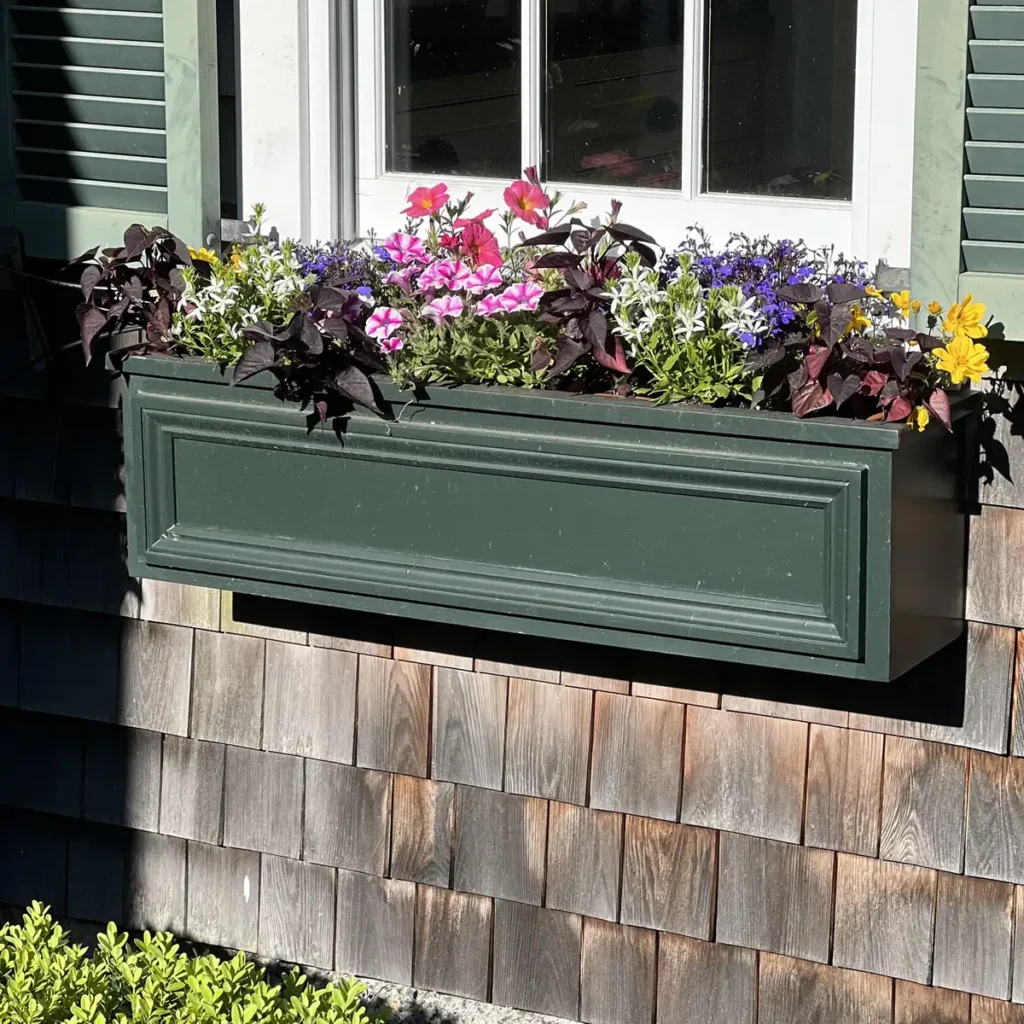
Clemson notes that herbs thrive in containers with little care, and that many houseplants can serve as summer foliage outdoors. An herb box by the kitchen window is practical as well as pretty. Snip what you need for dinner, and the plants stay bushy.
Foliage boxes are the low-maintenance option for seasonal homes. Leaves don’t need deadheading, and a mix of silver, lime and burgundy foliage looks full all summer even when no one is there to fuss over it.
Fall and winter open more options. Ornamental kale holds its color after frost. Once the annuals are done, cut evergreen boughs, dried grasses and branches with berries can fill a box until spring.
How Often Should Window Boxes Be Watered?
Window boxes often need watering daily, and in hot, windy weather sometimes twice a day. Check by feeling the potting mix: if it is dry about an inch below the surface, water until it runs out the drainage holes. Seasonal homes and sunny walls are where drip irrigation pays off most.
Clemson Extension says containers dry out very fast, so daily checks are normal. Frequent watering also washes out food, so it suggests feeding boxes every two weeks in summer with a liquid fertilizer at half strength, or a slow-release fertilizer at planting.
Soil matters as much as water, so use a lightweight potting mix, never garden soil, and make sure the box has drainage holes. Clemson also advises against putting pebbles in the bottom, because they don’t improve drainage.
Drip irrigation solves the seasonal-home problem. A small drip line run to each box, on a timer or a smart irrigation controller that adjusts to rain, keeps boxes alive through a week away. Self-watering liners with a reservoir help too, especially on second-floor boxes that are hard to reach with a hose.
Island wind changes the math. A box on an open wall can dry out far faster than one on a sheltered porch, even on the same day. Check the windy side first.
Bird-Friendly Window Boxes, Done Safely
Window boxes can feed birds and give them cover, but anything that draws birds toward glass needs care. The goal is to enjoy them up close without causing window strikes.
The Cornell Lab of Ornithology’s advice on feeders and window collisions is clear. Place feeders very close to a window, within 3 feet, or far from it, more than 30 feet. A bird leaving a close feeder can’t build enough speed to be hurt if it hits the glass.
That makes the window box itself one of the safer spots for a small feeder. A tray or tube feeder fixed to the box or the frame keeps birds within that 3-foot zone. The middle distance, a feeder hung a few yards out in the yard, is the risky one.
A few habits make a bird box work:
- Use hulled seed. Cornell suggests it to cut down on shells and mess, which matters when the box sits above a patio or a bed.
- Clean the feeder every two weeks. Cornell recommends soapy water, then a rinse of one part bleach to nine parts water, and drying fully before refilling.
- Add visual markers to the glass. Reflective streamers or similar markers help birds see the window.
- Let some plants go to seed in fall. Seed heads on spent annuals give small birds something to pick at after the flowers are done.
A Season-by-Season Window Box Plan
Island window boxes look best with three or four changeovers a year. Here’s a simple plan:
| Season | What goes in | Care notes |
|---|---|---|
| Spring (April to May) | Pansies and violas, early herbs | Cool-season plants handle chilly nights |
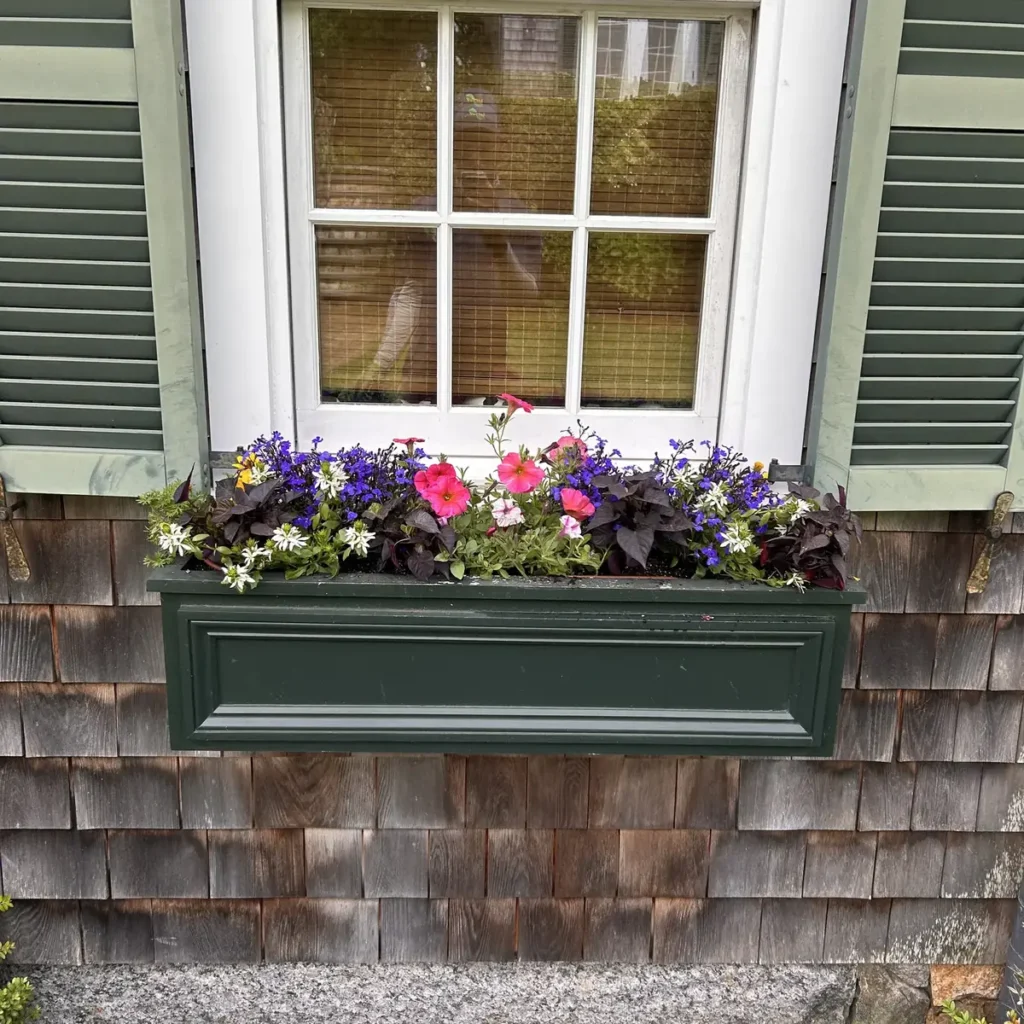
| Summer (late May to September) | Geraniums, petunias, lantana, coleus, impatiens for shade | Water daily, feed every two weeks, deadhead |
| Fall (September to November) | Ornamental kale, ornamental pepper, mums, grasses | Kale and grasses carry color past the first frost |
| Winter (December to March) | Evergreen boughs, berried branches, dried grasses | No watering needed once the mix freezes |
Clemson recommends choosing small, healthy young plants for each changeover, because they settle in faster than large ones. Remove spent flowers through summer, and give leggy plants a trim in late summer to bring them back.
For seasonal homes, the first and last changeovers matter most. A spring box that’s planted before you arrive and a fall box that carries through mid-October make the house look lived-in. Our flowerpots and window boxes service handles those changeovers on a schedule.
How Do You Install a Window Box That Won’t Damage the House?
To install a window box that won’t damage the house, mount it on strong brackets fixed into framing, not just siding. Leave a small air gap so shingles can dry, and make sure water drains away from the wall. A wet box is much heavier than a dry one.
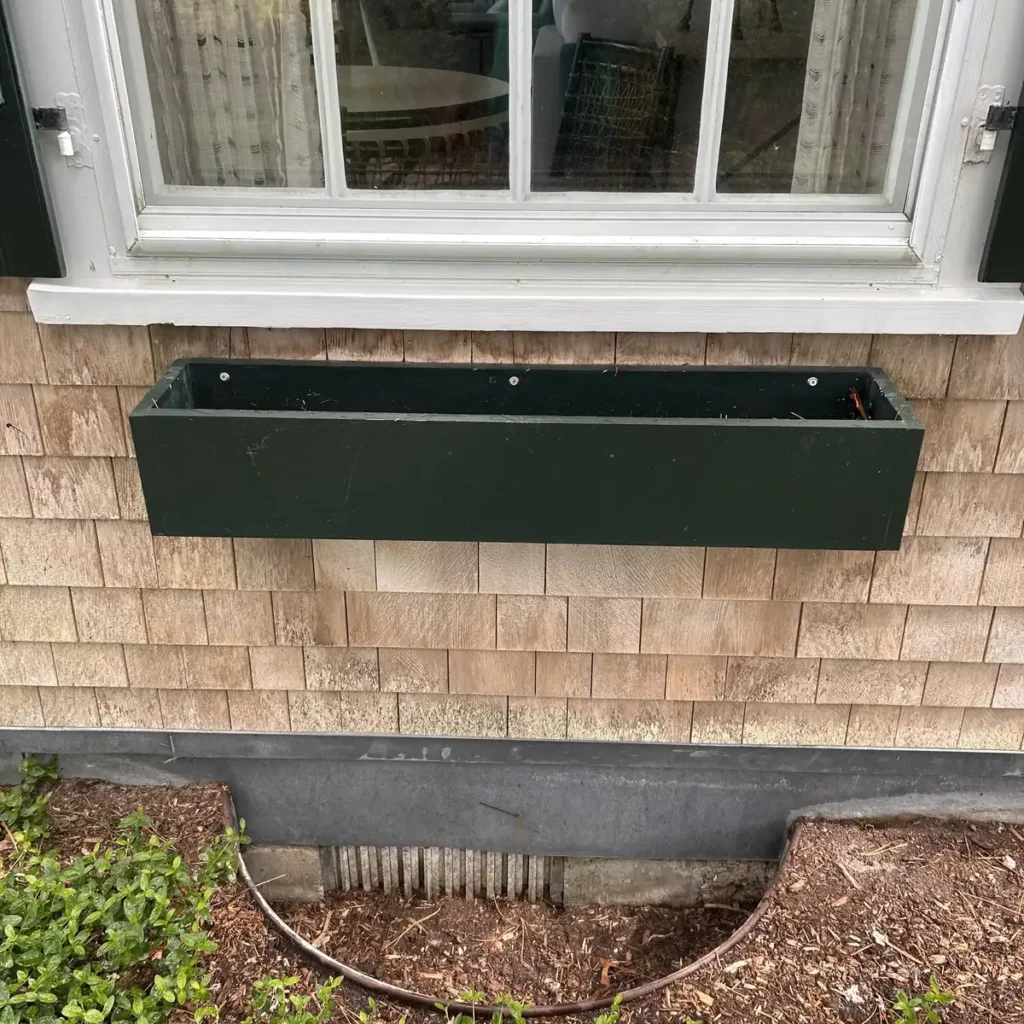
Clemson stresses that window boxes need a strong support system because they get much heavier when watered. It also notes that a box looks best when it runs the full width of the window.
Here are the steps for a sound install:
- Measure the window. Choose a box at least as wide as the window, including trim if you like a fuller look.
- Find the framing. Locate studs or blocking under the shingles or clapboards.
- Mount the brackets. Use exterior-rated brackets and fasteners sized for a full, wet box.
- Leave an air gap. Spacers keep the back of the box off the siding so water doesn’t sit against the shingles.
- Check drainage. Confirm the drainage holes are open and the overflow won’t run down the wall or into a door frame.
- Add a liner if you like. Liners make changeovers easier and protect wooden boxes.
- Run drip irrigation before planting. Hide the line along the trim and bring it in from the end of the box.
- Fill with potting mix and plant. Plant closely, with trailing plants at the front edge.
Cedar shingles stain where water sits behind a box year after year. The air gap and good drainage are what prevent that.
Window Boxes That Last All Season
Good window boxes on Martha’s Vineyard come down to three choices. Match plants to the exposure. Plan the watering before the heat arrives, with drip lines on boxes that go unattended. Mount the box so it protects the siding instead of soaking it.
Our planting design team can coordinate window boxes with the beds below them, and our landscape maintenance crews keep them watered and changed over while you’re off-island. For the bigger picture of yard work, see landscaping vs. hardscaping and our landscape design services.
To plan your boxes for next season, request a free quote or call (508) 333-1071.
Frequently Asked Questions
Can you put a bird feeder in a window box?
Yes. A feeder mounted on a window box sits within about 3 feet of the glass, which the Cornell Lab of Ornithology identifies as one of the two safer placements. Birds leaving it can’t gain enough speed to be hurt by a collision. Use hulled seed so shells don’t pile up in the box.
What should you put in window boxes in winter?
Fill winter window boxes with cut evergreen boughs, berried branches and dried grasses pushed into the old potting mix. Ornamental kale planted in fall often holds its color into early winter, and none of these need water once the mix freezes.
What flowers do well in full-sun window boxes?
Geraniums, petunias, verbena, trailing lantana, fan flower and licorice plant all handle full sun. Lantana and licorice plant also cope with heat and wind, so they suit exposed south and west walls. Petunias look great but need steady water and feeding.
Do window boxes damage siding?
They can if water sits against the wall. Boxes mounted tight to shingles keep the wood wet. That leaves stains or rot behind them. Brackets with a small air gap, open drainage holes and a check each spring prevent most damage.
Can window boxes stay up year-round on Martha’s Vineyard?
Yes, if they are mounted to framing and built from rot-resistant or synthetic material. Empty or dress them for winter rather than leaving dead annuals in place. Check brackets and fasteners every spring, since winter storms and salt air are hard on hardware.