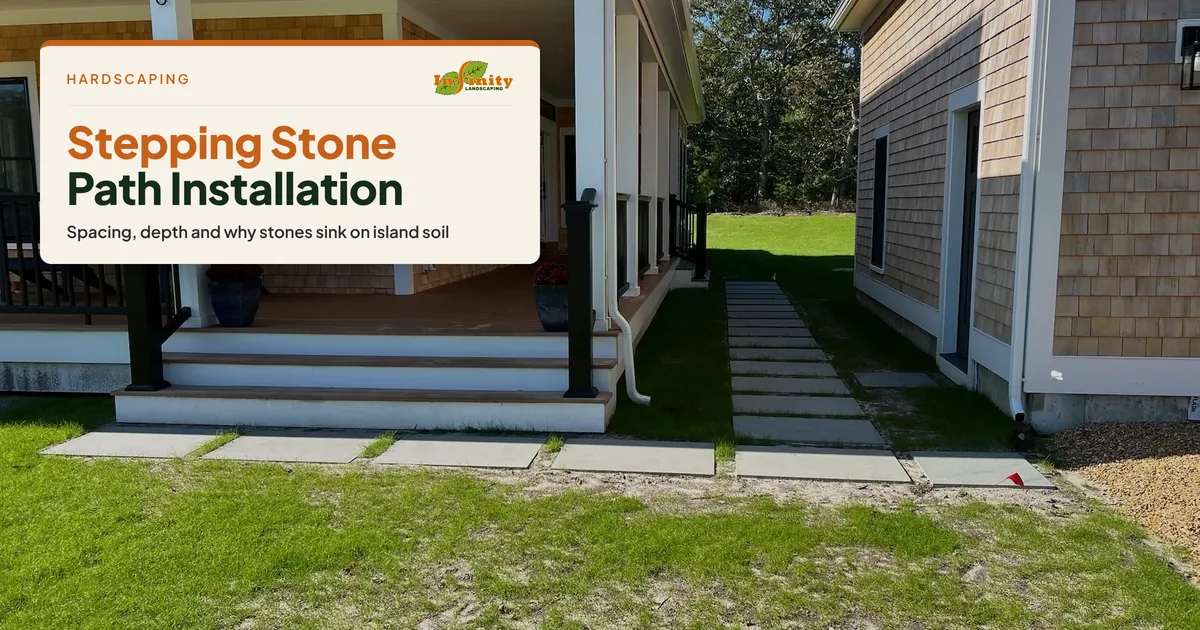
TL;DR: Stepping stone path installation comes down to three things: spacing that matches a real stride, a firm bed under every stone, and a top that sits flush with the lawn. Call Dig Safe first, lay the stones out and walk them, dig each pocket just deeper than the stone, and set it on compacted sand. On Martha’s Vineyard, sandy soil and up-island clay need different bases.
Stepping stone path installation looks simple. Cut a hole, drop a stone, move on. Then the first wet spring arrives and one stone tips, another sinks, and a third sits high enough to catch a toe.
The old name of this guide promised a path “that won’t kill you.” That was a joke, but trips on garden paths aren’t. Every step below is about one goal: a surface you can walk without looking down.
You’ll find the steps in order, a spacing guide, how deep to set stones in a lawn, why stones move on island ground, and where a homeowner project ends and a professional job begins.
Infinity Landscaping, a Martha’s Vineyard hardscaping and landscaping company, installs stone paths and walkways across the island. This guide is for homeowners who want to understand the job before they decide who does it.
How Do You Install a Stepping-Stone Path That Won’t Wobble or Sink?
To install a stepping-stone path that won’t wobble or sink, set each stone on a firm, level bed rather than on loose soil or grass. Dig a pocket about as deep as the stone is thick plus an inch, compact the soil, add about an inch of compacted sand, and seat the stone flush with the lawn.
That method comes from the Natural Learning Initiative at NC State, whose guide to installing stepping stones also recommends stones at least 2 inches thick. Thin stones crack and rock. Thicker ones stay put.
Wobble almost always comes from the bed, not the stone. A high spot under the middle lets a stone rock like a seesaw, and a soft corner lets it tip.
Sinking is the same problem over time. Loose soil settles, water carries fine sand away, and the stone drops below the grass. A compacted bed and joints filled tight stop both.
Stepping Stone Path Installation, Step by Step
Here is the full sequence for a stepping-stone path through a lawn.
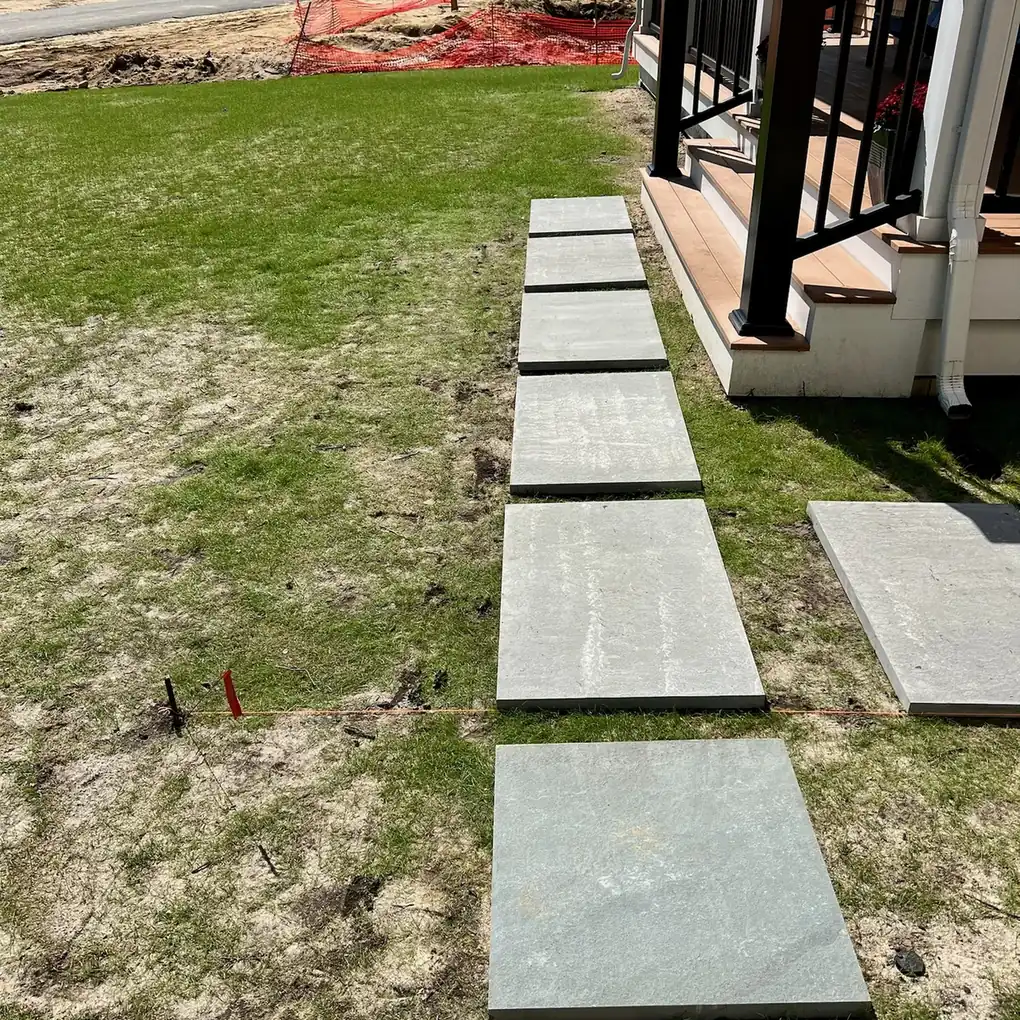
- Call Dig Safe. In Massachusetts you must contact Dig Safe at least 72 business hours before you dig, even for a small project. Premark the area in white paint first.
- Plan the route. Follow the way people already walk. Worn grass is a good map.
- Lay the stones out on top of the grass. Don’t dig yet.
- Walk the path. Adjust spacing until every step lands near the middle of a stone without stretching or shuffling.
- Cut around each stone. Use a flat spade to trace the outline, then move the stone aside.
- Dig the pocket. Go as deep as the stone is thick plus about an inch. Keep the sides straight.
- Compact the bottom. Tamp the soil firm and level.
- Add the bed. Spread about an inch of sand, wet it lightly and tamp it.
- Set the stone. Seat it with a rubber mallet until it is flush with the lawn and doesn’t rock under your full weight.
- Check level. Lay a straightedge across neighboring stones. Each should sit at the same height as the turf around it.
- Fill the joints. Pack sand or soil into the gap around each stone, then water it in so it settles.
- Recheck after the first heavy rain. Lift and reset any stone that moved.
On a sloped lawn, the job changes. Each stone needs its own level step cut into the hill, and the downhill edge needs firm soil in front of it. That is where many DIY paths start to struggle.
How Far Apart Should Stepping Stones Be?
Stepping stones for adults are usually set about 24 inches apart, center to center, to match an average walking stride. Children need closer spacing, about 12 to 18 inches on center. The best spacing for your path is the one that fits the people who use it, so lay stones out and walk them before digging.
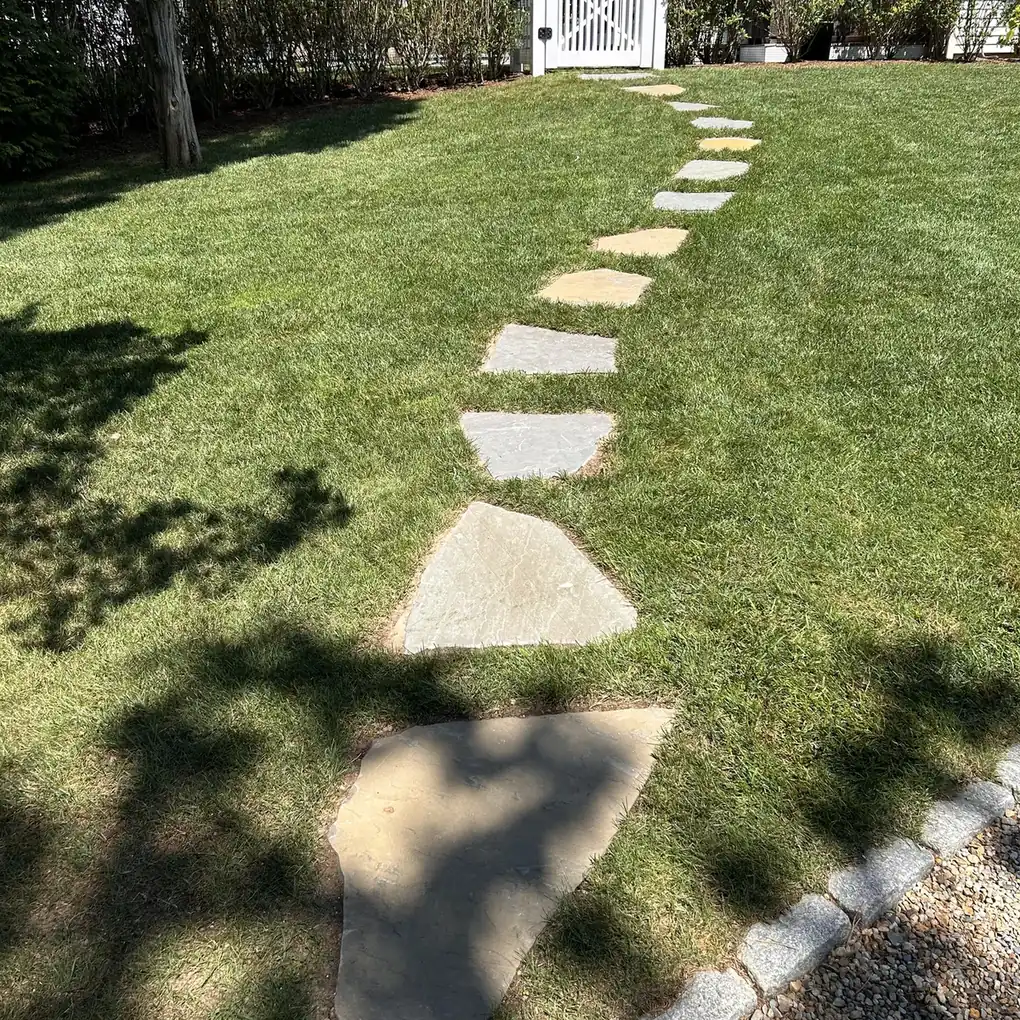
The adult rule of thumb is a common one. Angi’s guide to laying stepping stones gives 24 inches center to center, or about 6 inches between stone edges. It suggests 6 to 8 inches of space if you want to plant between stones. The child spacing comes from the NC State guide above.
| Who walks the path | Spacing, center to center | Notes |
|---|---|---|
| Children | About 12 to 18 inches | Easy hops; good for play gardens |
| Most adults | About 24 inches | Matches an average stride |
| Planted joints | Edges 6 to 8 inches apart | Room for thyme, moss or grass |
| Mixed household | Walk-test before digging | Mark where each person’s feet land |
A path to the clothesline or the outdoor shower gets used in a hurry, often in bare feet or with your hands full. Set those stones a little closer than a strolling path, and use wider stones where someone carries a laundry basket or a tray.
How Deep Should Stepping Stones Be Set in a Lawn?
Stepping stones in a lawn should be set so the top sits flush with the soil around it. Dig as deep as the stone is thick plus about an inch for a compacted sand bed. A flush stone lets a mower pass over and has no lip to catch toes.
Flush is the safety rule. A stone that stands proud of the lawn is a trip hazard and a mower-blade hazard. A stone that sits low becomes a puddle in spring and disappears under turf by midsummer.
For most lawn paths, the inch of compacted sand from the NC State method is enough. Wet spots and paths that carry heavy use need more. Angi describes a trench method with 3 to 6 inches of compacted gravel under a sand layer for full walkways. That gravel base gives water somewhere to go.
Gravel paths with steppers work on the same idea. The stones sit in a compacted base, and the gravel around them holds them in place and drains fast.
Why Stepping Stones Sink or Rock on Island Soil
Martha’s Vineyard has two kinds of ground, and each moves stones differently. Glacial meltwater left sandy outwash plains across the center and south of the island, while the up-island hills are clay-rich moraine that holds water.
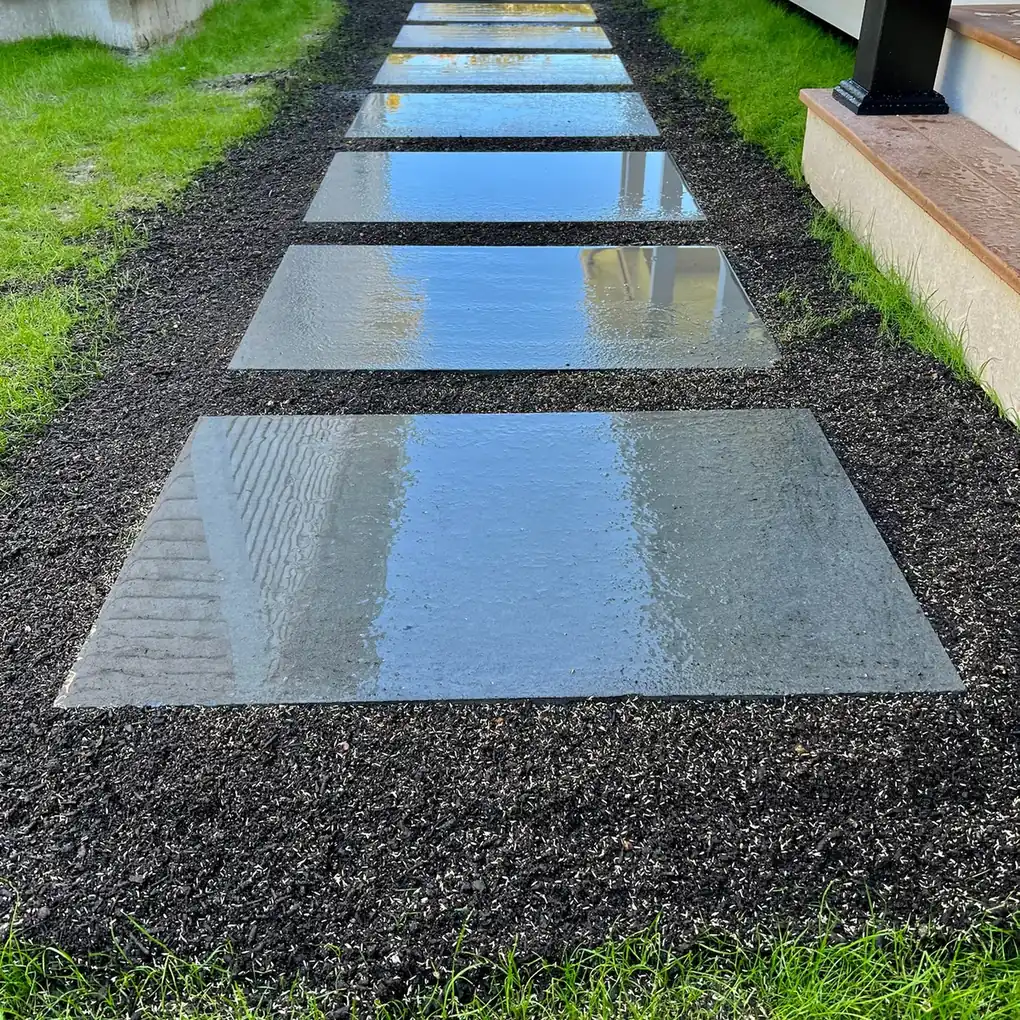
On down-island sand in Edgartown, Oak Bluffs or Katama, the usual problem is sinking. Loose sand that wasn’t compacted settles under foot traffic. Heavy rain can also wash sand out from under a stone edge. The fix is a well-tamped bed and joints filled tight.
Clay-heavy up-island lots in Chilmark or Aquinnah face a bigger risk: frost heave. Pavement Interactive explains that frost heave needs three things: soil with fine particles, freezing temperatures and water. Clean sands and gravels are not frost susceptible. Ice lenses form in fine soils and push whatever sits above them upward.
That’s why a stone that sits flat all summer can rock by March on heavy ground. Remove one of the three conditions and heave mostly stops. In practice, that means swapping the fine soil under each stone for sand or gravel and keeping water moving away from the path.
Roots are the third cause. Stones set close to a tree trunk get lifted as roots grow. Route the path around the drip line of a large tree where you can.
Choosing Stone for a Vineyard Path
The right stone is thick, flat underneath and textured on top. Most island paths use one of four materials:
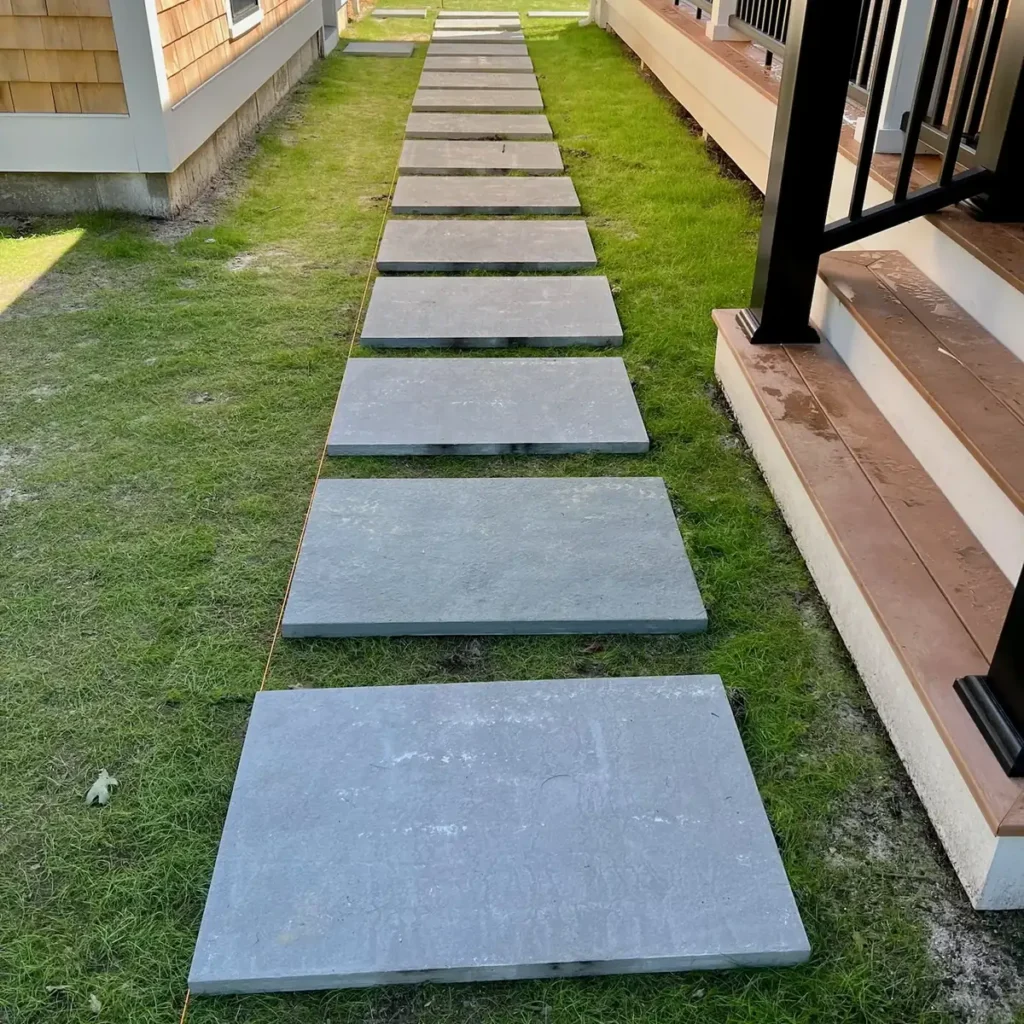
- Bluestone. The classic Vineyard choice. Thermal bluestone has a flamed, slightly rough face that grips better when wet than smoother stone.
- Granite. Very hard and durable. Sawn granite steppers suit modern houses; split granite suits older properties.
- Fieldstone. Irregular, local-looking and great in a cottage garden. Pick pieces that are flat on both faces, or they’ll rock no matter how good the bed is.
- Cobblestone accents. Granite cobbles set around a large stepper or as a border give a path a finished edge. Our cobblestone and stepping stones page shows how they pair.
Texture matters more than color, and Angi’s guide notes that textured stones are less slippery when wet, which counts on a foggy island morning. Dark stone also gets hot under bare feet in July, so choose lighter stone for a path to the beach shower.
Size is the other choice. Bigger steppers feel steadier and are harder to tip. They’re also heavy, and many full-size bluestone steppers take two people to set safely.
Should You DIY a Stepping-Stone Path or Hire a Pro?
A short, flat stepping-stone path through a lawn is a reasonable DIY project if you can lift the stones safely and follow the steps. Hire a pro when the path climbs a slope, crosses a wet spot, runs long, uses large stone, or needs to connect to steps, a patio or a driveway. Those details are where paths fail.
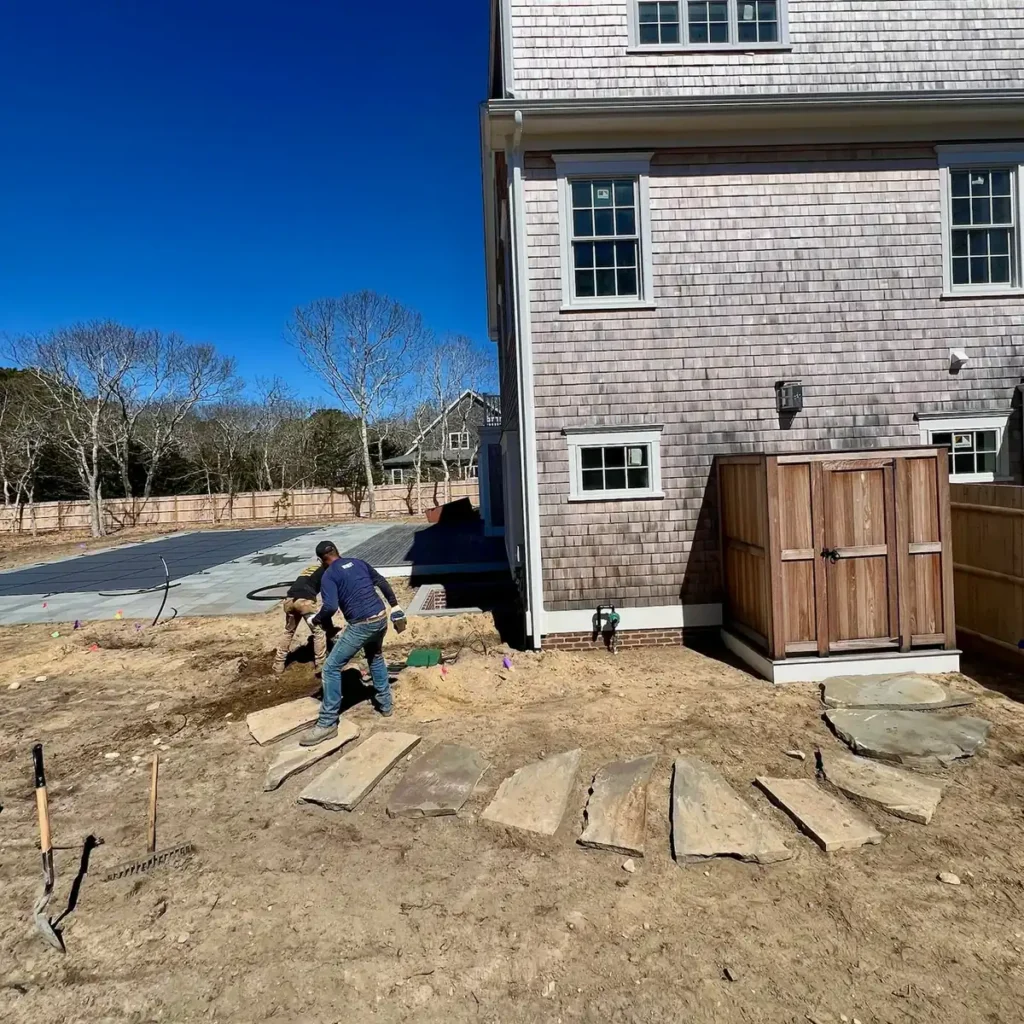
Slopes are the clearest line: every stone on a hill needs a level cut, and the soil in front of it has to hold. Get that wrong and the path sheds stones downhill.
Drainage is the next one. If water already pools where you want the path, the stones won’t fix it; they’ll sink into it.
Weight is the third. Large bluestone steppers can be heavy enough to injure a back or crush fingers. Pros move them with carts and lift aids for a reason.
For anything past a simple lawn path, our walkway installation team designs the route, base and drainage as one job. You can see finished stonework set into lawn in our lawn paths and patio installation project.
A Path You Can Walk Without Looking Down
A good stepping-stone path disappears underfoot. You stop noticing it because nothing tips, sinks or catches.
Three habits get you there. Walk the layout before you dig. Set every stone on a compacted bed, flush with the lawn. Match the base to your ground: firm sand on the outwash plain, better drainage on up-island clay.
If you’d rather leave the digging and lifting to a crew, Infinity Landscaping builds stepping-stone paths and full hardscaping projects across the Vineyard. Our landscape design team can plan the path with the planting around it, and our guide to landscaping vs. hardscaping explains how the two fit together. Request a free quote or call (508) 333-1071.
Frequently Asked Questions
Can you lay stepping stones directly on dirt or grass?
You can set stepping stones on soil, but not directly on grass. Stones laid on top of turf shift and slide while the grass dies underneath. Cut the turf out, compact the soil and set each stone on about an inch of compacted sand so it stays level.
How do you fix a stepping stone that has sunk or started to rock?
Lift the stone out with a flat bar and look at the bed. Add sand under the low side and tamp it firm. Reset the stone until it sits flush and doesn’t move under your weight. If the same stone keeps moving, the soil underneath is too soft or too wet and needs a gravel base.
How do you stop stepping stones from moving sideways?
Fill the joints around each stone tightly with sand or soil and water it in. In a lawn, the turf knits around the edges and locks the stones within a season. Gravel paths need an edge restraint, which keeps the gravel, and the stones with it, from drifting.
Do I need to call Dig Safe for a small stepping-stone path?
Yes. Massachusetts requires a Dig Safe call for any excavation, even setting a mailbox post. Premark the area in white paint, then wait 72 business hours, not counting weekends or holidays. Dig Safe doesn’t mark private lines such as your own irrigation pipes, so locate those yourself.
What’s the best time of year to put in a stepping-stone path on Martha’s Vineyard?
Spring and early fall are the easiest times, when the ground is workable and the lawn grows back quickly around new stones. Avoid frozen or waterlogged ground, because a bed set on wet soil settles later. Early fall also gives the turf time to knit before winter.