

Connected paths and granite steps
Stone pavers and granite entrance steps connect the porch to the landscape.
See the finished detailsBluestone, granite, paver and stepping stone walkways connecting entries, patios, gardens and parking across all six island towns. Built level and stable through hard winters and busy summers.
Walkway installation on Martha's Vineyard means bluestone, granite, pavers, cobblestone or stepping stones set on a compacted base that drains through sandy soil and resists frost heave. A front entry walk usually takes three to seven days once materials arrive. Infinity designs and builds walkways with its own crew in all six island towns.
Documented work from a complete landscape installation on Martha’s Vineyard. Follow the project to see how these spaces connect.
Stone pavers and granite entrance steps connect the porch to the landscape.
See the finished detailsThe walk from the driveway to the front door carries daily traffic, guests and deliveries in every kind of weather. It gets the most durable materials, such as bluestone, granite or quality pavers, laid with consistent joints on a compacted base. A comfortable walk for one person is 36 to 42 inches wide; 48 inches or more lets two people walk side by side and suits a wider house.
Paths through planting, around the side of the house or out to a shed or gate. These often use stepping stones, irregular flagging or gravel with softer edges that sit into the planting rather than contrast with it.
Walks that link a patio to an outdoor kitchen, a garage or a lower garden, often with steps or a grade change along the way. Those transitions need the same structural care as the surfaces they connect.
Gravel, pea stone and open-joint flagging let water soak through instead of running off. They work well around established trees and in areas that stay wet, and need a solid edge to hold the material in place.

Bluestone. The most common choice for entry and garden walks. Available in cut rectangles for a clean pattern or irregular pieces for a natural look, and durable in salt air and freeze and thaw.
Granite. Harder than bluestone and ideal for steps, landings and the busiest entries.
Cobblestone. Used as a border along bluestone or pavers, or as a traditional path. See our cobblestone page for aprons and edging.
Concrete pavers. Many shapes and colors, including tumbled styles that look like old stone. Reliable from quality manufacturers over a proper base.
Stepping stones. Individual stones set through lawn, gravel or planting. The most economical way to add a path, and the least disruptive to an existing landscape.
| Material | Look | Best for | Things to know |
|---|---|---|---|
| Bluestone (cut) | Clean, classic, blue-gray or full-color | Front entries, patios, formal paths | Natural cleft grips when wet; dark stone warms up in full sun |
| Bluestone (irregular) | Relaxed, natural | Garden paths, cottages | Wider joints; needs careful leveling |
| Granite | Formal, very durable | Steps, landings, busiest entries | Higher material cost; lasts generations |
| Concrete pavers | Uniform, many styles | Long runs, budget-conscious projects | Quality varies by manufacturer |
| Cobblestone border | Traditional, textured | Edging bluestone or pavers | Locks the edge and frames the walk |
| Stepping stones | Light, informal | Lawn and garden paths, side yards | Spacing matters: 18 to 24 inches center to center |
| Gravel or pea stone | Soft, permeable | Garden paths, around trees | Needs an edge and topping up every few years |
Stepping stones make a path without paving the whole surface, which keeps a lawn or garden open and lets water soak in. They are the lightest way to connect a porch to a shed, a patio to a gate, or a driveway to a side door.
The details decide whether a stepping stone path is pleasant or awkward:
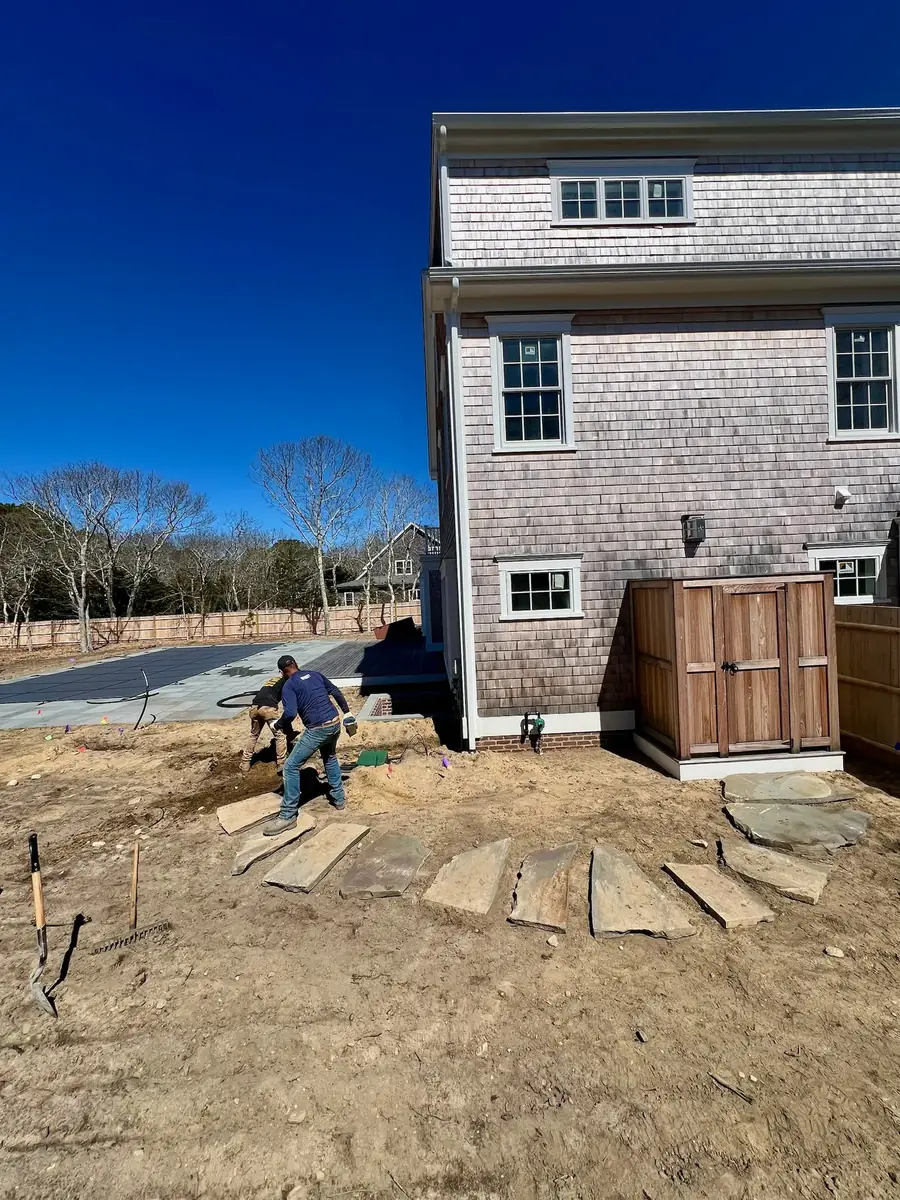
We lay the stones out on site first so you can walk the path before anything is set.
Three walks from our own crews, each suited to a different spot.
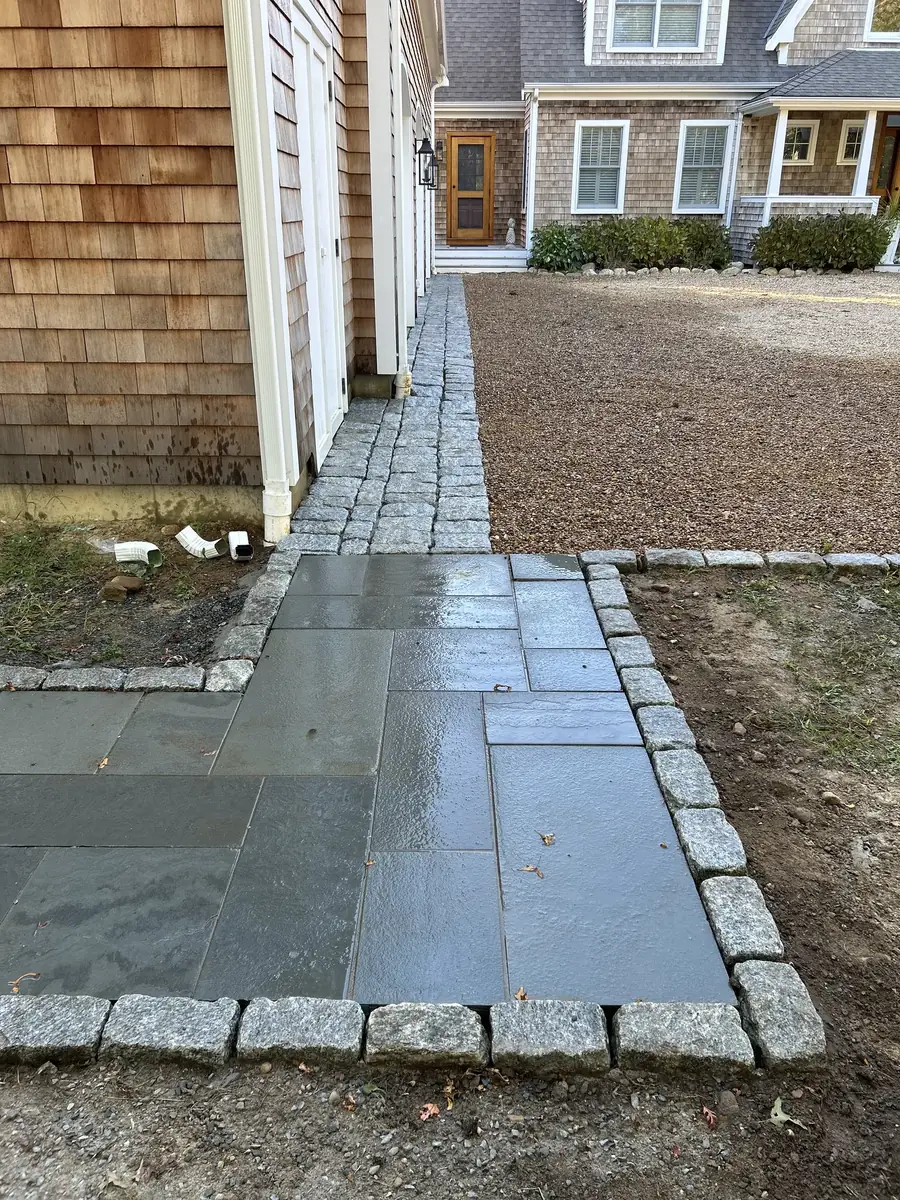
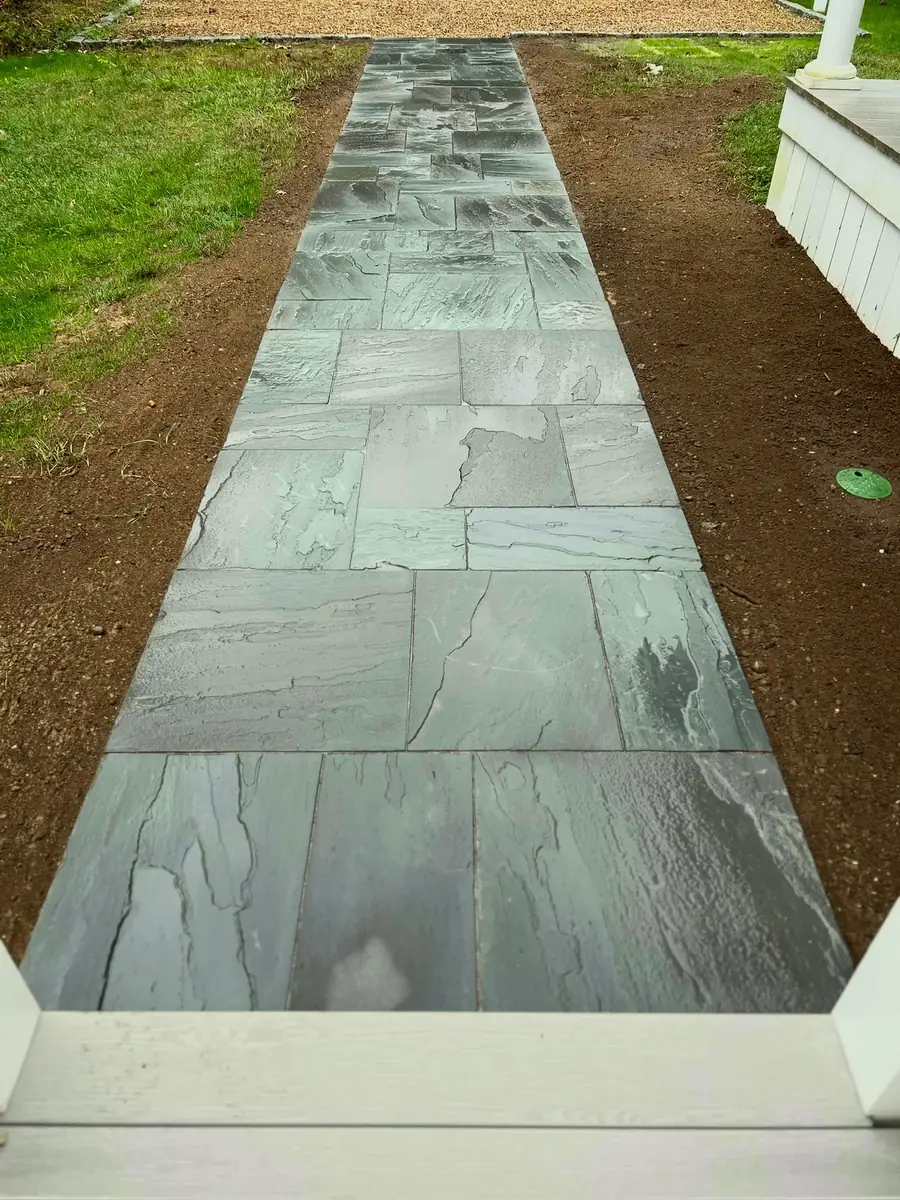
A cut bluestone walk along a cedar-shingled house, framed with a granite cobblestone border that locks the edge and separates the walk from the gravel and planting beds on either side.
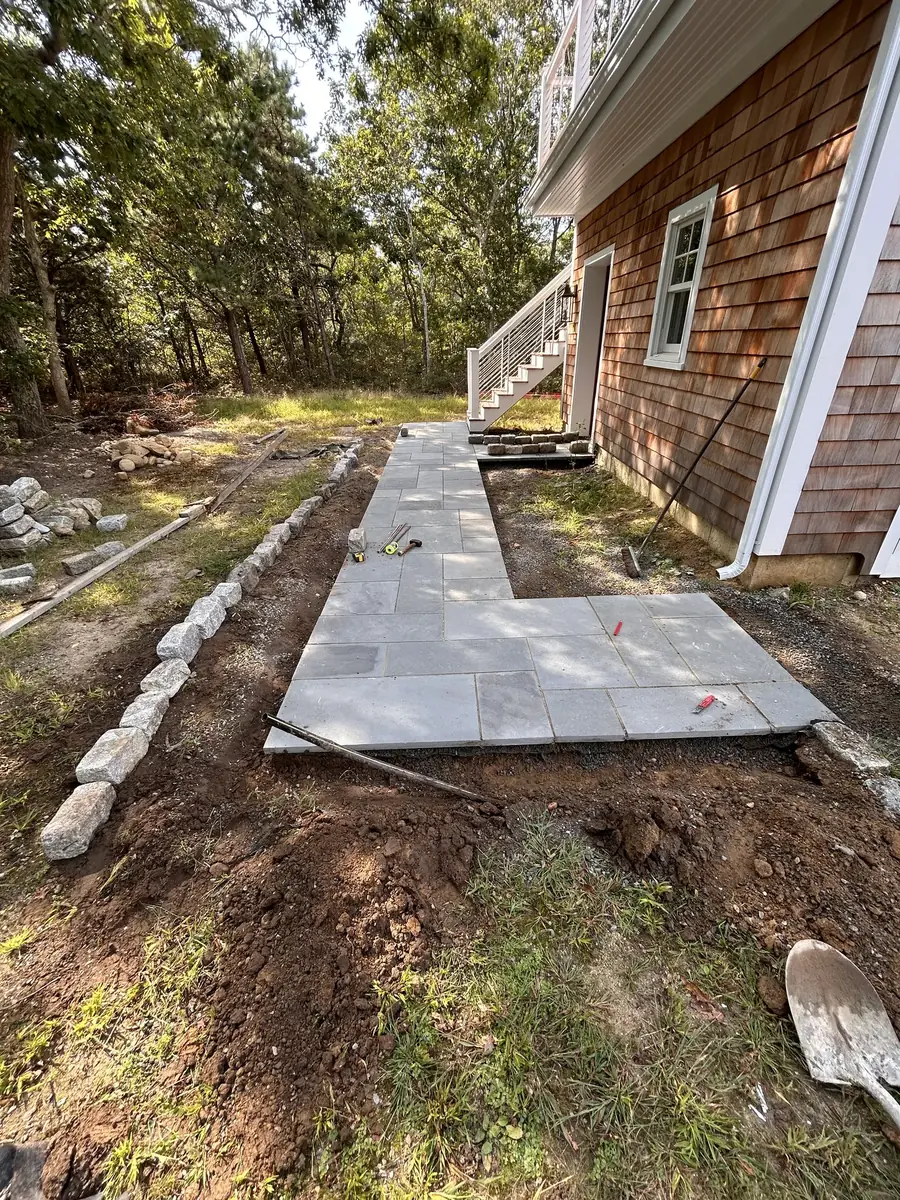
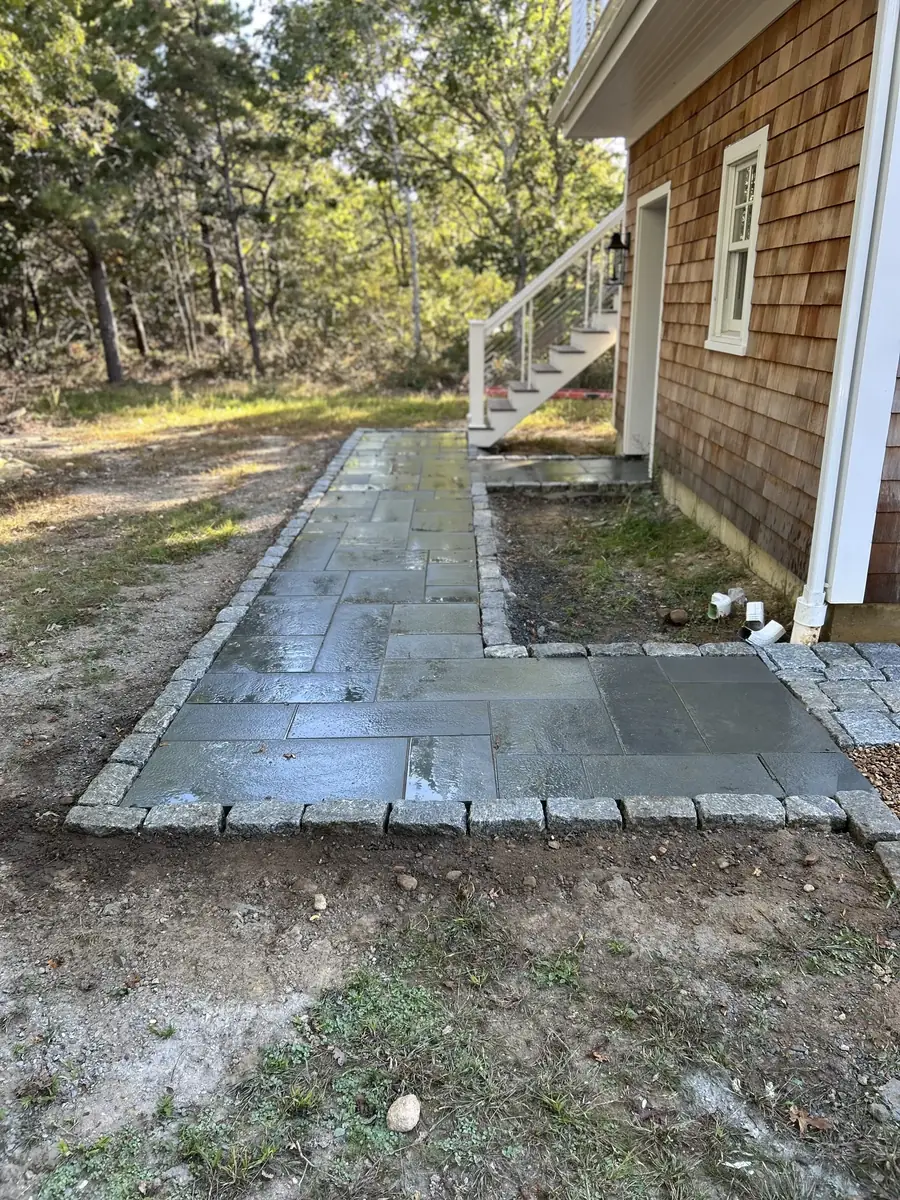
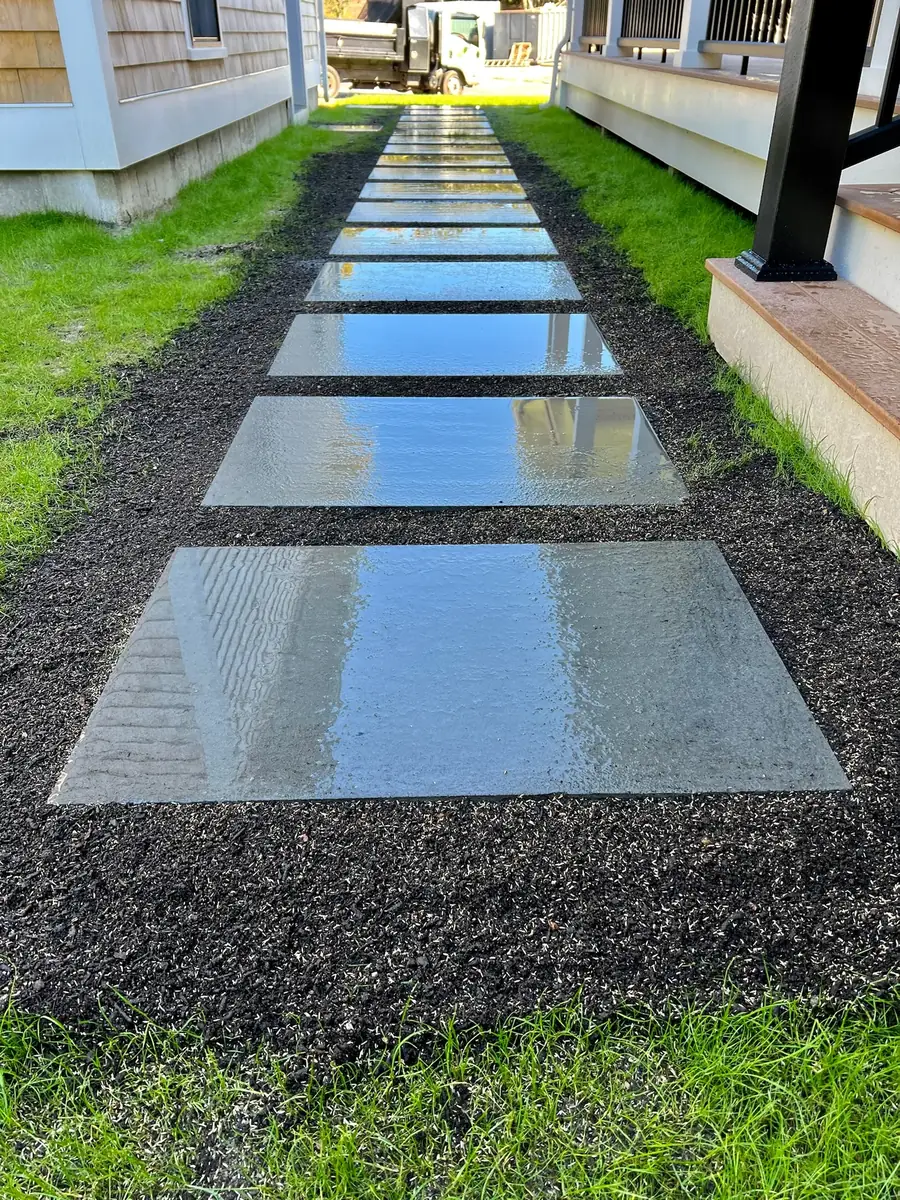
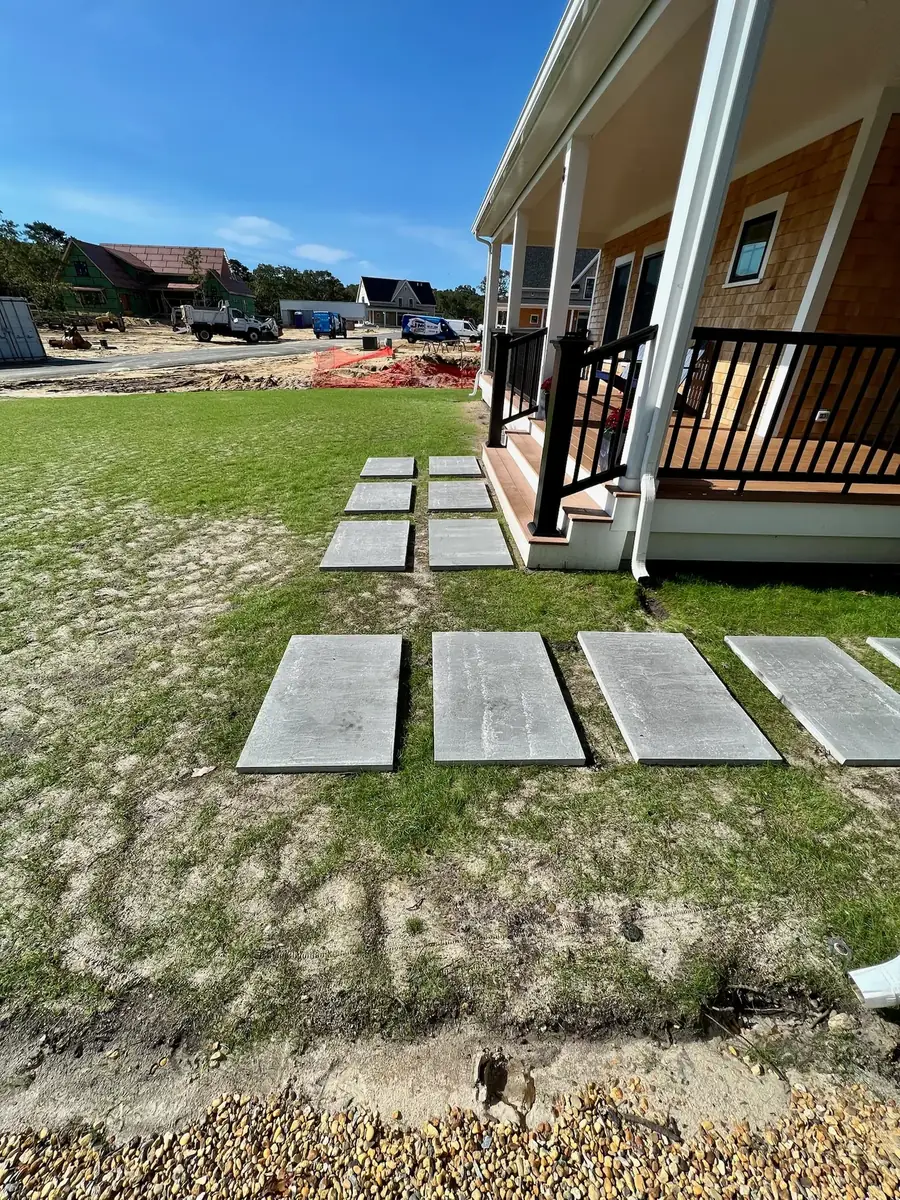
A run of oversized bluestone steppers set in dark gravel along the side of a new house, and a pattern bluestone walk leading to a porch. Both give a clean, modern line with room for water to drain.
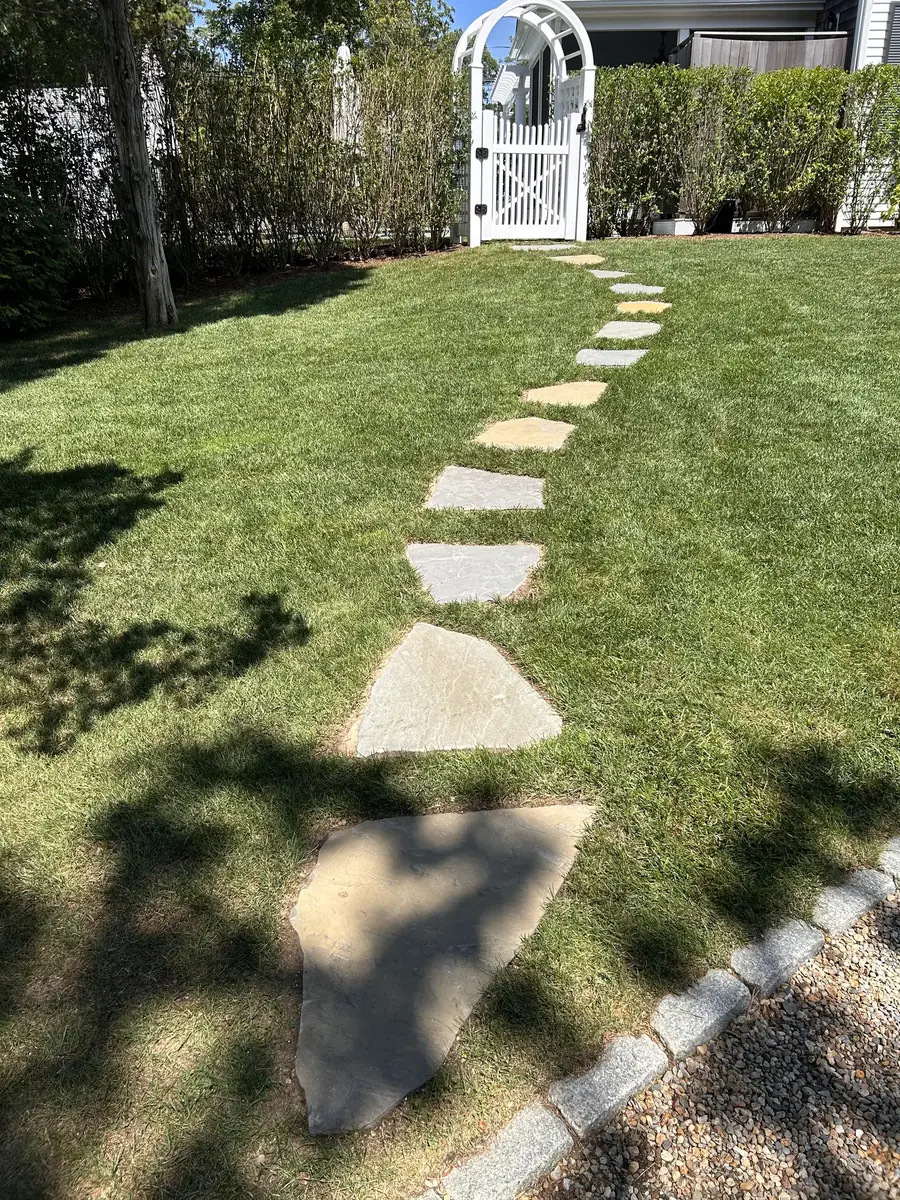
Irregular stepping stones laid out across a lawn, set one by one on compacted pads, and finished as a path to a garden arbor.
More work is in our hardscaping portfolio.
Walkways follow the same rules as patios: excavation, compacted gravel and a setting bed matched to the stone. The difference is that walks run longer, cross changing soil and often pass through tree roots. Where a walk crosses under a large tree, we adjust the base and alignment to protect the roots while keeping the walk stable.
Any walk built from individual pieces (pavers, cobble or cut stone) needs a firm edge. Without one, the pieces creep outward as they are walked on and the ground moves each winter. We use buried edge restraint, a concrete haunch or a stone border set in concrete.
A few details help us understand the work before the first conversation.
Tell us whether you need room to dine, gather around a fire or move comfortably between entrances.
Share photographs of slopes, steps and the route our crew would use to reach the work area.
Bring examples of stone finishes you like and any deadlines so the scope can be planned together.