TL;DR: A cobblestone driveway apron is the stretch where your driveway meets the street, rebuilt in granite block instead of asphalt or gravel. In Edgartown it gives a finished entrance that suits the village. It also holds gravel and shell in place at the road. An apron lasts when it has a compacted base, a firm edge on every side and water that drains toward the street. Work at the road edge often needs town approval, so check first.
A cobblestone driveway apron in Edgartown does two jobs at once. First, it marks the entrance with stone that fits the village. It also takes the hardest wear of any part of the driveway: turning tires, scraping plows and water running off the road.
Most homeowners notice the look first. The details that decide whether it lasts are less visible. They are how deep the base goes, what holds the edges, and where water goes after a storm.
This guide covers what an apron is, the design choices that matter and how one is built to carry cars. It also explains drainage and frost at the road edge, the town rules to check in Edgartown, and a real project from our own photos.
Infinity Landscaping, a Martha’s Vineyard hardscaping and landscaping company, builds cobblestone aprons and driveway edges across the island. Our cobblestone and stepping stones service page covers the offer. This guide is the background a homeowner needs before choosing one.
What Is a Cobblestone Driveway Apron?
A cobblestone driveway apron is the section of a driveway where it meets the street, paved with granite block instead of asphalt, concrete or gravel. This Old House describes the apron as the transition between driveway and street, often reaching about 10 feet up from the road and often sitting in the public right-of-way.
Its driveway apron guide also points out that the apron is usually built from the same material as the rest of the driveway. A stone apron breaks that habit on purpose. It frames the entrance and gives the driveway a clear, finished edge at the road.
Most island “cobblestone” is technically a sett. A sett, also called Belgian block, is quarried or worked to a regular shape and is usually granite. A true cobblestone is a naturally rounded rock. Setts ride smoother under tires and lay tighter, which is why they’re the standard for aprons.
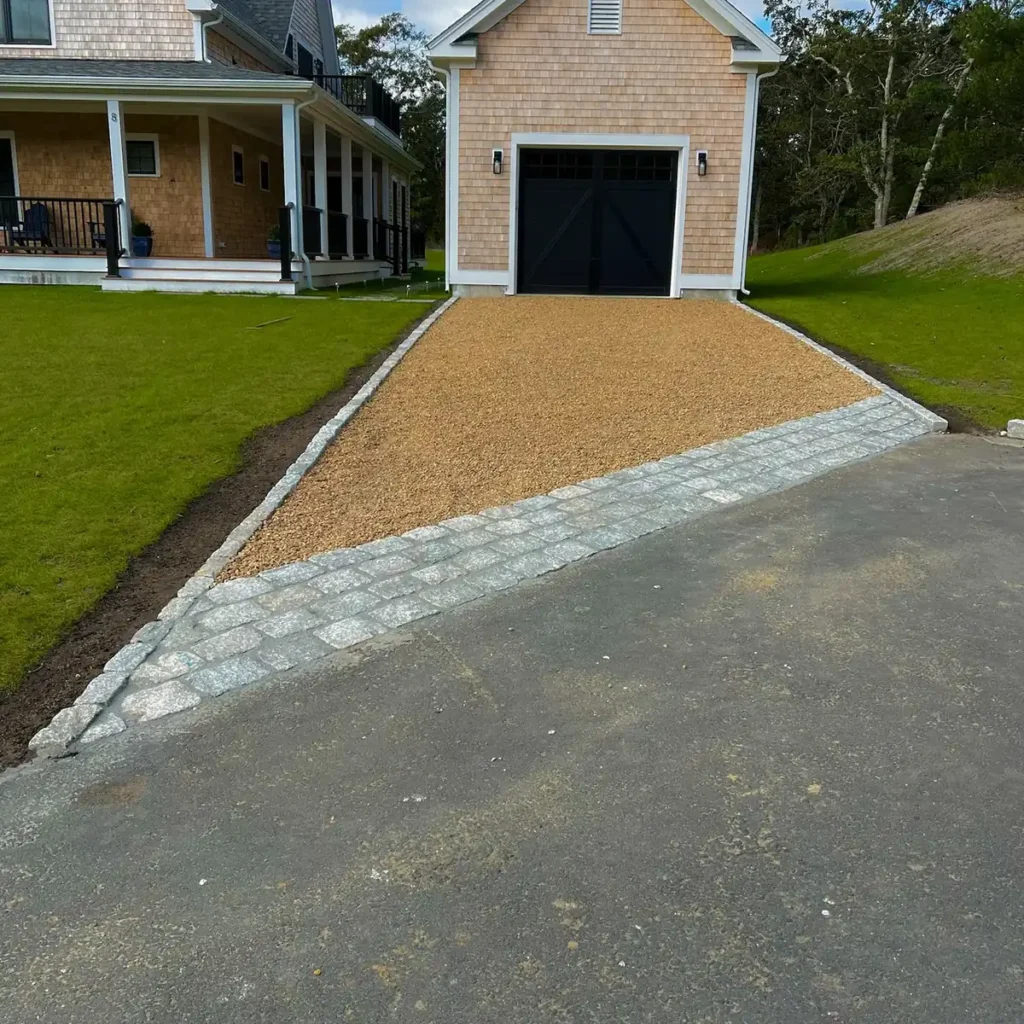
The apron matters more on gravel and shell driveways. Without a firm edge at the road, loose stone migrates into the street and the end of the drive breaks down. A granite apron stops that line.
What Design Choices Matter Most for a Cobblestone Apron?
Five design choices matter most for a cobblestone apron. They are width and depth, the shape of the curb line, the type of granite block, the joint fill, and how the apron meets the driveway behind it. Get those right and the apron looks built-in rather than added on.
Width usually matches the driveway. Some aprons flare at the road so cars can turn in easily.
Depth is the distance from the road back toward the house. A short band of a few courses reads as an edge. A deeper apron reads as a paved entrance.
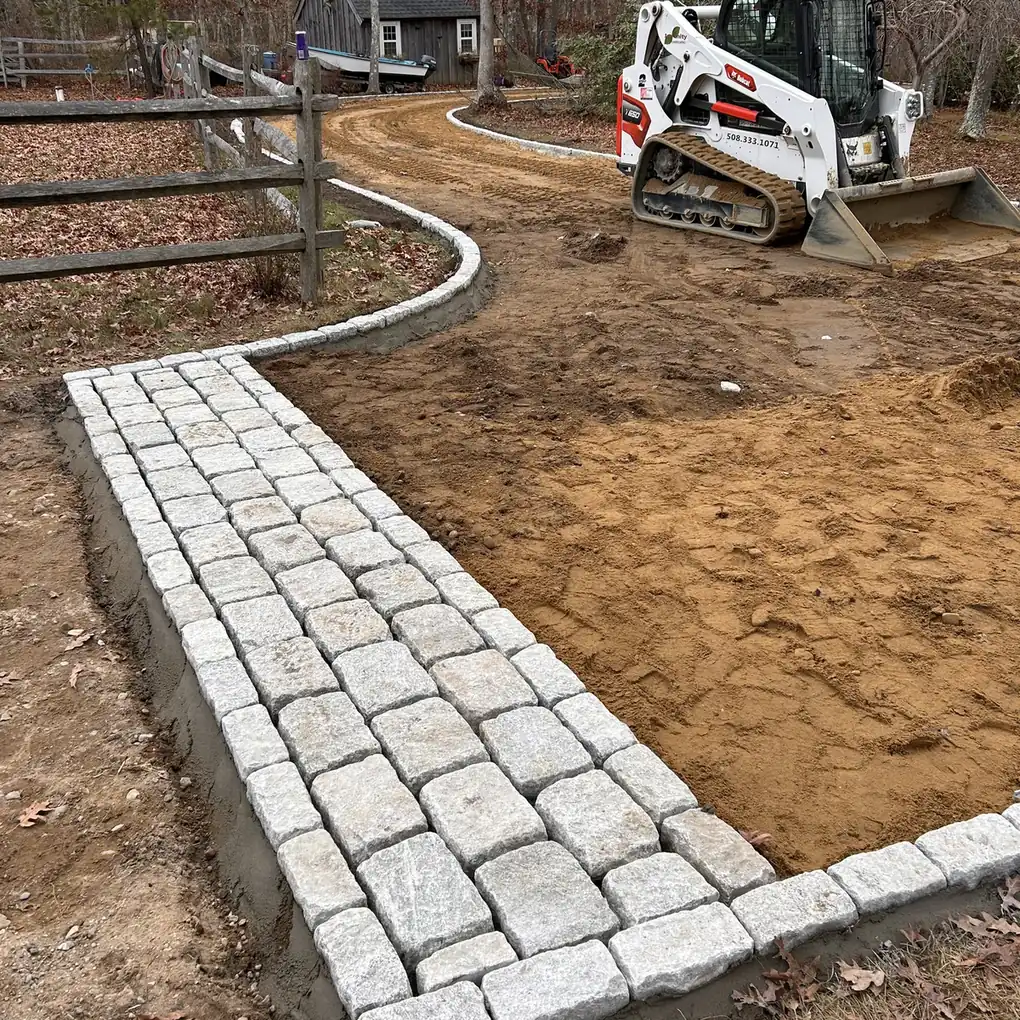
The curb line is the edge along the street. A straight line suits a formal village house. A gentle curve suits a wider drive or a corner lot. Either way, the stone must sit flush with the road surface so tires and plows don’t catch it.
Block type changes the feel. Sawn-top granite rides smoothest. Split or tumbled block looks older and rougher. Reclaimed granite looks like it’s been there for a century, though sorting it to an even height takes more labor.
Joints are the last choice. This Old House recommends permeable joint fills such as polymeric sand, a permeable epoxy grout or washed small gravel, and warns against cement grout because it cracks.
The transition depends on what sits behind the apron:
| Driveway surface | How the apron meets it | Watch for |
|---|---|---|
| Asphalt | Saw-cut straight line, apron flush with the paving | A clean cut so the asphalt edge doesn’t crumble |
| Crushed stone or gravel | Apron acts as the front edge that holds the stone back | Gravel drifting onto the apron; keep the stone level with the block |
| Shell | Same as gravel, with a firm edge row at the back of the apron | Shell washing over the top in heavy rain |
| Concrete | Joint between slab and block with a firm edge | Water collecting at the joint |
How Is a Cobblestone Apron Built to Last?
A cobblestone apron lasts when it sits on a compacted base with a solid restraint along every edge. Its joints should let water drain instead of washing the bedding out. The stone itself rarely fails. Aprons fail because the base was too thin, an edge was left unrestrained, or water had nowhere to go.
Unilock’s driveway guide is direct about the edges: all edges of a paver driveway must be restrained. It also recommends digging 6 to 8 inches wider than the paved area to make room for that restraint.
The usual build sequence looks like this:
- Call Dig Safe. Massachusetts requires notice at least 72 business hours before any excavation. The road edge is where water, gas and cable lines often run.
- Confirm the right-of-way. Ask the town where the public way ends and whether the work needs a permit.
- Cut and remove the old surface. Saw-cut asphalt in a straight line; pull back gravel or shell.
- Excavate. Dig out the apron area plus 6 to 8 inches on the sides for edge restraint.
- Build the base. Place and compact crushed stone in layers until it is firm and sloped to drain.
- Set the edges first. A granite curb row or a concrete edge holds the field stones in place.
- Lay the block. Set the setts on a level bedding layer, staggering joints so no two rows line up.
- Compact and check. Settle the block, check that it is flush with the road and the drive, and fix any high or low spots.
- Fill the joints. Use a permeable fill and let it cure before traffic.
This Old House’s DIY method uses concrete cobble mats on a sand bed, with the bed half an inch deeper than the cobbles. Granite setts are heavier and less uniform, so professional aprons usually go deeper and use a stronger edge. The principles are the same: firm base, tight edges, flush surface.
How Do You Keep an Apron From Heaving or Holding Water?
To keep a cobblestone apron from heaving or holding water, slope it so water runs toward the street. Build it on a free-draining crushed stone base and keep fine soil out from under it. Frost heave needs fine soil, freezing and water together. Remove one of the three and the apron stays flat through winter.
Pavement Interactive explains that frost heave depends on frost-susceptible soil, freezing temperatures and water. Clean sands and gravels are not frost susceptible. Ice forms in fine soils, grows, and pushes the surface up.
Clean sandy ground helps, because clean sand doesn’t heave. The risk comes from what gets mixed in: clay fill, old asphalt grindings or road sand packed with fines. A proper dig removes that and replaces it with clean crushed stone.
Slope is the other half: the apron should drain toward the road or to the side, never back toward a garage. Where a road crowns high, the apron may need a gentle swale or a drain so water doesn’t sit in a low spot at the edge.
Winter road care adds wear. Plows ride the road edge, and road sand settles into the joints. A flush apron with tight joints shrugs off both; a stone set even slightly high gets clipped.
Do You Need Town Approval for a Cobblestone Driveway Apron in Edgartown?
Often, yes. Because the apron usually sits in the public right-of-way, work there may need permission from the town and must meet its standards. In Edgartown’s historic district, a change of material or curb line can also need the Historic District Commission’s review, depending on the town bylaw. Check both before ordering stone.
This Old House advises calling your town’s building or public works department before you start to confirm where the right-of-way ends. In many towns it reaches well past the curb.
The historic district question depends on local law. Massachusetts lets each town decide whether its historic district commission reviews terraces, walks, driveways and similar structures that are substantially at grade. The same section lets a commission issue a certificate of nonapplicability for work outside its review. Edgartown’s bylaw and the commission’s practice decide which applies to your property.
If your house is in or near the village historic district, contact the Edgartown Historic District Commission early. Bring a site sketch, the stone you plan to use and a photo of the existing entrance.
Project Walkthrough: From a Worn Entrance to a Finished Apron
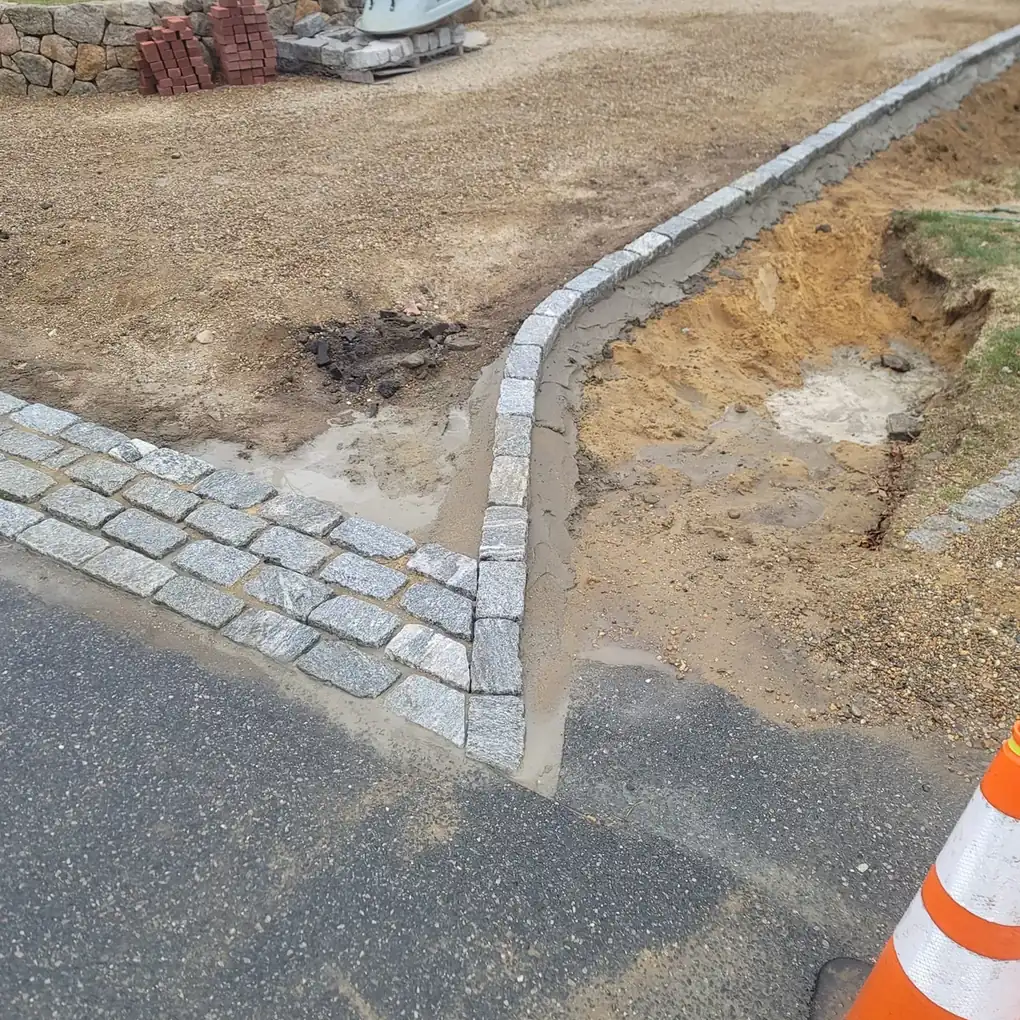
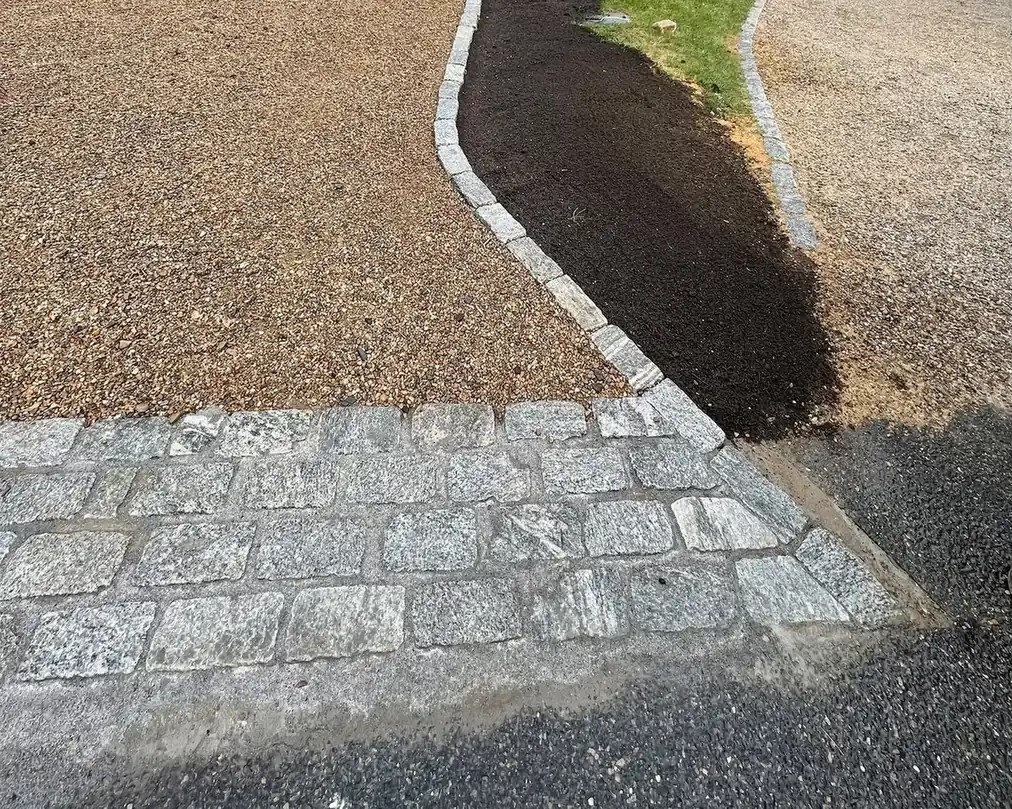
Real projects show the sequence better than a list. The four photos below follow one of Infinity’s own apron jobs on the island, from layout to the finished edge.
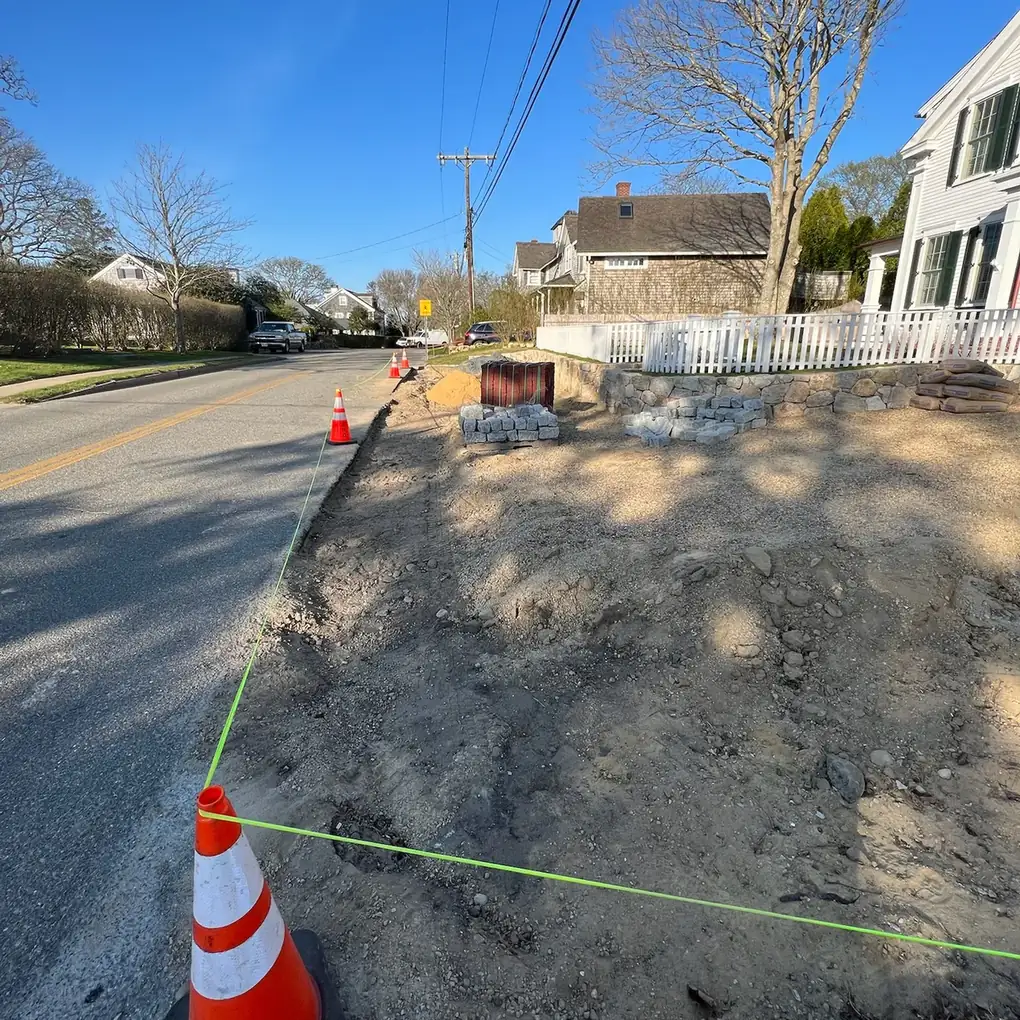
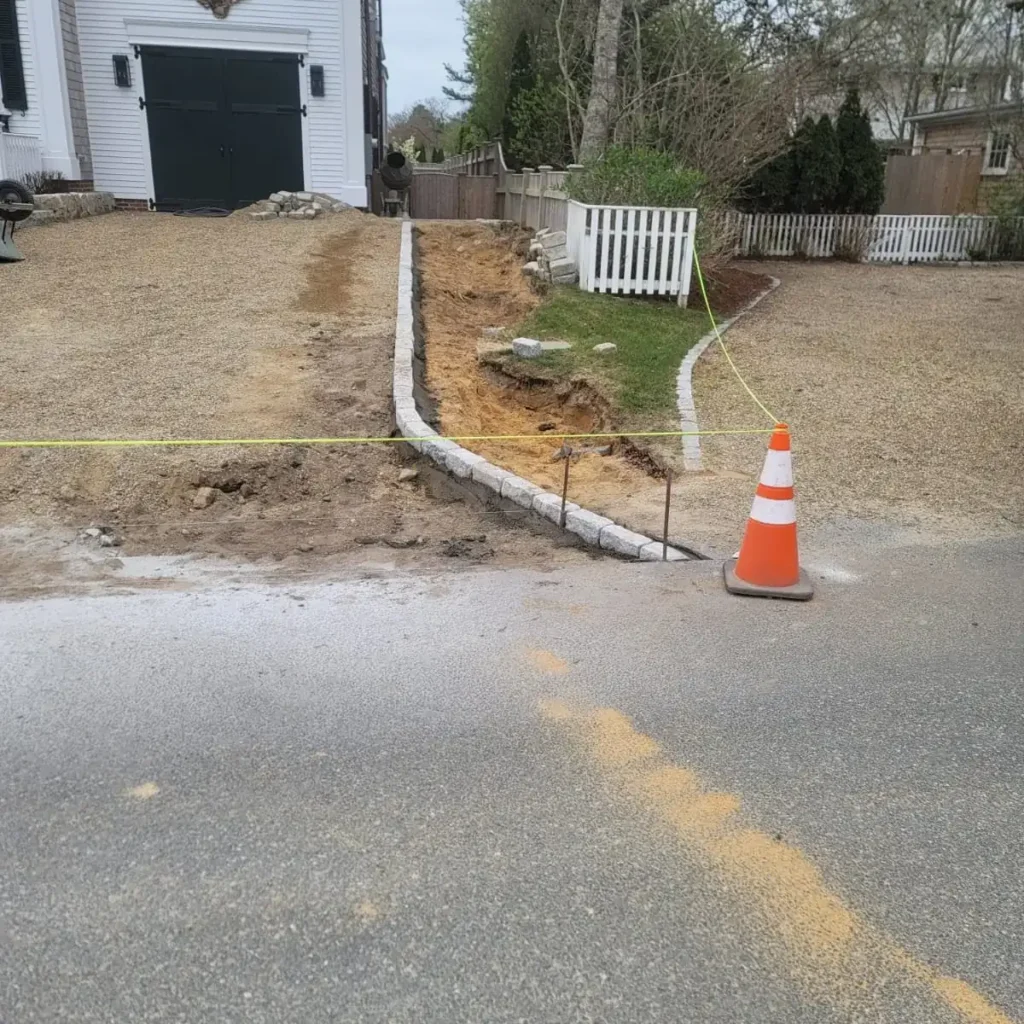
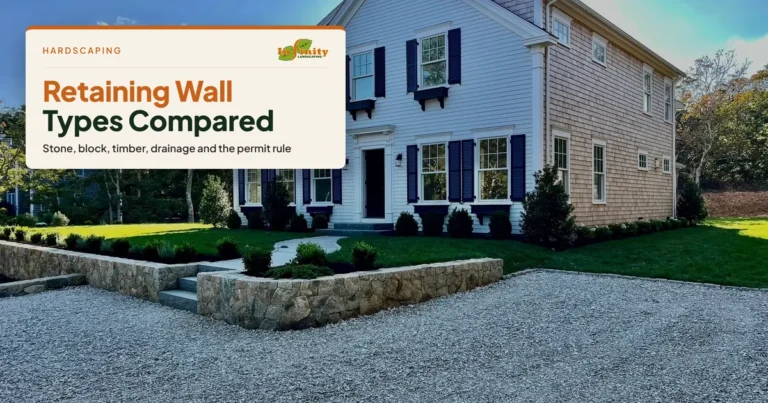
It usually starts with a tired entrance. Broken or sunken block, gravel drifting into the road and a ragged asphalt edge are the common signs. The first step is layout: string lines and cones mark the curb line and the width of the apron, as in the first photo.
Next comes the dig and the edge. Once the base is compacted, the curb row is set to the road line, as in the second photo. That row becomes the anchor for everything else.
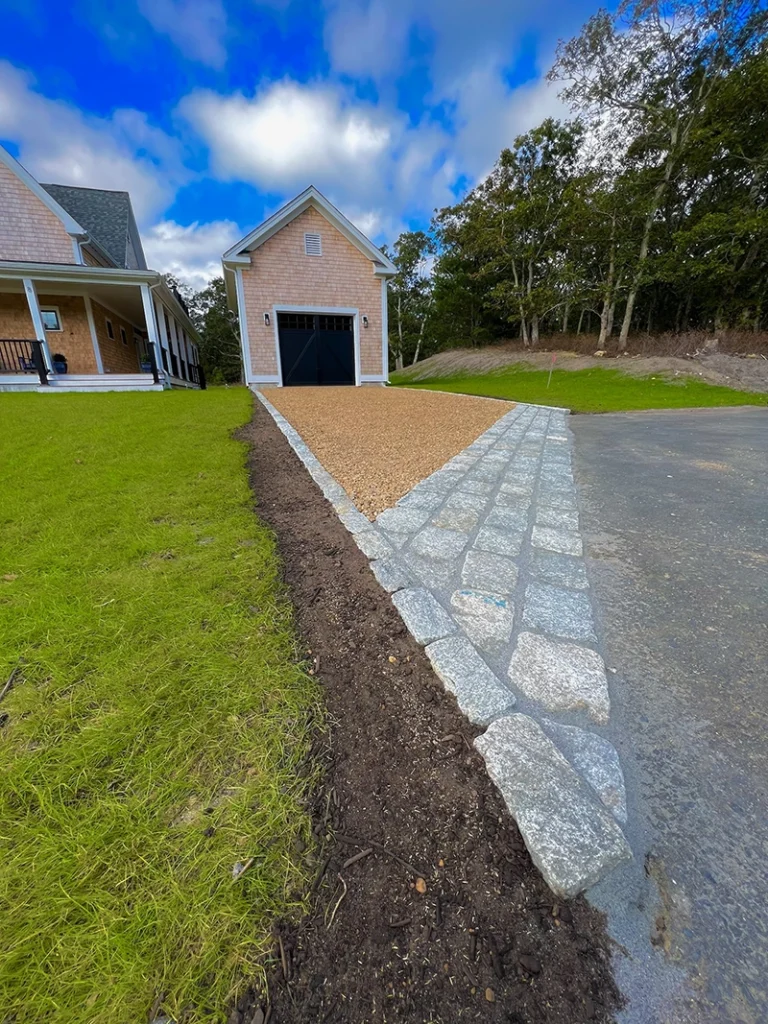
Then the field goes in, course by course, with joints staggered, as in the third photo. On gravel driveways the new stone ends in a straight or curved line where the crushed stone begins, and the gravel is raked level with the block.
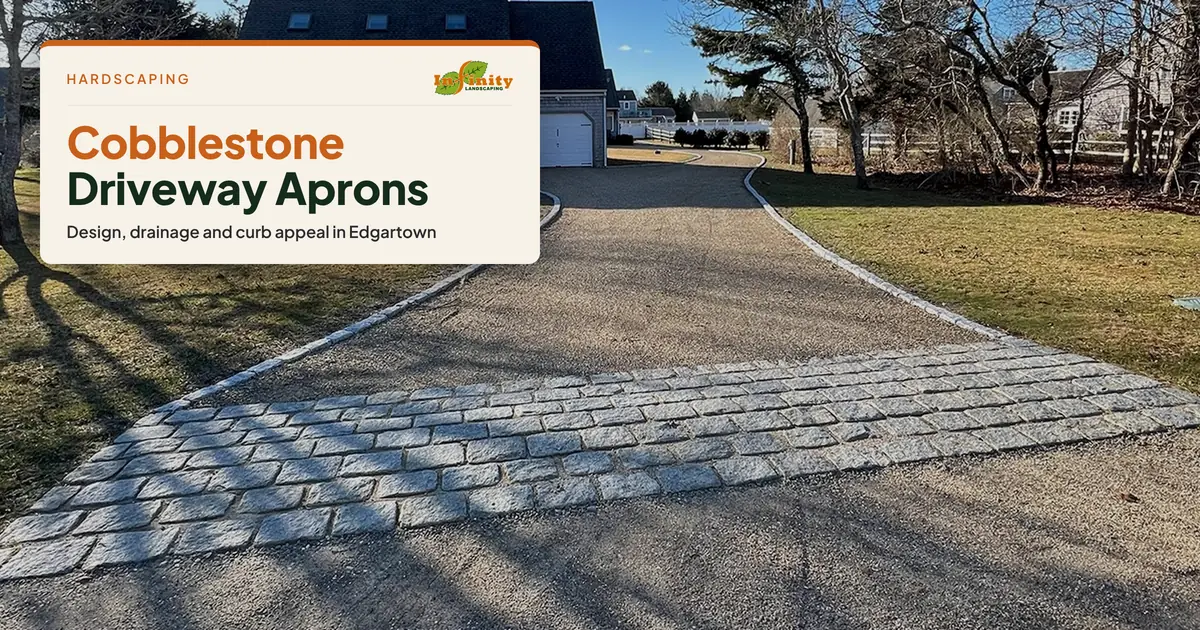
The last photo shows the finished edge: the granite band at the road, the curb row curving along the driveway and a strip of fresh topsoil beside it. The result is an entrance that looks like it belongs to the house. There’s more of this work in our hardscaping portfolio.
Planning an Apron for Your Edgartown Home
A cobblestone apron is a small project with a big effect on how a property looks from the street. It lasts when the base is right, every edge is restrained and water drains to the road.
Three steps get you started. Confirm the right-of-way and any historic district review with the town. Decide on block type and curb line to suit the house. Then plan the transition to your asphalt, gravel or shell drive.
Infinity Landscaping builds cobblestone aprons and driveway edges as part of our hardscaping services for Edgartown homes and across the island. Our landscape design team can plan the planting that frames a new entrance. For the bigger picture, read landscaping vs. hardscaping.
To plan your entrance, request a free quote or call (508) 333-1071.
Frequently Asked Questions
How long does a cobblestone apron last?
Granite is one of the most durable paving stones there is. Setts have paved streets for generations, and some laid in the 19th century are still in use. Whether yours lasts comes down to the base, the edges and the drainage, not the stone.
Do cobblestone aprons need a concrete base?
Not always. A dry-set apron on a thick, compacted crushed stone base with a solid edge restraint works well for most homes. Concrete setting is sometimes used for curb rows or heavy traffic, but cement grout in the joints tends to crack, so permeable joint fills are the safer choice.
Can you add a cobblestone apron to an existing asphalt driveway?
Yes. The end of the asphalt is saw-cut in a straight line and the old paving and base come out. The apron is built in its place, flush with both the driveway and the road. The rest of the driveway stays as it is.
What’s the difference between cobblestone and Belgian block?
Belgian block is a sett: granite quarried or cut to a regular, roughly rectangular shape. A true cobblestone is a naturally rounded stone. Many products sold as cobblestone are really setts, and their flat tops are smoother to drive and walk on.
Can I keep a gravel or shell driveway and just add an apron?
Yes, and it’s one of the best upgrades for a gravel or shell drive. The apron gives a firm edge at the road, keeps loose stone out of the street and makes the entrance look finished. Keep the gravel raked level with the back edge of the block so tires roll on smoothly.