TL;DR: The best deer resistant plants for Martha’s Vineyard also shrug off salt spray and wind. Bayberry, bearberry, inkberry, sweet pepperbush, juniper, little bluestem and seaside goldenrod are rated both ways by Rutgers or the state’s coastal office. Skip arborvitae, yew, hosta and tulips, which deer eat often. In high-deer towns like Chilmark and Aquinnah, fence young plants until they’re established.
Deer resistant plants on Martha’s Vineyard have a harder job than they do on the mainland. The herd is several times the state’s target size. Many yards also get salt spray and steady wind. A plant that passes one test and fails the other still ends up as a bare stem by March.
This guide puts both tests in one place. We matched deer ratings from Rutgers University with salt ratings from the state’s coastal office. Then we sorted the winners by where they grow best.
It’s the same short list our planting design team starts with on every Vineyard job. You’ll also see which popular plants to avoid, and how to protect new beds while they settle in.
Why Are Deer Such a Problem for Martha’s Vineyard Gardens?
The island has more deer than its plants can handle. A drone survey in early 2026 counted 53 deer per square mile across Martha’s Vineyard. The state’s target for the island is 12 to 18. Up-island towns are hit hardest, with Aquinnah at 101 and Chilmark at 85.
Those numbers come from a winter count reported by The Martha’s Vineyard Times. The survey found 4,681 deer over 87.7 square miles, and pressure isn’t even. Oak Bluffs came in at 19 deer per square mile, while homes in Chilmark and Aquinnah face more than four times that.
Weather adds a second filter. The 2023 USDA map puts most of the island in zone 7a, with average winter lows of 0 to 5°F. The Vineyard Gazette reported that Chappaquiddick, eastern Edgartown and Aquinnah moved up to zone 7b. Every plant below is hardy in both zones.
Which Deer Resistant Plants on Martha’s Vineyard Also Handle Salt Spray?
Bayberry, bearberry and sweet fern top the list: each is native, salt tolerant and deer resistant. Inkberry, sweet pepperbush and common juniper also score well on both counts. For perennials and grasses, choose seaside goldenrod, little bluestem, switchgrass and mountain mint.
Rutgers rates garden plants from A (rarely damaged) to D (frequently severely damaged). The state’s coastal office rates natives for salt in its guides to coastal shrubs and groundcovers and coastal grasses and perennials. Where Rutgers is silent, the table uses the state’s deer note.
| Plant | Type | Deer rating | Salt tolerance | Mature size |
|---|---|---|---|---|
| Bayberry (Myrica) | Native shrub | A, rarely damaged | Salt tolerant | 5 to 7 ft |
| Bearberry | Native groundcover | A, rarely damaged | Salt tolerant | 6 to 12 in tall |
| Sweet fern | Native shrub | Deer resistant (state) | Salt tolerant | 2 to 4 ft |
| Common juniper | Native evergreen | A to B | Somewhat, away from spray | Low forms under 4 ft |
| Inkberry | Native evergreen | B, seldom severe | Tolerant, best out of direct spray | 6 to 12 ft |
| Sweet pepperbush (Clethra) | Native shrub | B, seldom severe | Somewhat salt tolerant | 6 to 12 ft |
| Seaside goldenrod | Native perennial | Deer resistant (state) | Salt tolerant | 3 to 5 ft |
| Little bluestem | Native grass | Deer resistant (state) | Somewhat salt tolerant | 18 in to 3 ft |
| Mountain mint | Native perennial | Extremely deer resistant (state) | Somewhat salt tolerant | 2 to 4 ft |
| Switchgrass | Native grass | A, rarely damaged | Salt tolerant | Varies by variety |
No plant is fully deer proof, as Rutgers says plainly. An A rating means deer usually pass it by, not that they never bite.
Front Line, Middle Ground, Near the House: Planting by Exposure
Salt injury depends on distance from the water. Virginia Tech Extension explains that salt spray lands on leaves and buds, then moves into the plant and damages it. Evergreens show the harm fast. Deciduous plants may not show it for months.
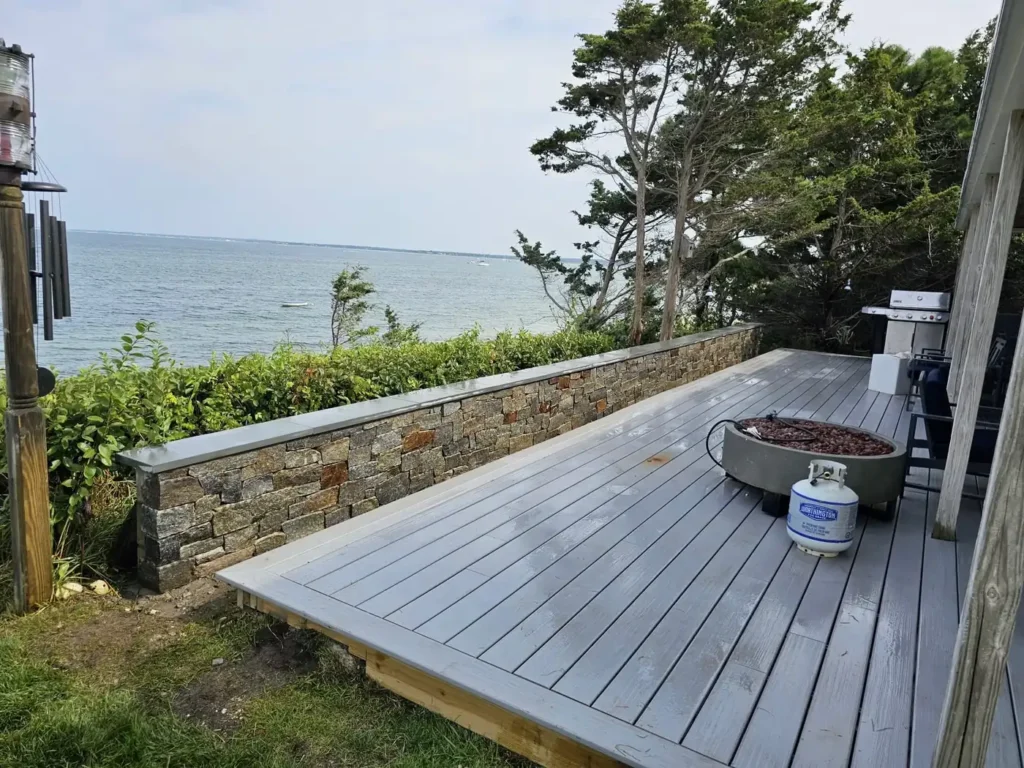
We plan waterfront properties in three bands:
- Front line (facing the water): bayberry, bearberry, sweet fern and seaside goldenrod. All four are salt tolerant and deer resistant, so they can take the full wind.
- Middle ground (behind a wall, hedge or dune): inkberry, sweet pepperbush, juniper, little bluestem and switchgrass. The state notes that inkberry and juniper do best out of direct spray.
- Near the house (sheltered beds): boxwood, lavender, catmint, Russian sage, false indigo (Baptisia) and Pieris. Rutgers rates each one A, and they give you the more finished look many homeowners want by the porch.
Inland lots in West Tisbury or Oak Bluffs can skip the front-line band. There, deer pressure matters more than salt, so sort by the Rutgers letter first.
Are Hydrangeas Deer Resistant?
No. Rutgers rates bigleaf, panicle, smooth and oakleaf hydrangeas C, meaning occasionally severely damaged. Bigleaf types lose the most, since they bloom on last year’s stems and buds eaten in winter take next summer’s flowers. Panicle and smooth types bloom on new growth, so they recover.
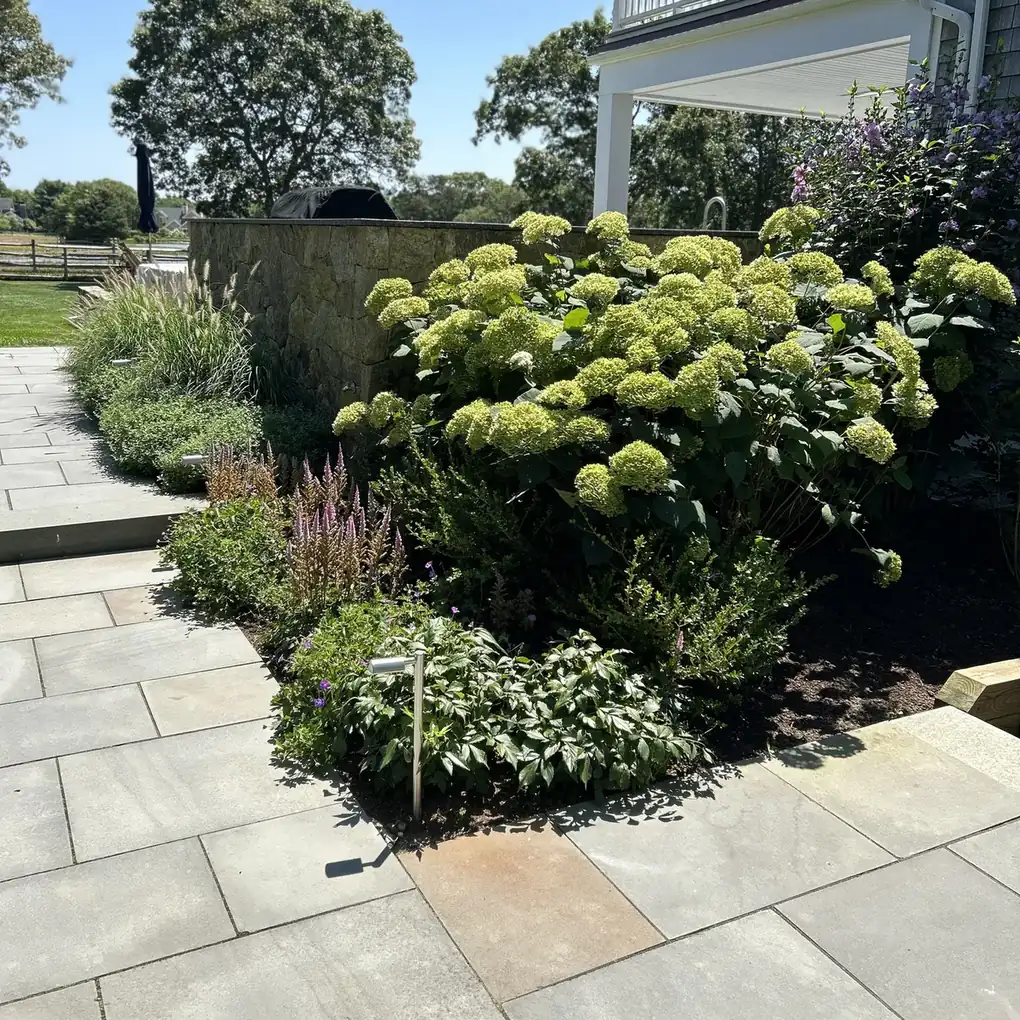
University of Maryland Extension notes that deer browse and hard cold can both kill the flower buds that bigleaf hydrangeas carry through winter. Smooth hydrangeas bloom on the current season’s growth, and panicle types bloom on new wood from mid-July.
Our recommendation is simple. Put panicle or smooth hydrangeas where deer roam, and keep the blue mopheads inside a fence or tight to the house. For shrubs that are already struggling, our shrub care visits include pruning at the right time for each type.
Plants Deer Eat Most on the Vineyard
Some island favorites are simply deer food, and Rutgers rates arborvitae, yew, hosta, tulips and evergreen azaleas D. Rhododendrons and wintercreeper (Euonymus fortunei) fall between C and D.
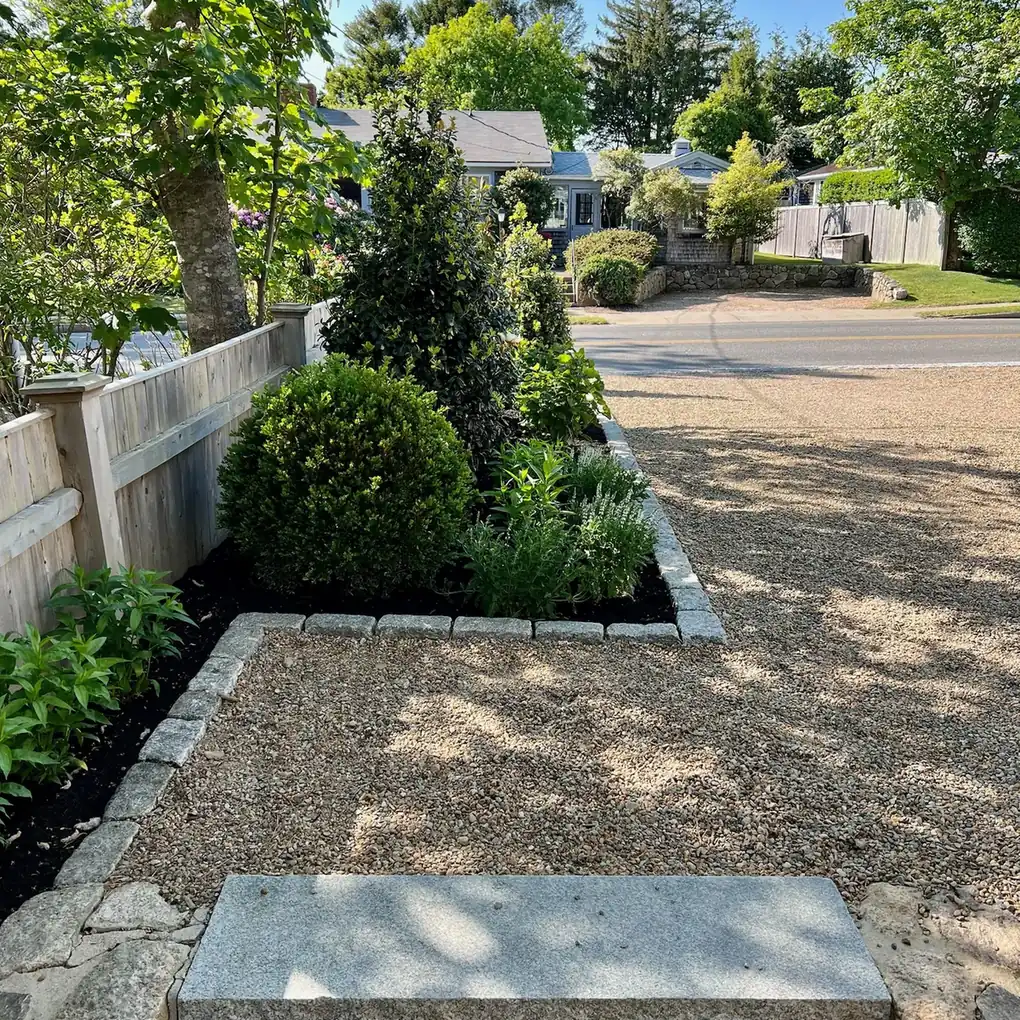
Local gardeners know the pattern. The president of the Martha’s Vineyard Garden Club told Martha’s Vineyard Magazine she never bought another hosta after deer ate hers. A state wildlife biologist gave the same advice in that story: don’t plant the deer’s main food sources.
| Instead of | Deer rating | Try | Deer rating |
|---|---|---|---|
| Yew hedge | D | Boxwood or Pieris | A |
| Evergreen azalea | D | Pieris japonica | A |
| Hosta | D | Catmint or false indigo | A |
| Wintercreeper groundcover | C to D | Bearberry | A |
Screens are the hardest swap. Arborvitae rates D, so tall privacy screening near deer trails needs tougher choices or a fence.
How Do You Protect New Plantings From Deer?
Protect them for the first few seasons, whatever their rating. Hungry deer will eat young shrubs in late winter and early spring without being picky. Wire mesh works for single plants. A full fence needs to be 8 feet tall or more.
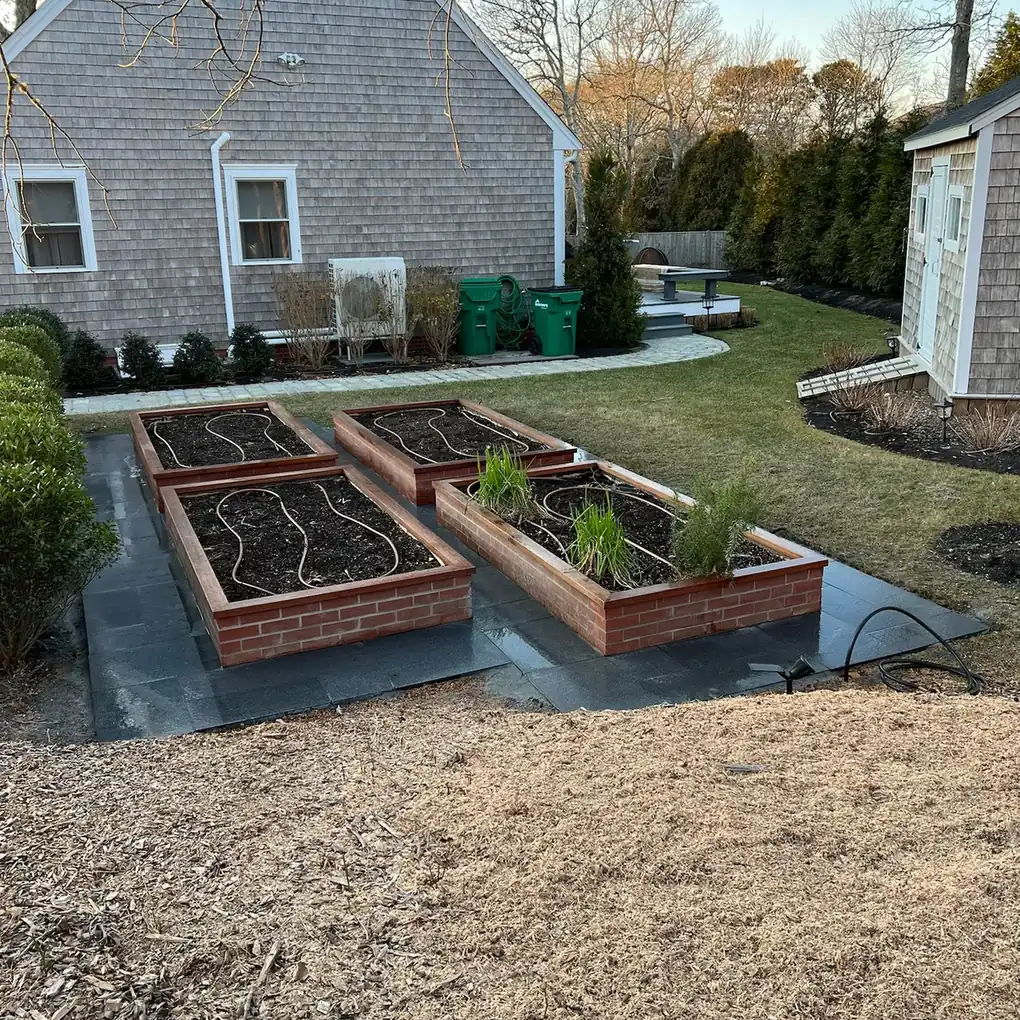
UMass Extension recommends sturdy wire mesh barriers until new plants are established. A young shrub eaten to the ground never gets the chance to prove its rating. Our fall planting guide covers when to plant on the island.
For vegetable beds, roses and hydrangeas, fencing is the only reliable answer. NC Wildlife’s fencing guide says an adult deer can easily jump 7 feet. It calls for 8 feet or more of welded wire or similar strong material for long-term protection. We install deer fencing sized to the property and the herd around it.
Plan a Garden That Deer and Salt Can’t Wreck
A Vineyard garden lasts when the plant list does the work. Start with plants rated A or B by Rutgers that the state also lists as salt tolerant. Sort them by exposure, with the toughest natives on the water side. Save hydrangeas, roses and vegetables for fenced or sheltered spots.
Our designers can build a planting plan that fits your town’s deer numbers and your distance from the water. Request a free quote or call (508) 333-1071, and we’ll help you pick plants that last.
Frequently Asked Questions
What hardiness zone is Martha’s Vineyard?
Most of Martha’s Vineyard is USDA zone 7a, with average winter lows of 0 to 5°F. Chappaquiddick, eastern Edgartown and Aquinnah are zone 7b on the 2023 map, with lows of 5 to 10°F. Pick plants rated for zone 7a or colder to be safe island-wide.
Is rugosa rose a good choice for a Vineyard beach garden?
Rugosa rose is extremely tolerant of sea spray, but it isn’t deer resistant. Rutgers rates it C, occasionally severely damaged, and the state notes it’s native to eastern Asia. Native bayberry, rated A, is a better pick for the water’s edge.
Do deer eat daffodils and tulips?
Deer rarely touch daffodils, which Rutgers rates A, so they’re the safer spring bulb for open beds. Tulips rate D and tend to vanish unless they’re inside a fence or in pots on a deck.
Will deer resistant plants work in Chilmark and Aquinnah?
They help, but expect more browsing than the ratings suggest. The 2026 survey found 85 deer per square mile in Chilmark and 101 in Aquinnah, so even B-rated shrubs can take damage there. Stick to A-rated plants in open areas and fence anything you’d hate to lose.
What’s the best deer resistant evergreen for a privacy screen?
Inkberry is a strong choice. It grows 6 to 12 feet tall, rates B with Rutgers and handles salt away from direct spray. Juniper, rated A to B, is another option. Avoid arborvitae and yew, which Rutgers rates D.