TL;DR: Fall planting on Martha’s Vineyard works best from mid-August to mid-October. Get evergreens like arborvitae in by late September, perennials 4 to 6 weeks before frost, and save oaks, birches, magnolias, rhododendrons and yews for spring. Island soil is sandy and drains fast, so water deeply once or twice a week until the ground freezes, and mulch 2 to 4 inches deep.
Fall planting on Martha’s Vineyard gives new trees, shrubs and perennials something spring can’t: warm soil, cool air and a full season to root before the July heat. Most of the island sits in USDA zone 7a, and Octobers stay mild. That window closes faster than people expect, though, and a few popular plants do better if you wait.
This guide covers what to plant now, what to hold for April, and how much water new plantings need in sandy island soil. It also covers how to get evergreens through their first windy winter. The dates and figures come from UMass Extension, Massachusetts Coastal Zone Management and NOAA climate data for Edgartown, applied to the conditions we work in every day across the Vineyard.
If you’d rather hand it off, our planting design team can plan and plant it for you.
When Is the Best Time for Fall Planting on Martha’s Vineyard?
Plant trees and shrubs between mid-August and mid-October, and aim to finish by Columbus Day weekend. That gives roots at least six weeks to settle before the ground freezes. Evergreens need the earlier end of that window, and perennials should go in 4 to 6 weeks before the first frost.
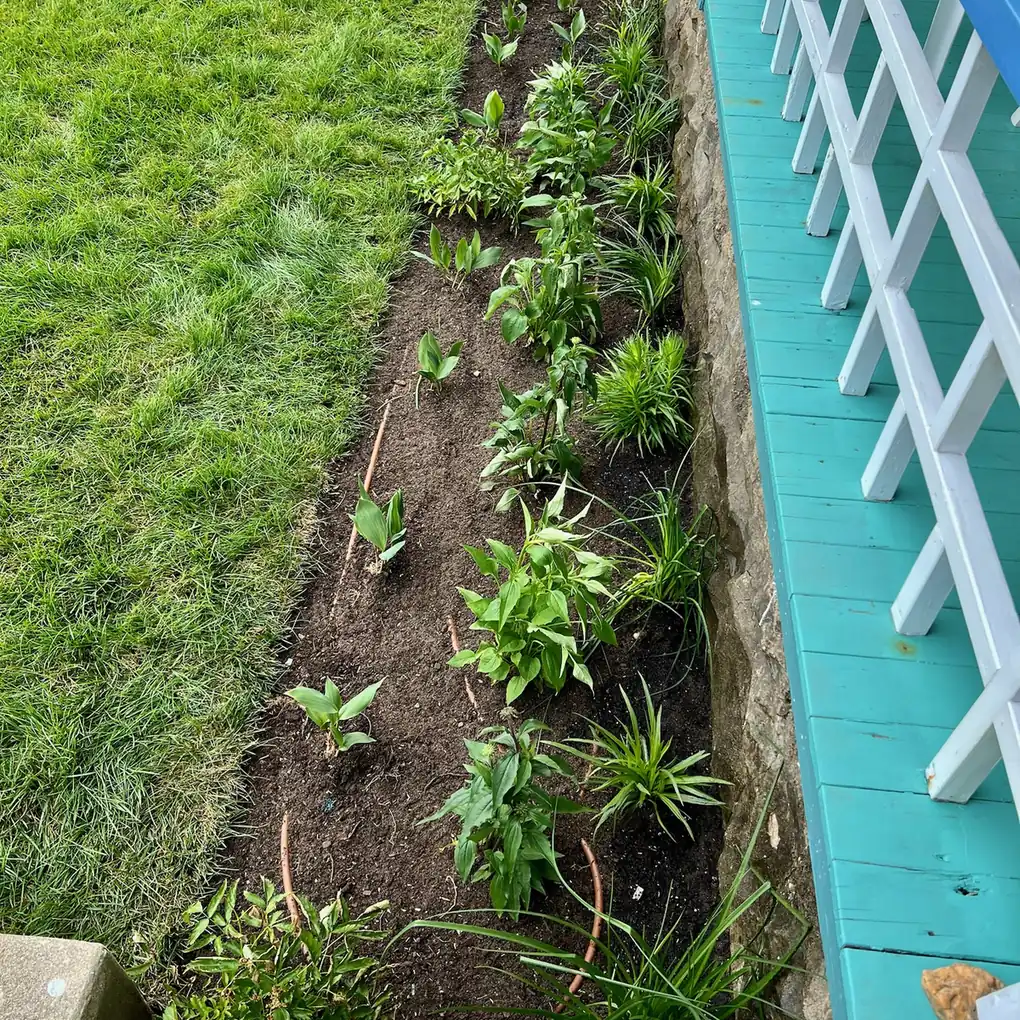
Those dates come from UMass Extension’s fall planting fact sheet, and the state’s coastal program agrees. Its guide to fall planting on the coast puts the window at roughly six weeks before the first hard frost, generally September and October. Evergreens should be in before mid-October. Deciduous plants can go in any time the ground is still workable.
The island buys you a little time. NOAA averages for Edgartown show October highs of 64°F and lows of 48°F, and November still averages a 54°F high.
| What you’re planting | Plant by (Martha’s Vineyard) | Why |
|---|---|---|
| Deciduous trees and shrubs | Mid-October, while the ground is workable | Roots keep growing until the soil freezes |
| Pines and spruces | End of September | They root well only while the soil is still warm |
| Arborvitae and other container-grown conifers | Late September, mid-October at the latest | Winter wind dries needles while roots are frozen |
| Perennials | 4 to 6 weeks before first frost | Crowns need time to anchor before freeze-up |
| Oak, birch, beech, magnolia, rhododendron, yew | Wait for April or May | Extension guides list these as spring plants |
Why Is Fall a Good Time to Plant Trees and Shrubs?
Fall planting gives roots a head start. Rain is usually plentiful, heat stress is low, and warm soil lets roots keep growing until the ground freezes. Plants go into their first summer with a bigger root system, so they handle heat and dry spells far better than spring plantings.
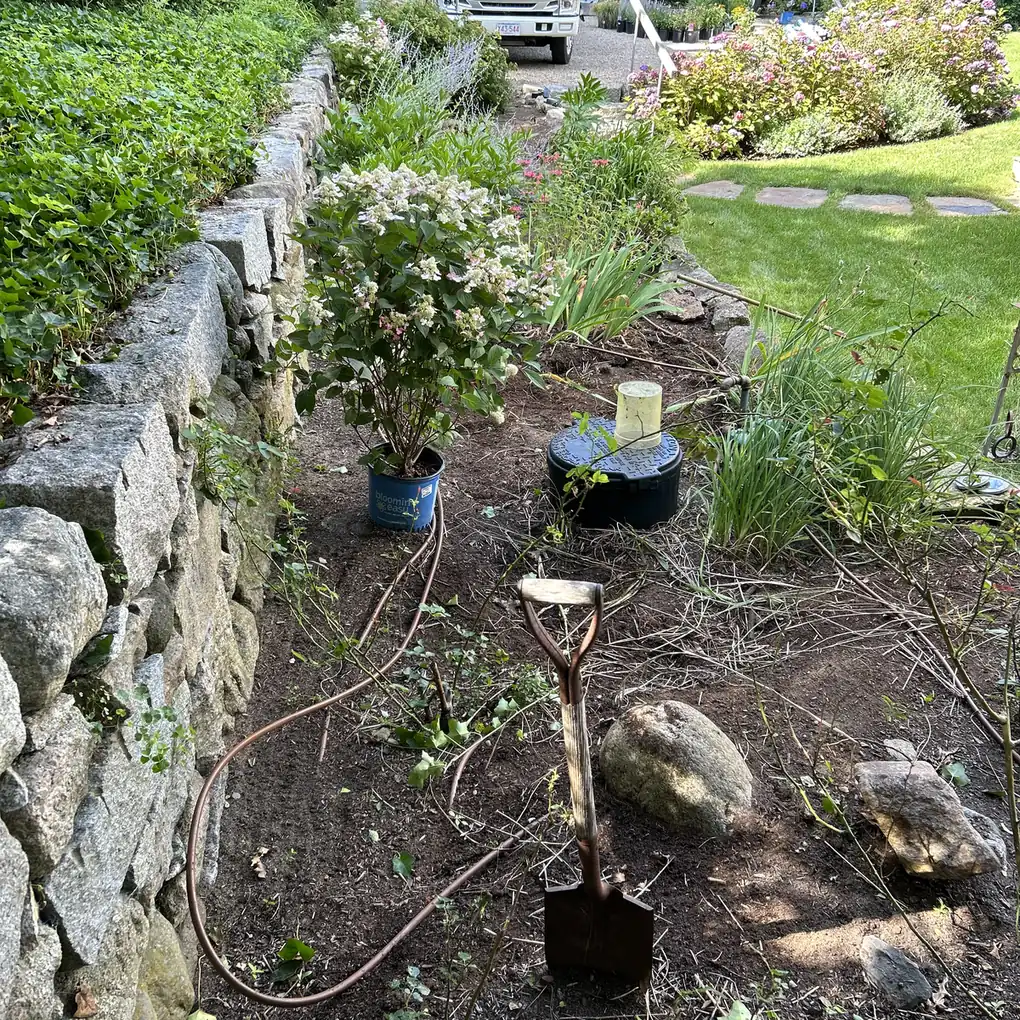
Those advantages come from the state’s coastal program, and on the Vineyard they matter even more. Summer here brings dry weeks, salty wind and sandy ground that holds little water.
A shrub planted in May has only a few weeks to root before all of that hits. One planted in late September gets the whole fall, plus early spring, to spread its roots into the sandy subsoil and reach deeper moisture.
Seasonal homeowners gain the most. A fall planting is settled and filling in by Memorial Day. It won’t be wilting through its first July while you’re just arriving. Fall planting also pairs well with fall cleanup, since beds are already open and edged.
Which Trees and Shrubs Should Wait Until Spring?
Oak, birch, beech, magnolia, cherry and tulip trees are better planted in spring, so hold them for April or May. UMass also lists broadleaf evergreens such as rhododendron and narrow-leaf evergreens such as yew as spring plants. Most maples, lindens, crabapples, lilacs and witch hazel handle fall planting well.
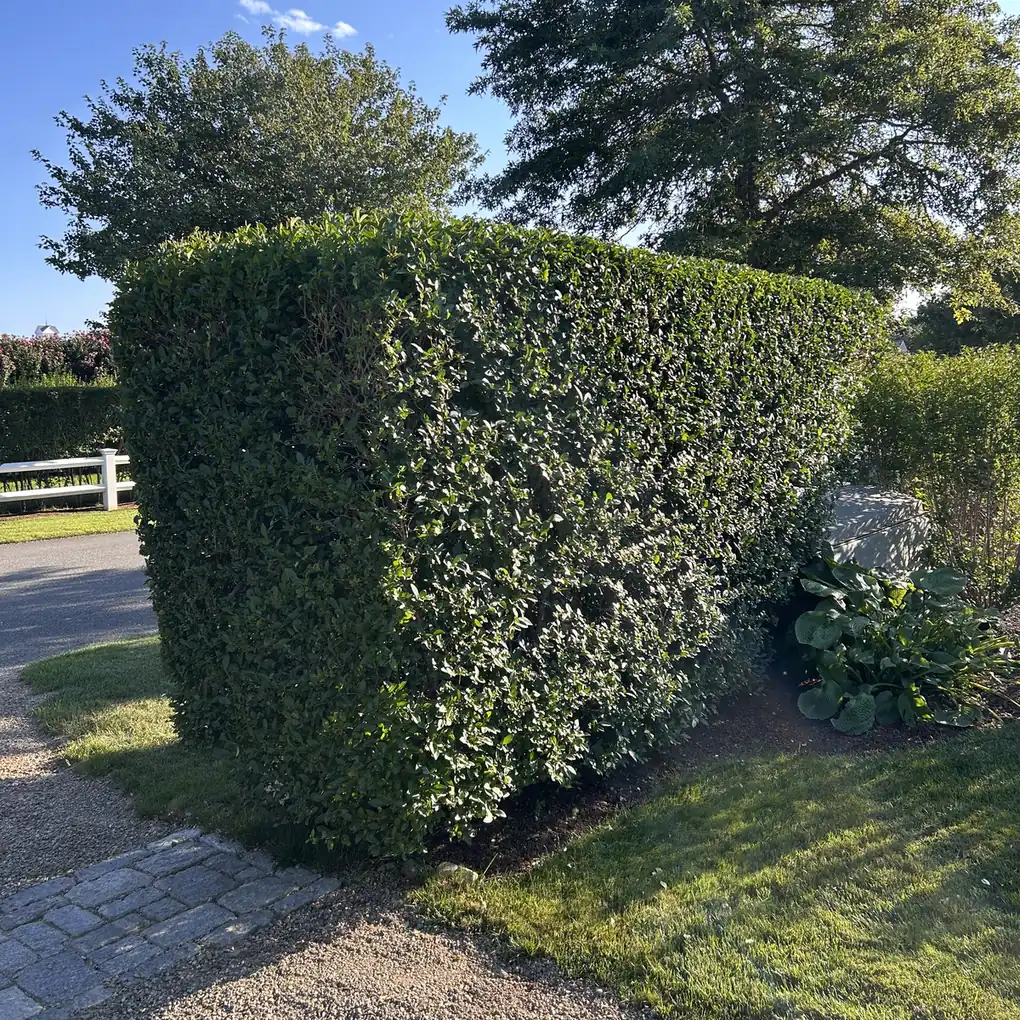
The species list comes from University of Wisconsin horticulture’s fall planting guide, which calls these “fall hazard” trees. The evergreen advice is from UMass, which adds one exception. Pines and spruces do fine in fall if they’re planted before the end of September while the soil is warm.
Arborvitae is the plant we get asked about most, because it’s the backbone of privacy screening on the island. Our rule is simple. Container-grown arborvitae can go in through late September if you’ll water it and screen it from the wind. Larger balled-and-burlapped trees for an exposed Chilmark or Aquinnah lot wait for April.
Red maple sits on both sides of the line. Wisconsin puts it on the spring list, while the state’s coastal program recommends it for fall planting. We plant small container maples in September and move big specimen trees to spring.
What Grows Well on the Island: Salt, Wind and Sandy Soil
Most of the Vineyard is USDA zone 7a, and the 2023 hardiness map moved Chappaquiddick, eastern Edgartown and all of Aquinnah up to 7b. Hardiness is rarely the problem, though. Salt spray, steady wind and fast-draining soil decide what thrives.
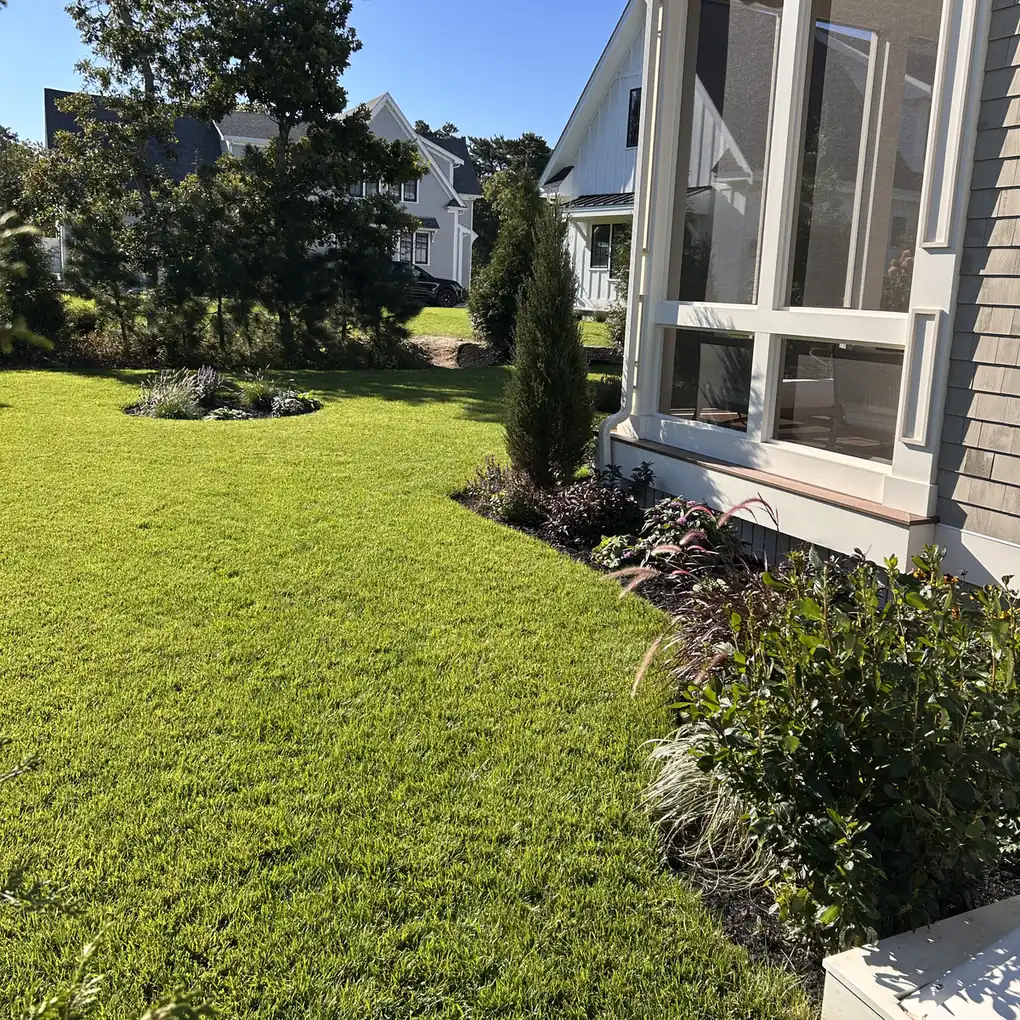
For waterfront and exposed lots, the state’s coastal program names ten tough fall-planting picks. Our short list from it:
- Windbreak: eastern red cedar grows 10 to 40 feet and is recommended as windbreak material.
- Mid-size shrubs: arrowwood viburnum grows 5 to 9 feet tall and wide, and beach plum reaches 4 to 7 feet.
- Groundcover: bearberry stays 6 to 12 inches high and spreads 3 to 6 feet on sandy banks.
- Grasses: switchgrass holds sandy banks and dunes against erosion.
Island natives do double duty. The Plant Local MV guide, put together by local conservation groups and growers, lists 20 top natives, including little bluestem, inkberry, sweet pepperbush, American holly and beetlebung. It also recommends spring or fall as the best planting seasons. Deer pressure is heavy on much of the island, so we match plant choices to each property during garden bed installation.
How Much Should You Water New Plantings in Sandy Soil?
Give new trees and shrubs about 1 inch of water a week, which is roughly 10 gallons twice a week for a 20 to 24 inch root ball. Keep going until the ground freezes. Sandy island soil drains fast, so check 12 inches down and water more often in dry spells.
Those figures come from UMass Extension’s guide to watering new plantings. Water whenever less than an inch of rain has fallen in 5 to 7 days. Probe the soil with a spade and feel for moisture at root depth before you decide.
Island soil is the reason this matters. The USDA describes soils like the Eastchop series, found on Martha’s Vineyard, Nantucket and Cape Cod, as sandy glacial outwash that is excessively drained. Water moves through fast. A fall shower drains past a new root ball in West Tisbury sand much faster than it would in heavier inland soil.
Trees need a longer commitment. The state forestry program’s new tree care fact sheet suggests 15 gallons once a week for a tree about 1.5 inches thick. Increase it for bigger trees and keep it up for the first two years, from thaw to freeze.
Planting It Right: Depth, Mulch and a Windbreak
A good hole matters as much as timing. UMass recommends a bowl-shaped hole 2 to 3 times wider than the root ball. Dig only as deep as the distance from the trunk flare to the bottom of the root mass.
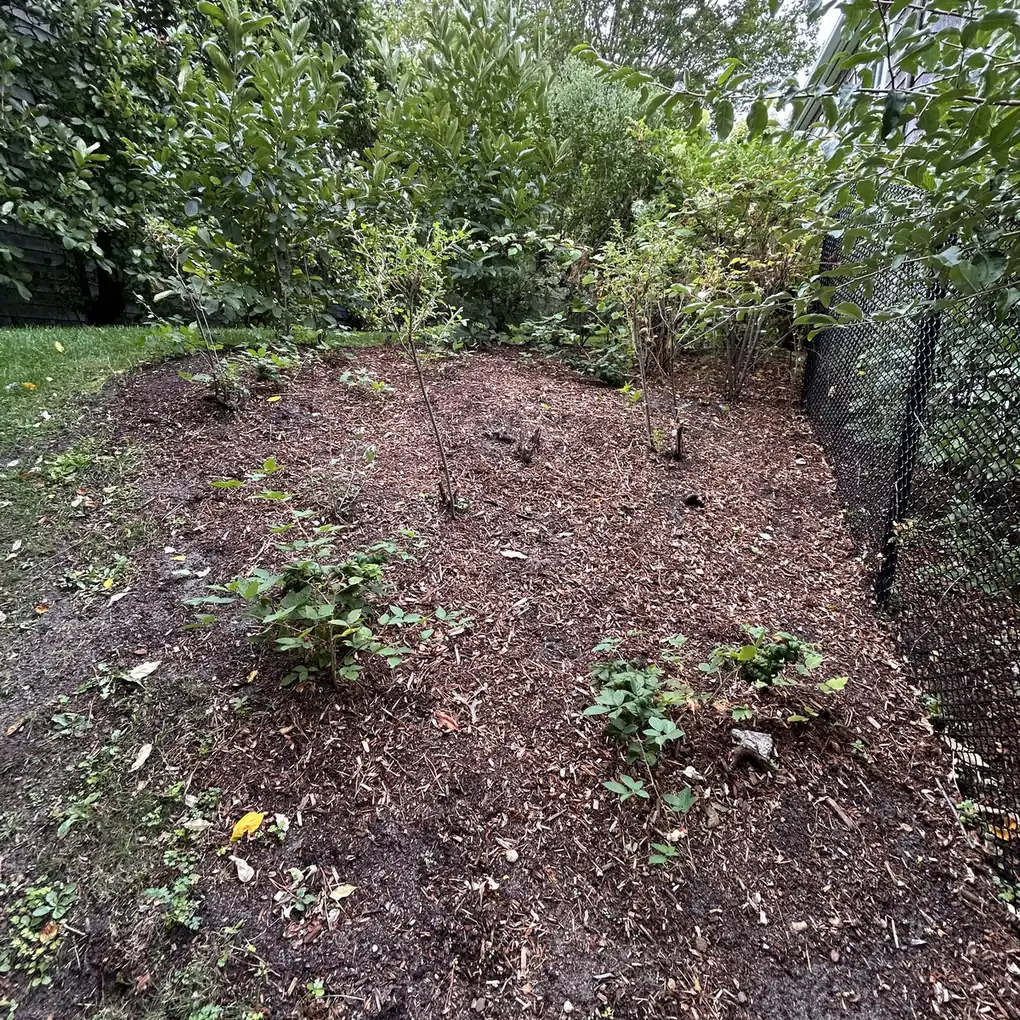
Set the flare at soil level or 1 to 2 inches above it. Water halfway through backfilling, let it drain, then finish and water again.
Mulch comes next. The state’s tree care sheet calls for 2 to 4 inches, kept at least 3 inches from the trunk. Its easy rule: 3 inches deep, 3 inches from the trunk, in a 3-foot ring. Our mulching service uses the same spacing.
New evergreens face one more risk in their first winter. University of Minnesota Extension explains that winter sun and wind pull water from needles while the roots sit in frozen soil. Their fix is a burlap barrier on the south, southwest and windward sides, left open at the top. On a north-shore lot or an open field in Chilmark, that screen can save an arborvitae hedge.
Plan Your Fall Planting Now
Three things decide how a fall planting does on the Vineyard. Plant early, especially evergreens, and choose plants that handle salt, wind and sandy soil, then water deeply until the ground freezes. Do those well and your new trees and shrubs head into next summer with roots already established.
Our crews are planting across the island through mid-October, and we can match plants to your property’s exposure, soil and deer pressure. Request a free quote or call (508) 333-1071 to get your fall planting on the schedule.
Frequently Asked Questions
Is October too late to plant on Martha’s Vineyard?
Early October is fine for deciduous trees, shrubs and perennials, and deciduous plants can go in as long as the ground is workable. Evergreens should be planted before mid-October. Island Octobers are mild, with average lows around 48°F in Edgartown, which gives new roots useful growing time.
Can I plant hydrangeas in the fall?
Yes. Hydrangeas are deciduous shrubs and root well when planted in September or early October. Don’t prune bigleaf hydrangeas in fall, though. UConn Extension notes they carry next year’s flower buds on old wood, so fall pruning removes the blooms.
Should I divide perennials in the fall?
Divide spring-blooming perennials in autumn and late-season bloomers in spring. UConn’s home garden team suggests cutting perennials back to 6 inches before moving them, then giving them about an inch of water a week until the ground freezes.
Do anti-desiccant sprays protect new evergreens over winter?
Not reliably. University of Minnesota Extension says anti-desiccant sprays are not effective for protecting evergreen foliage. A burlap screen on the windward side and deep watering before the ground freezes do more good.
What if my house is closed for the winter?
Plan for watering before you leave. New plantings still need about an inch of water a week until freeze-up, even after your irrigation is shut down. A caretaker, a scheduled watering visit or an earlier planting date in September keeps a new planting from drying out while you’re away.