TL;DR: Organic vs traditional lawn care is a choice between feeding the soil slowly and feeding the grass fast. Compost, natural fertilizer and good mowing build the soil in an organic plan over two or three seasons. Traditional care uses synthetic fertilizer and pesticides for quicker results. On sandy Martha’s Vineyard soil, island fertilizer rules apply to both. So the right plan starts with a soil test, not a label.
Organic vs traditional lawn care sounds like a fight with one winner. On Martha’s Vineyard it’s closer to a toolbox. Good island lawns often borrow from both. They’re built on soil, timing and the right grass more than on any one product.
Both sides oversell. Some organic fans promise a perfect lawn with no tradeoffs. On the other side, some spray programs treat every lawn the same, no matter the soil or how close the pond is.
This guide lays out the tradeoffs plainly. You’ll see the two side by side, how sandy soil and local rules change things, and how to switch if organic fits.
Infinity Landscaping, a Martha’s Vineyard lawn care and landscaping company, builds lawn programs from Edgartown to Aquinnah. We don’t think one approach is right for every lawn, and here’s why.
What Is the Difference Between Traditional and Organic Lawn Care?
Traditional lawn care uses synthetic fertilizer and pesticides to feed grass and kill weeds and insects fast. Organic lawn care uses compost, natural fertilizer and good habits such as high mowing and aeration. The goal is healthier soil, so the grass can handle stress and pests on its own.
Ohio State University Extension’s fact sheet on natural organic lawn care draws the same line, calling the first approach conventional care: synthetic products put down by an owner or a service. Organic care adds compost and other natural materials and leans on prevention.
The real gap is speed. A synthetic product is made to green up grass fast. Organic materials release food slowly, so the lawn changes over months, not days.
Neither one skips the basics: both need the right grass, the right mowing height, deep watering and good timing. A lawn that fails on those will fail under either plan.
Organic vs. Traditional Lawn Care Compared
This table compares the two on the points that matter most for an island lawn. There are no prices here. The last row shows what moves the budget instead.
| Criteria | Organic lawn care | Traditional lawn care |
|---|---|---|
| Main inputs | Compost, natural fertilizer, seed, good mowing and watering | Synthetic fertilizer, weed killer, insect control |
| How food is released | Slowly, over weeks and months | Fast, unless a slow-release form is used |
| Speed of results | Slower; often two to three seasons | Faster and more even |
| Effect on soil | Adds organic matter and feeds soil life | Feeds the grass; adds little to the soil |
| Leaching risk on sand | Lower at the right rate and time | Higher with fast-release nitrogen |
| Weed control | Thick turf, high mowing, corn gluten, hand pulling | Weed killers that work fast |
| Disease tools | Prevention only | Fungicides when needed |
| What you must accept | Some weeds and thin spots for a while | Less soil building |
| What moves the budget | Compost, labor, number of visits | Product, number of visits, repairs |
For most Vineyard lawns we recommend a soil-first plan. Test the soil. Use slow-release nitrogen. Build organic matter with compost and aeration, and keep standard tools for a real problem only.
How Do Natural Lawn Care Methods Compare in Effectiveness to Chemical Ones?
Natural lawn care methods can grow a healthy, even lawn, but they work more slowly than chemical ones. Ohio State Extension says organic results take longer and some weeds and insects should be expected. Chemical programs fix what you see faster, but they do little for the soil underneath.
There’s a research gap too. Ohio State notes that little science has tested fully organic lawn programs as a whole. Many single steps, such as core aeration, high mowing and compost, are well studied.
Weed control shows the timeline best. In the same fact sheet, corn gluten used before weeds sprout gave about 50 to 60 percent weed control in year one. That rose to 80 to 85 percent in year two and over 90 percent by year three. A weed killer can do in weeks what that plan does in three seasons.
Disease is the weak spot. Ohio State says there are no natural organic fungicides that are useful on lawns right now. Good mowing, watering and air flow have to do the work.
Why Sandy Vineyard Soil Changes the Answer
Much of Martha’s Vineyard sits on sand, and sand changes how fertilizer acts. UMass Extension’s guide to coastal planting and sandy soils calls these soils dry and low in food and organic matter.
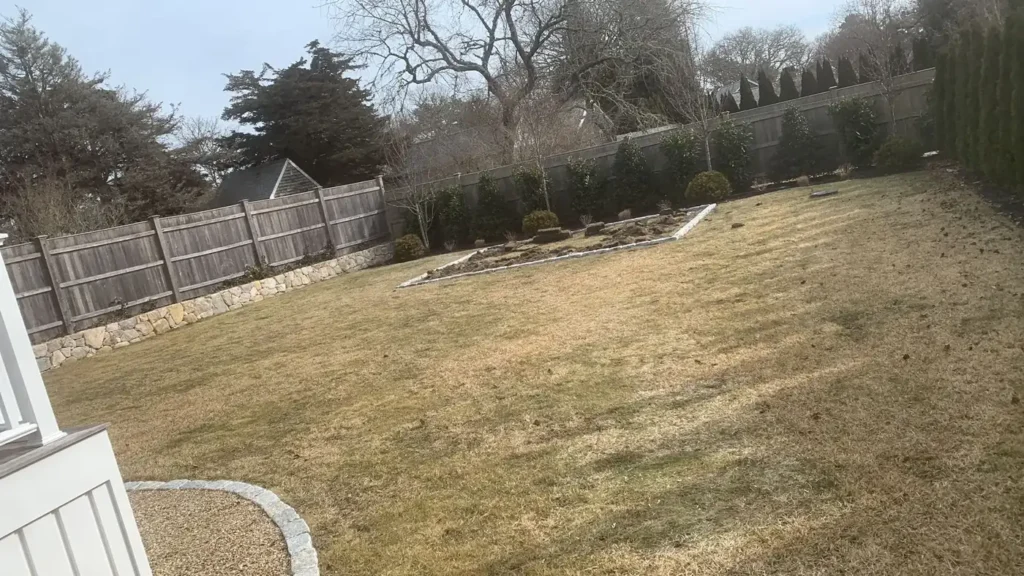
That matters for nitrogen. Water runs through sand fast. Fast-release nitrogen can wash down with it before the grass takes it up, so UMass suggests slow-release nitrogen for lawns that are already growing.
Grass choice helps as well. The same guide favors fine fescues, such as Chewings, hard and creeping fescue, over Kentucky bluegrass on these sites. Fine fescues handle dry spells better and need less nitrogen.
Organic matter is the long-term fix. Compost helps sand hold water and food. For new lawns on poor, sandy ground, UMass calls for at least 6 inches of topsoil. It also advises deep, less frequent watering that wets the soil about 6 inches down.
Island Fertilizer Rules and Pond Water Quality
Martha’s Vineyard has its own lawn fertilizer rules, and they apply to both kinds of care. The island’s Boards of Health finished a lawn fertilizer and nitrogen reduction initiative in 2014. It set up training, licenses for pros, rules for practice and enforcement.
The reason is the ponds. When the rules came before the Martha’s Vineyard Commission, speakers said lawn fertilizer makes up 5 to 15 percent of the controllable nitrogen in island ponds. Too much nitrogen feeds algae. It hurts water used for shellfishing and swimming.
Those 2014 standards were clear:
- Less than 3.0 pounds of nitrogen per 1,000 square feet of lawn each year.
- At least half of the nitrogen in slow-release form.
- No fertilizer from mid-November to April 15.
- At least four weeks between feedings.
- No phosphorus unless a soil test shows a need.
These limits count nitrogen and phosphorus, not labels. Organic fertilizer still holds nitrogen, so an organic plan has to fit the same caps and calendar. Rules can change, so check the current version with your town Board of Health before spring.
Lots near ponds need extra care. The rules set tighter limits in wetland buffer zones. A strip of unfed planting at the water’s edge also helps catch runoff.
When Does Organic Lawn Care Make Sense, and When Doesn’t It?
Organic lawn care makes the most sense when the lawn is in fair shape, the soil is sandy, the property is near a pond, and the owner can wait for results. A traditional or mixed plan fits better when a lawn needs fast repair, has heavy weeds or disease, or must look even by a set date.
Use this table to match the plan to the property:
| Your situation | Best fit | Why |
|---|---|---|
| Lawn near a pond, marsh or coastal bank | Organic or a light mixed plan | Less nitrogen reaches the water |
| Sandy down-island lot that dries fast | Soil-first organic | Compost helps sand hold water and food |
| More weeds than grass | Start over, then either plan | Ohio State advises renovating when weeds take over |
| Rental or event lawn needed by a date | Traditional or mixed | Faster, more even green-up |
| Kids and pets play on it daily | Organic or mixed | Fewer synthetic pesticide sprays |
| Seasonal home with no one watching | Mixed plan with smart irrigation | Fewer surprises while you’re off-island |
The mixed row is worth a second look. Many good island lawns are mostly organic, with a slow-release feeding and a spot treatment held in reserve. That avoids the all-or-nothing trap.
How Do You Switch a Lawn to Organic Care?
To switch a lawn to organic care, test the soil and decide whether to keep or redo the turf. Then build organic matter with core aeration and compost. Mow high, leave clippings, overseed thin spots and feed with slow-release natural fertilizer in the allowed season. Expect the change to take two to three seasons.
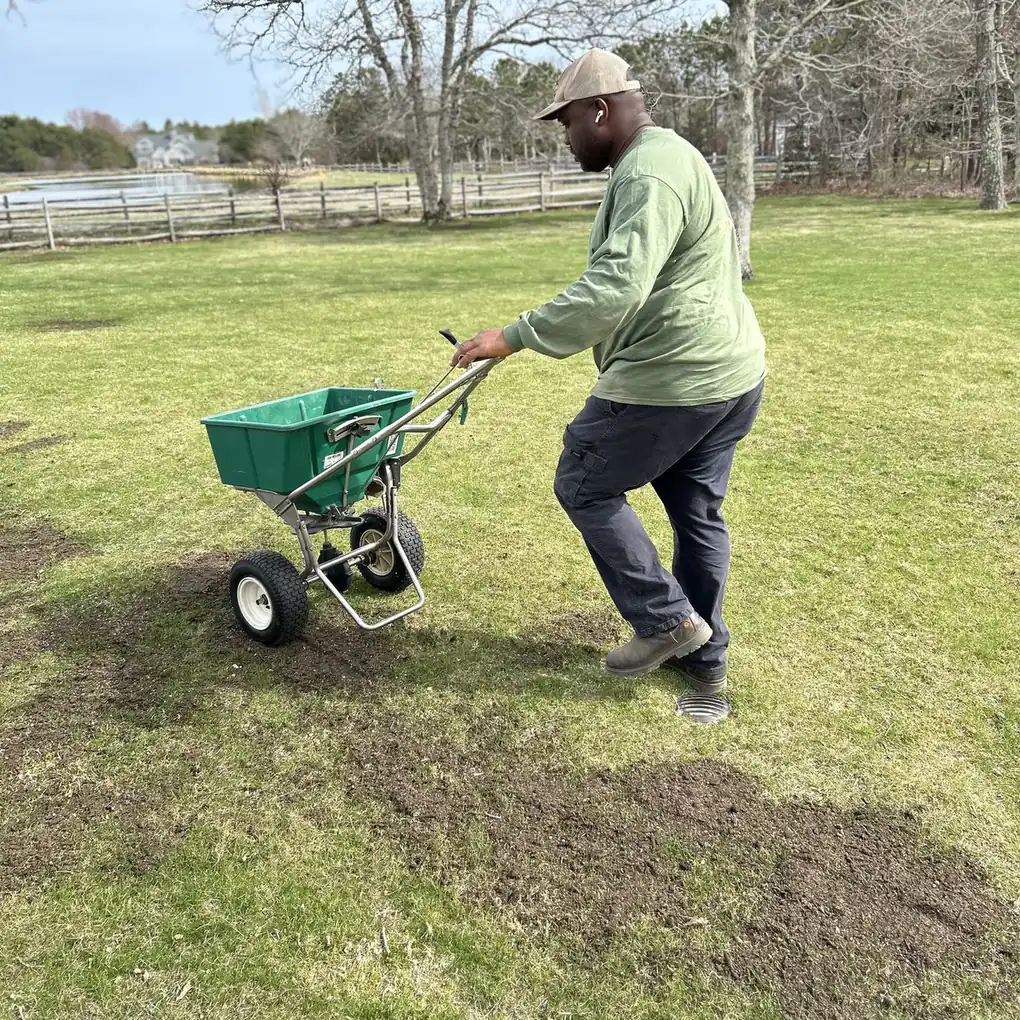
Here is a realistic first year for a Vineyard lawn:
- Early spring: send a soil sample to a lab. You’ll learn pH, nutrient levels and, if you ask, organic matter.
- Spring check: judge the turf honestly. Ohio State advises starting over when weeds or poor grasses take over.
- Late April to June: mow at 2.5 to 3 inches. Never cut more than a third of the blade at once.
- Summer: water deeply and less often. Let the lawn slow down in heat instead of pushing it with fertilizer.
- Late August to September: core aerate, spread about a quarter inch of compost, and overseed thin spots.
- September: feed with slow-release natural fertilizer within island limits, guided by the soil test.
- October to mid-November: keep mowing while the grass grows. Chop fallen leaves into the lawn.
- Years two and three: repeat aeration and compost. Expect fewer weeds each season.
Our lawn fertilization service follows the same soil-test-first approach. Fall is the main window for this work, as our fall lawn care guide explains.
Where Do Aeration, Top Dressing and Irrigation Fit Either Program?
Aeration, top dressing and smart irrigation help organic and traditional lawns alike. Core aeration loosens packed soil so water and air reach roots. Compost top dressing adds organic matter to sand. Smart irrigation waters deeply and only when needed, which keeps food from washing through fast-draining island soil.
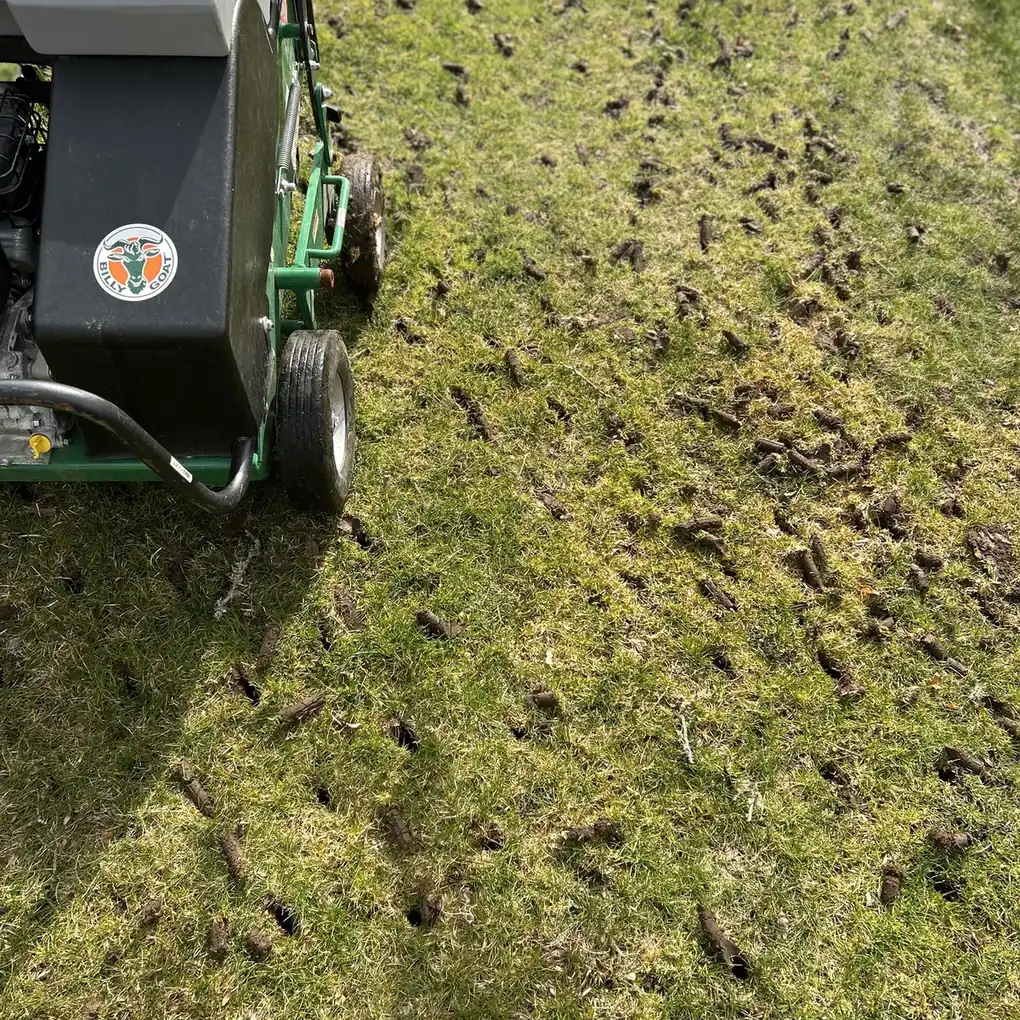
Most fall plans center on aeration and overseeding. Ohio State says to pull real soil cores, about nine per square foot, rather than poke holes with spikes. Spikes don’t loosen soil the same way.
Organic matter goes in with top dressing. Spread right after aeration, compost falls into the holes instead of sitting on top.
Watering is the quiet factor. Light daily watering keeps roots shallow and flushes food through sand. Smart irrigation controllers adjust to the weather, which matters most at seasonal homes where no one is there after a storm.
Choosing a Lawn Program for Your Property
Organic and traditional lawn care both grow grass. The difference is how fast, how evenly, and what happens to the soil and the water downhill.
Three steps make the choice easier. Test the soil first. Respect the island’s fertilizer limits, whatever products you use. Pick the plan that fits your lawn, your timeline and your distance to the nearest pond.
Our team builds lawn care programs for Vineyard properties and can run them while you’re off-island. For the bigger picture of yard projects, see our guide to landscaping vs. hardscaping. Request a free quote or call (508) 333-1071.
Frequently Asked Questions
Is organic lawn care worth it?
Organic lawn care is worth it if you care about soil and water and can wait two to three seasons for full results. It’s a weaker fit if you need an even lawn fast or fight heavy disease, since organic disease tools are limited. Many Vineyard owners do best with a mostly organic, soil-first mix.
How do organic lawn fertilizer mixes compare to conventional brands?
Compared with synthetic mixes, organic fertilizers release nitrogen more slowly and add some organic matter, but they’re bulky. Ohio State notes that you need more pounds of an organic product to supply the same nitrogen. Read labels closely, because some products sold as natural also contain synthetic fertilizer.
Can I fertilize my lawn in November on Martha’s Vineyard?
Not after mid-November, because the island standards presented in 2014 bar lawn fertilizer from mid-November to April 15, organic or not. Plan the last feeding for September or October, and confirm the current dates with your town Board of Health.
Should I bag my grass clippings?
No, leave them on the lawn, since Ohio State reports that clippings can supply up to 30 percent of a lawn’s nitrogen for the season and don’t cause thatch. Mow often enough that clippings stay short and spread evenly.
Is organic lawn care better for Vineyard ponds?
It can be, but the amount and timing of nitrogen matter more than the label. Organic fertilizer put down heavily or right before rain can still reach groundwater. Slow-release nitrogen, low yearly totals and an unfed strip by the water protect ponds under any plan.
Can you combine organic and traditional lawn care?
Yes, and many island lawns do best that way. A mixed plan builds soil with compost, aeration and slow-release feeding. It then uses a targeted standard treatment only for a specific problem, so you keep the soil benefits without giving up every tool.