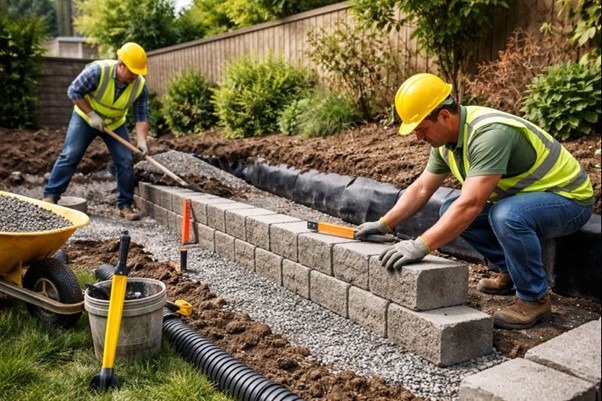
A retaining wall is a strong structure built to hold soil in place. It helps keep dirt from sliding down a hill or washing away when it rains. Building one of these walls takes careful planning and hard work. Understanding the retaining wall installation process helps people know how a yard can go from a sloped mess to a beautiful, flat space. The process starts with a plan to make sure the wall is safe and stays standing for a long time.
Why a Wall is Important
Many yards have hills that make it hard to grow grass or play games. A wall creates a flat area that looks nice and works better. It also protects the ground from moving too much. When a wall is built correctly, it acts like a shield for the land. Knowing the retaining wall installation steps is the best way to make sure the project is done right from the very beginning to the very end.
Planning the Project
Before any digging starts, a plan must be made. This plan shows how tall the wall will be and where it will go. It is important to check the dirt to see if it is strong enough to hold a wall. This part of the retaining wall installation for homeowners is very helpful because it explains why some walls are made of big blocks, and others are made of flat stones. Planning ensures that water has a place to go so it does not push against the wall and break it.
Digging the Trench
Once the plan is ready, the ground must be prepared. A deep trench is dug into the earth where the wall will sit. This hole is very important because it serves as the foundation for the wall. A professional retaining wall installation company knows that if the bottom is not deep enough, the wall might tip over. The trench is usually filled with crushed rocks that are packed down very tightly to make a flat, hard floor for the first row of blocks.
Building the Base
The first row of the wall is called the base course. This is the most important part of the whole job. Every block or stone in this row must be perfectly level. If the first row is crooked, the whole wall will be crooked. For a residential retaining wall installation, workers use special tools to make sure everything is straight. They also put a pipe behind this row to let extra water drain away so the wall stays dry and strong.
Adding More Rows
After the base is perfect, more rows are added on top. Each new row is usually set back just a little bit toward the hill. This helps the wall lean into the dirt it is holding back. If the project uses heavy materials, a concrete retaining wall installation might be the best choice. Concrete blocks are very strong and can be stacked high to hold back a lot of heavy soil. Each block is placed carefully to make sure there are no big gaps.
Choosing the Right Look
Some people want their wall to look very natural, like it grew right out of the ground. In these cases, a stone retaining wall installation is a popular pick. Natural stones come in many different shapes and sizes. They fit together like a giant puzzle. Even though they look different than concrete, the steps to build them are very similar. The goal is always to make sure the wall is solid and cannot be moved by the wind or rain.
Finishing the Wall
The last step is to fill the space behind the wall with gravel and then top it with soil. This is called backfilling. The gravel lets water flow down to the drain pipe. Then, flat “cap” stones are glued to the top of the wall to make it look finished. After everything is cleaned up, the yard looks brand new and much more organized.
Helpful Tips for the Great Wall
- Always call before digging to make sure there are no pipes in the ground.
- Use a level on every single stone to keep the wall straight.
- Make sure there is a way for water to get out from behind the wall.
- Pack the dirt down tightly so the wall does not move later.
- Pick colors that match the house or the garden.
Get Started With Your Project
If a yard needs a new look or a strong wall to hold back a hill, it is time to call the experts. Infinity Landscaping Inc helps make yards look beautiful and stay safe with expert building skills. Reach out today to start planning a project that will last for many years.
Frequently Asked Questions
Q1: How does retaining wall installation work?
It works by digging a trench, filling it with gravel, and stacking heavy blocks or stones. The wall is built to lean slightly against the hill to stay strong.
Q2: What is the process of installing a retaining wall?
The process starts with planning and digging. Then, a flat base is made. Blocks are stacked one by one, and rocks are placed behind them to help water drain away.
Q3: What homeowners should know about retaining walls?
Homeowners should know that walls need a good drain so they don’t fall. It is also important to pick materials that look good with the rest of the house.
Q4: How long does retaining wall installation take?
Most walls take a few days to a week to finish. Big walls or very rainy weather can make the job take a little longer.
Q5: What is required to install a retaining wall?
It requires strong materials like stone or concrete, gravel for drainage, and special tools to make sure the wall is level and straight.
Q6: Do retaining walls need permits?
In many places, a permit is needed if the wall is taller than four feet. It is always best to check with the local city office before starting.
Q7: What is the best foundation for a retaining wall?
The best foundation is a trench filled with tightly packed crushed stone. This gives the wall a hard, flat surface to sit on so it does not sink.