

Patios for everyday outdoor living
The main stone terrace, seen from above.
See the finished detailsBluestone, granite and paver patios built to hold their level through coastal winters, salt air and heavy summer use. Every patio starts with a base sized for the island's sandy soils, then the stone you will actually see.
Patio installation on Martha's Vineyard means bluestone, granite, fieldstone or concrete pavers set over a compacted gravel base that drains through the island's sandy soil and resists frost heave. Most residential patios take two to four weeks to build. Infinity designs and installs them with its own crew in all six island towns and quotes each one after a site visit.
Documented work from a complete landscape installation on Martha’s Vineyard. Follow the project to see how these spaces connect.
The main stone terrace, seen from above.
See the finished details
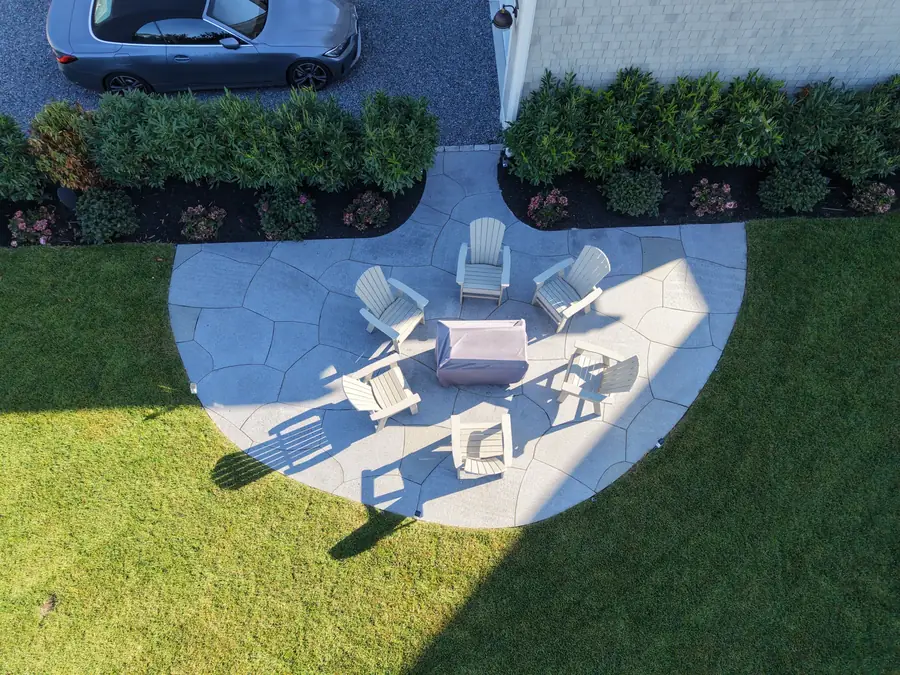
The custom outline and stone layout are visible from above.
See the finished detailsThe most common choice for Vineyard patios, and a good one: dense, strong and well suited to freeze and thaw. Natural cleft bluestone keeps the stone's split texture and grips well when wet. Thermal bluestone has a heat-treated, flat surface that reads more formal. Full-color bluestone mixes blue with lilac, tan and rust tones for a warmer look.
Harder than bluestone and slightly more expensive for similar sizes. We recommend it where the patio takes heavy furniture, rolling equipment or constant traffic, such as entries and main dining areas, and for steps and coping.
A good match for cottage properties and informal garden areas where the patio should read as part of the landscape. The stones need careful setting so they sit level, with joints tight enough for a heel but open enough to drain.
Reliable, cost effective and available in many shapes and colors. Quality pavers over a proper base perform well here. Lower-grade pavers from discount suppliers tend to flake at the surface after a few winters.
Beautiful in photos, but we don't recommend them outdoors on the island. Both are porous, take on water and can flake when it freezes.

Before any stone is ordered, the layout has to match how the space will be used. That means confirming:
Three recent patios, each shaped by a different site. Photos are from our own crews, taken during and after the work.
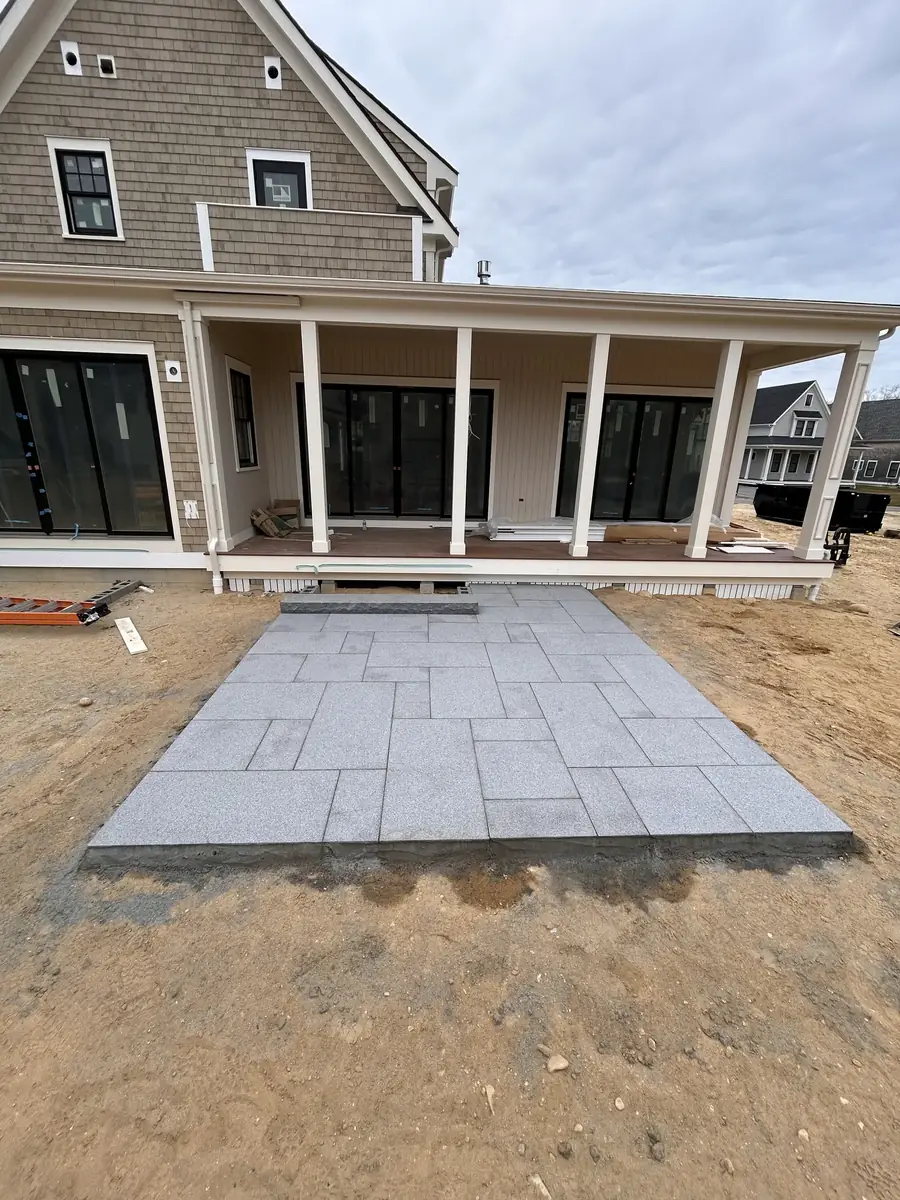
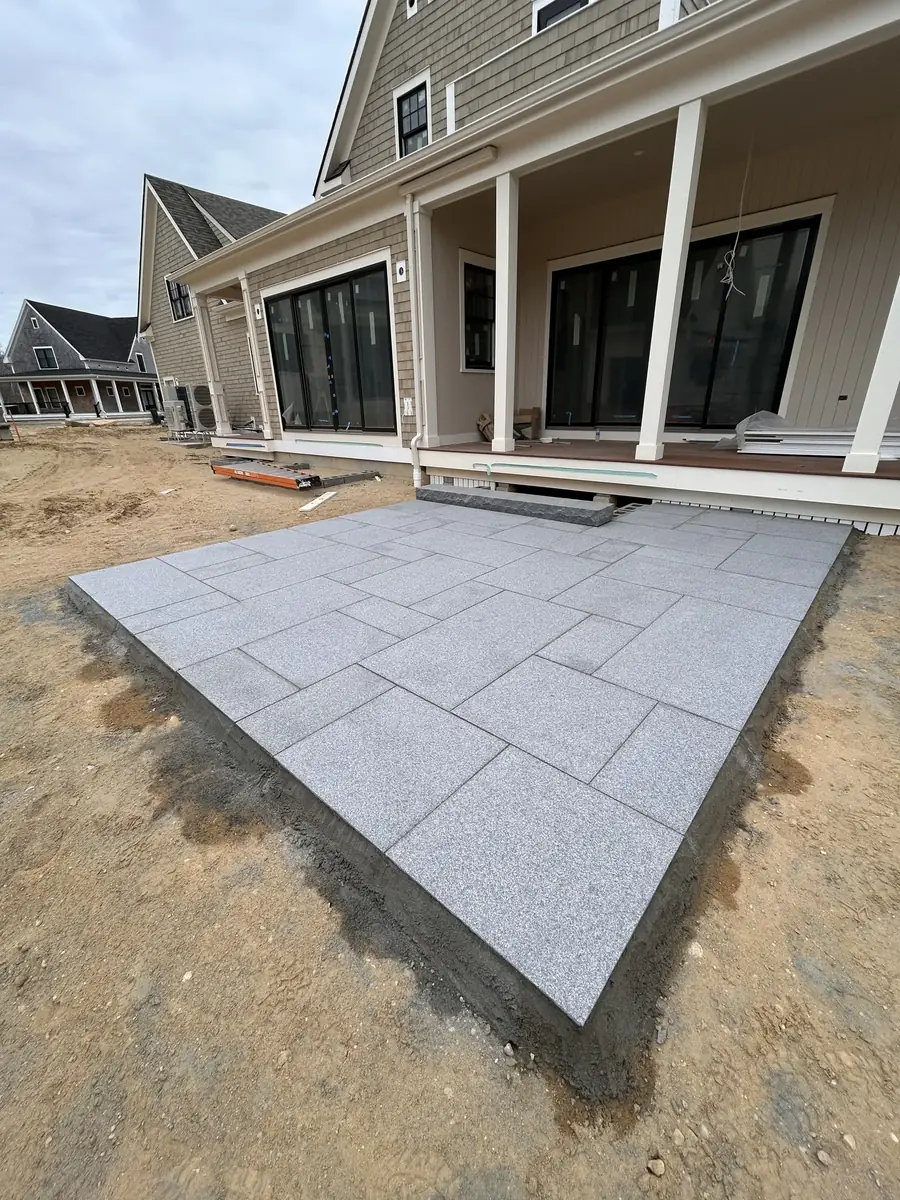
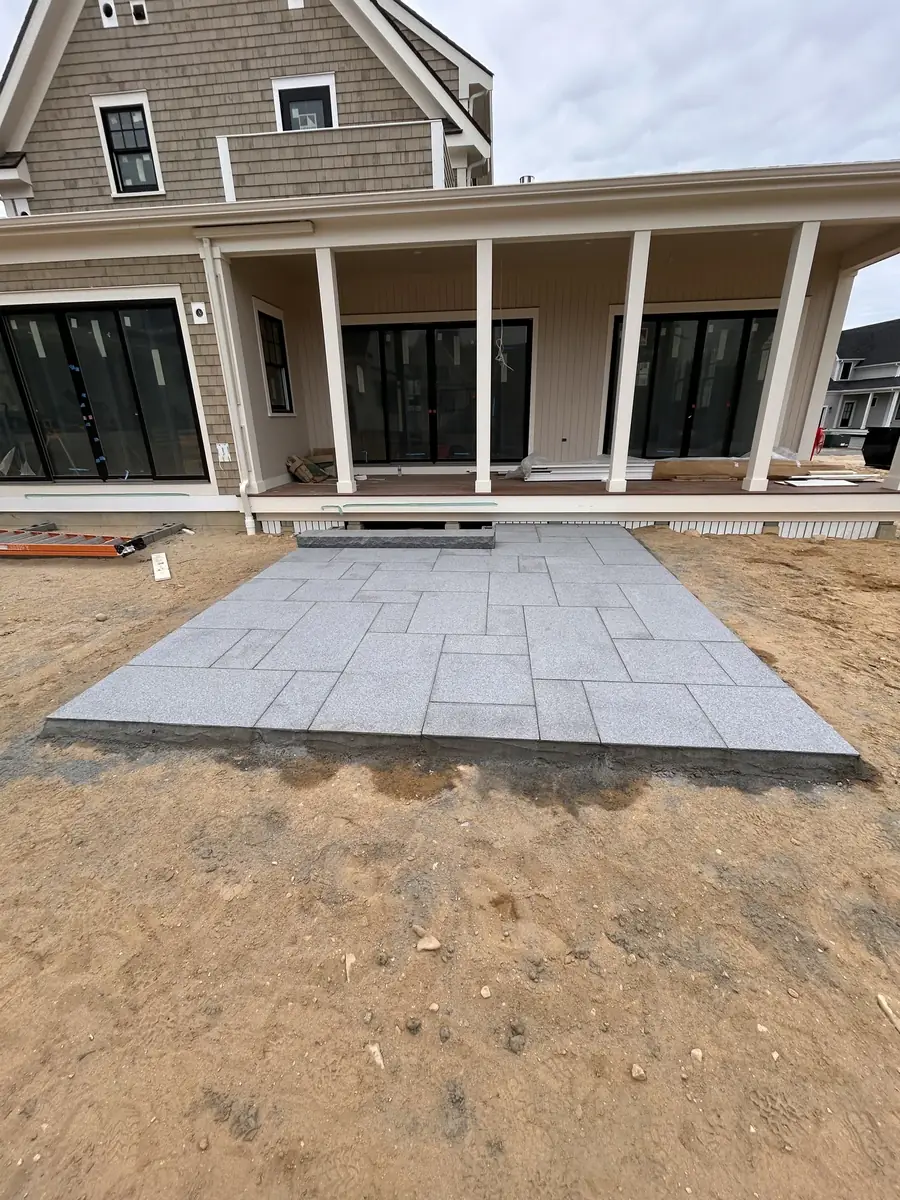
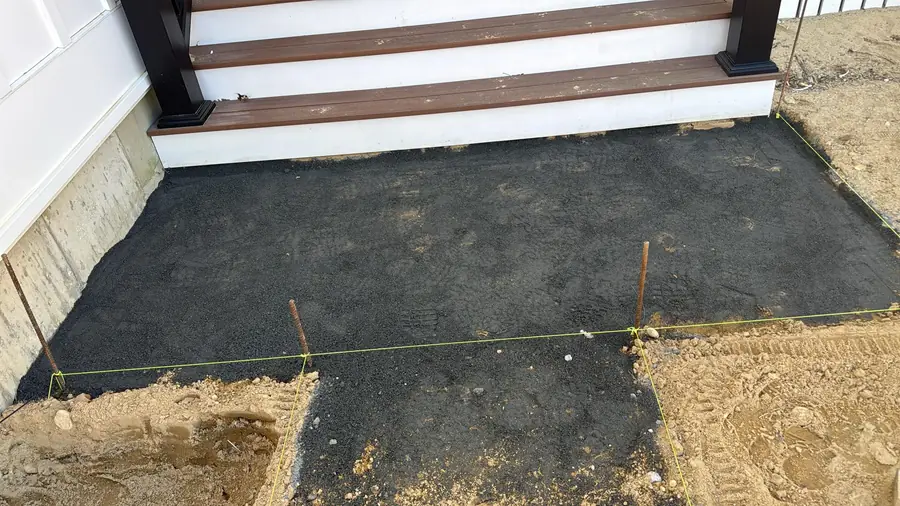
A rectangular pattern bluestone patio at the foot of a new home's back porch, built during construction on a sandy lot before the lawn went in. The base was compacted in layers over the loose fill so it wouldn't settle, and the stone was set to meet the porch step at a comfortable height while pitching away from the house.
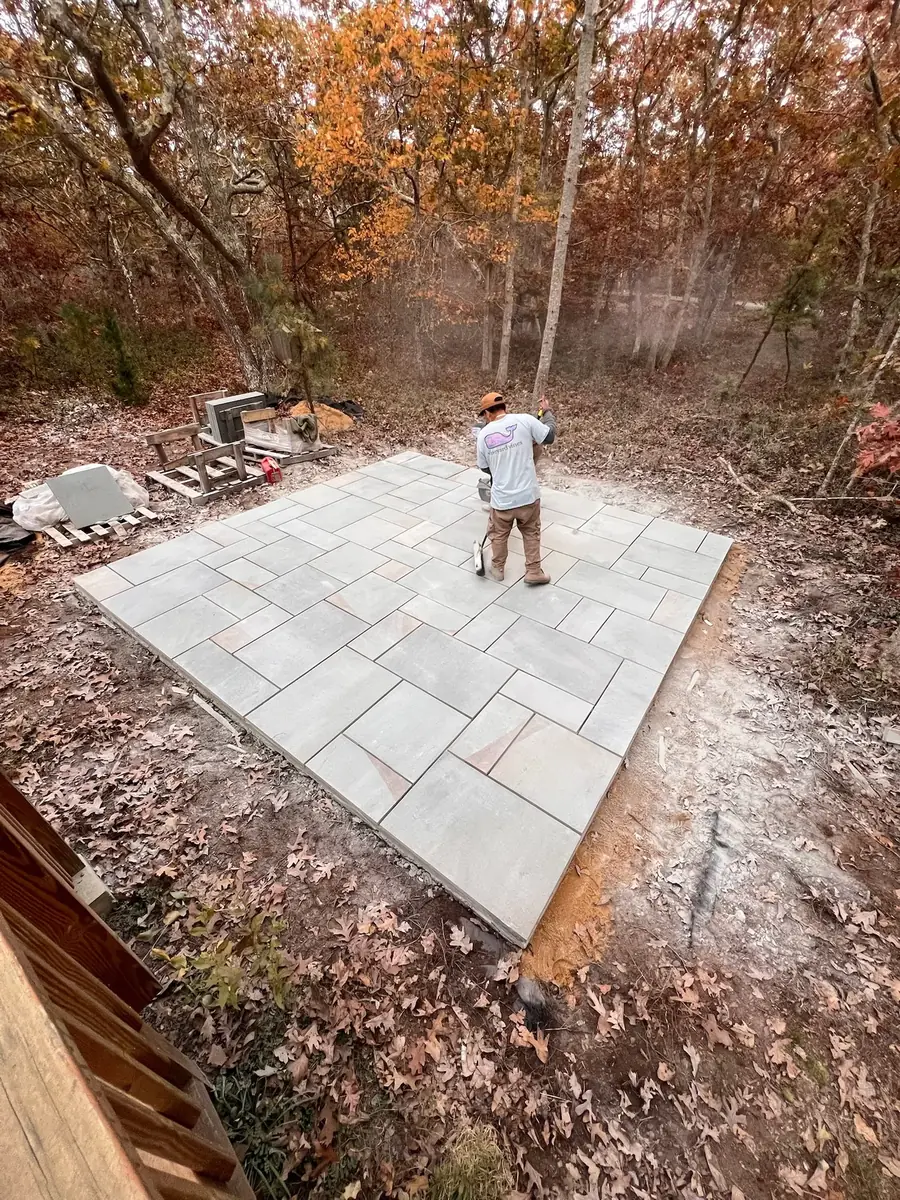
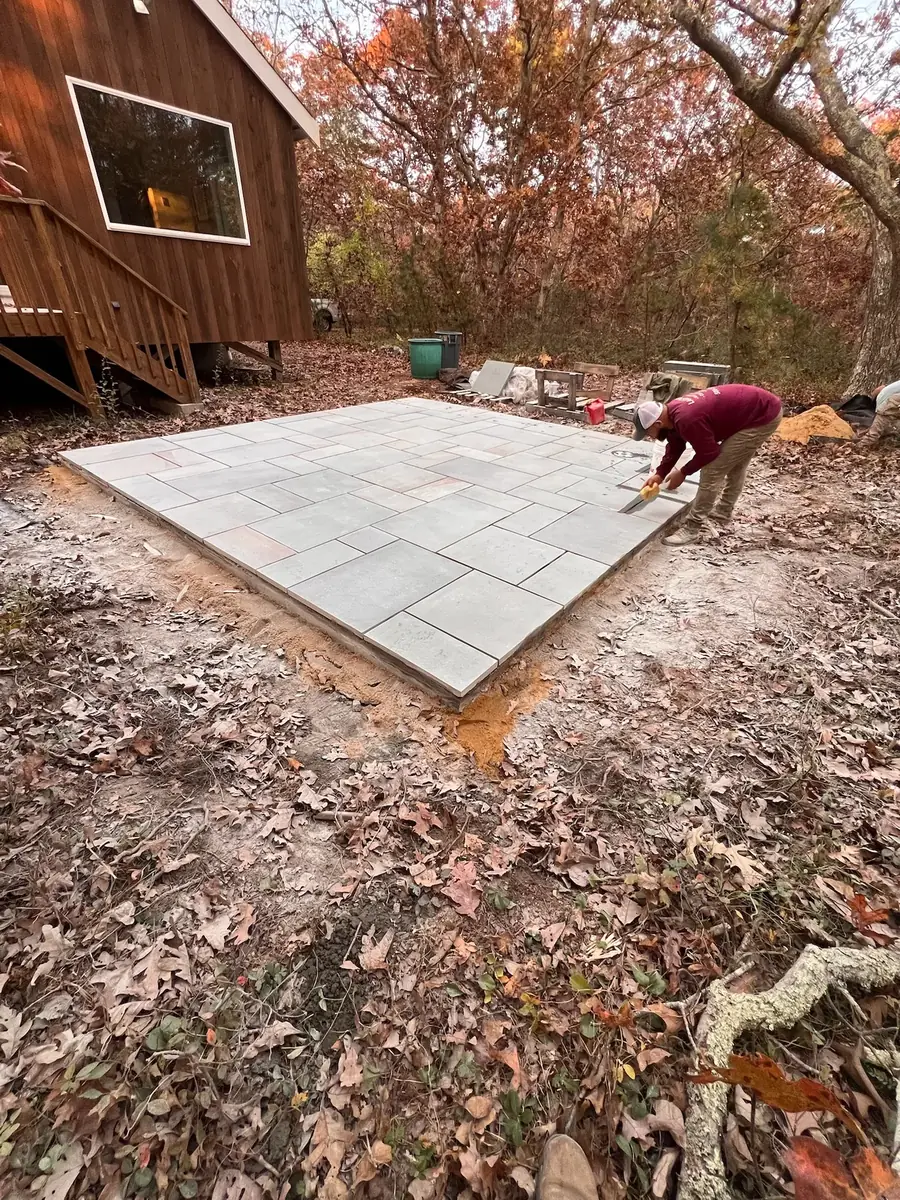
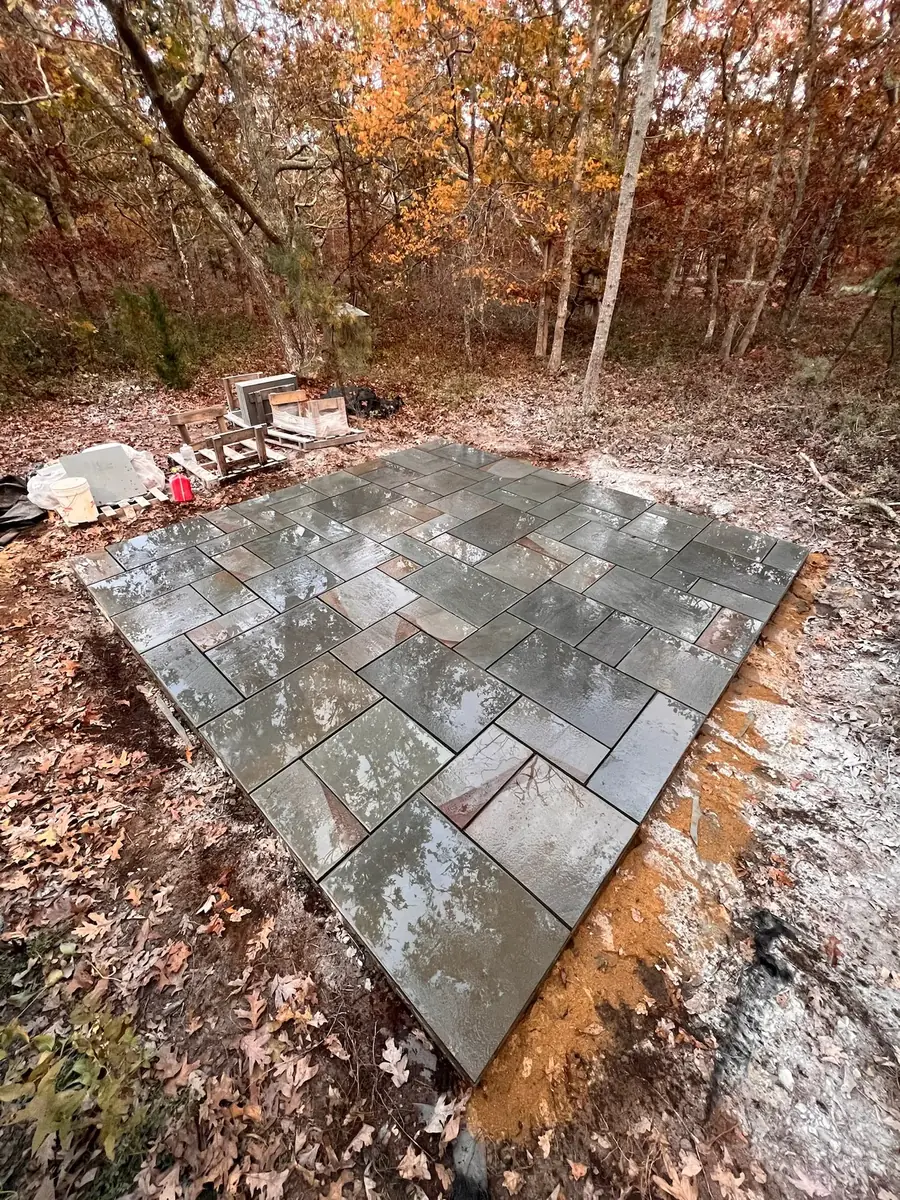
A rectangular bluestone patio behind a cedar-sided home in the woods, laid out in a random pattern of full-color stone, set in mortar, pointed and sealed. Under oaks, sand joints fill with leaf litter and seedlings, so a mortared surface with sealed joints was the lower-maintenance choice for this property.
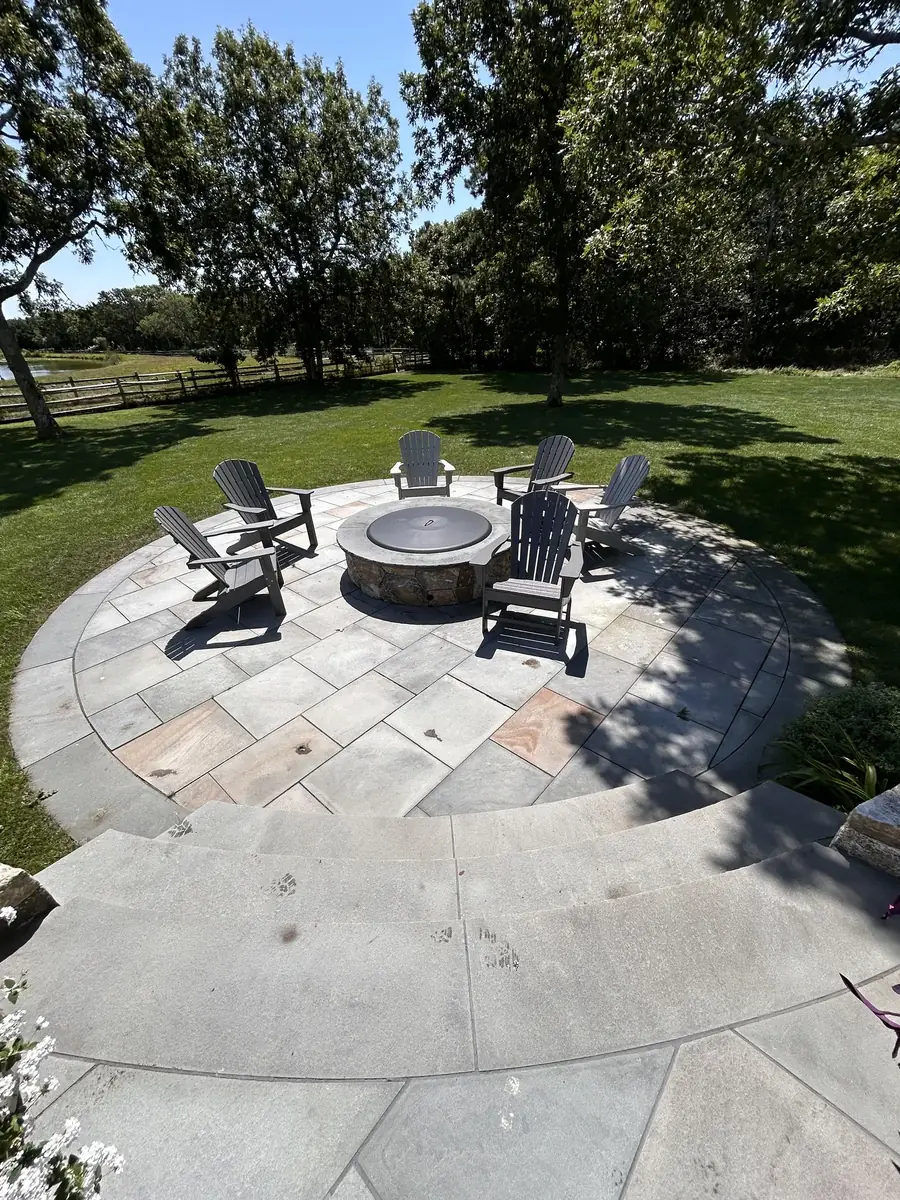
A round patio built around a fire pit, with bluestone cut in radial courses so the joints follow the circle. It sits in open lawn, so the outer edge was set flush with the finished grade for clean mowing.
More finished hardscape work is in our hardscaping portfolio and the full-property case study.
We don't publish prices because every Vineyard site is different, but the same factors set the cost of every patio. This is what we look at on the site visit before writing a quote.
| Factor | Why it changes the cost | What we check on site |
|---|---|---|
| Size and shape | Square footage sets the stone and labor. Curves and circles need more cutting than rectangles. | Your furniture plan and how many people you usually host |
| Stone and finish | Pattern bluestone, irregular flagstone, granite and pavers differ in material price and setting time. | Look, grip when wet, heat in full sun, matching steps and walls |
| Setting method | Dry-laid stone on compacted gravel costs less than stone set in mortar on a concrete slab. | Drainage, tree cover, how formal a finish you want |
| Base and soil | Clean island sand drains well. Fill, clay pockets and wet spots need deeper excavation and more gravel. | Test digs, standing water, signs of past frost heave |
| Grade changes | Slopes add steps, retaining walls and extra base material. | Height difference between the house, patio and lawn |
| Access and trucking | Tight lots, long carries by hand and stone shipped over on the ferry add time. | Where trucks and machines can reach and where stone can be staged |
| Connected work | Fire pits, seat walls, lighting conduit, drainage and irrigation changes are built in at the same time. | What you want now and what you may add later |
Most Vineyard properties aren't flat. A patio often steps up to a deck, down to a garden or across a grade change within its own footprint. Treads and risers need consistent, comfortable dimensions, the step material should match or complement the patio, and the connection between patio and steps has to be rigid enough to resist frost movement without cracking. Where the change in height is larger, a retaining wall holds the patio level.
A fire pit is the most requested addition to a Vineyard patio. It works best when it is planned with the patio: a non-combustible base under the pit, enough stone around it for chairs to sit fully on the patio, and a layout that keeps smoke away from the house and the prevailing wind in mind. Check your town's rules for open fires before planning a wood-burning pit. For built-in and gas options, sizes and seating layouts, see our fire pit installation page.
Most backyard patios don't need a building permit, but a few situations bring in town boards. We look at all of them during the site visit.
Where a filing is needed, we work with your builder, engineer or permit agent so the approvals and the build schedule line up.
A few details help us understand the work before the first conversation.
Tell us whether you need room to dine, gather around a fire or move comfortably between entrances.
Share photographs of slopes, steps and the route our crew would use to reach the work area.
Bring examples of stone finishes you like and any deadlines so the scope can be planned together.