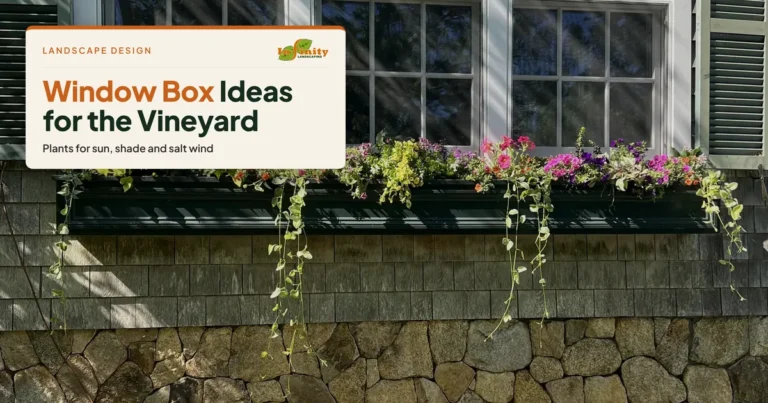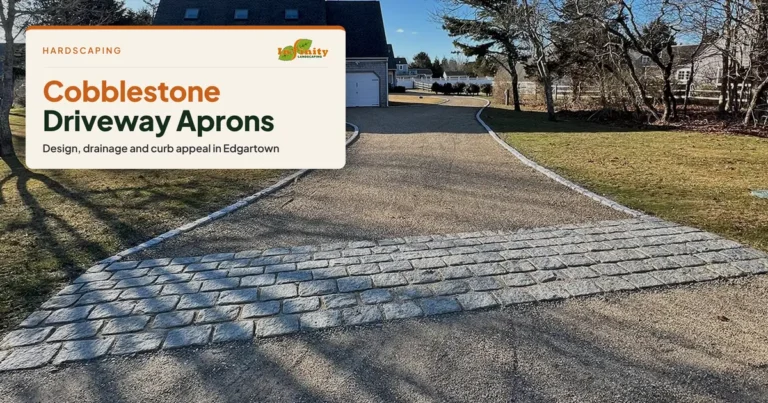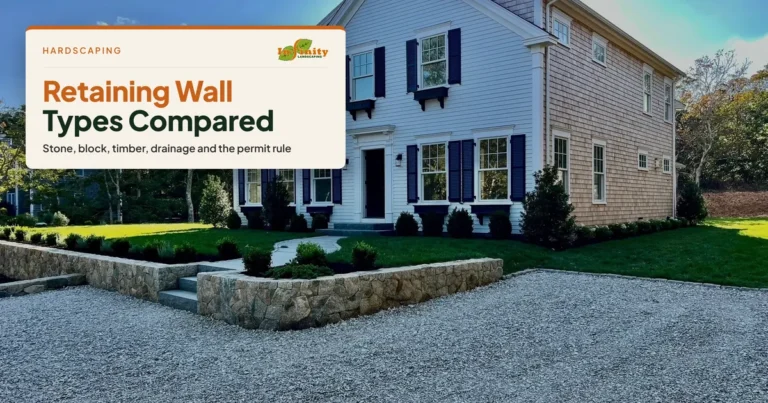
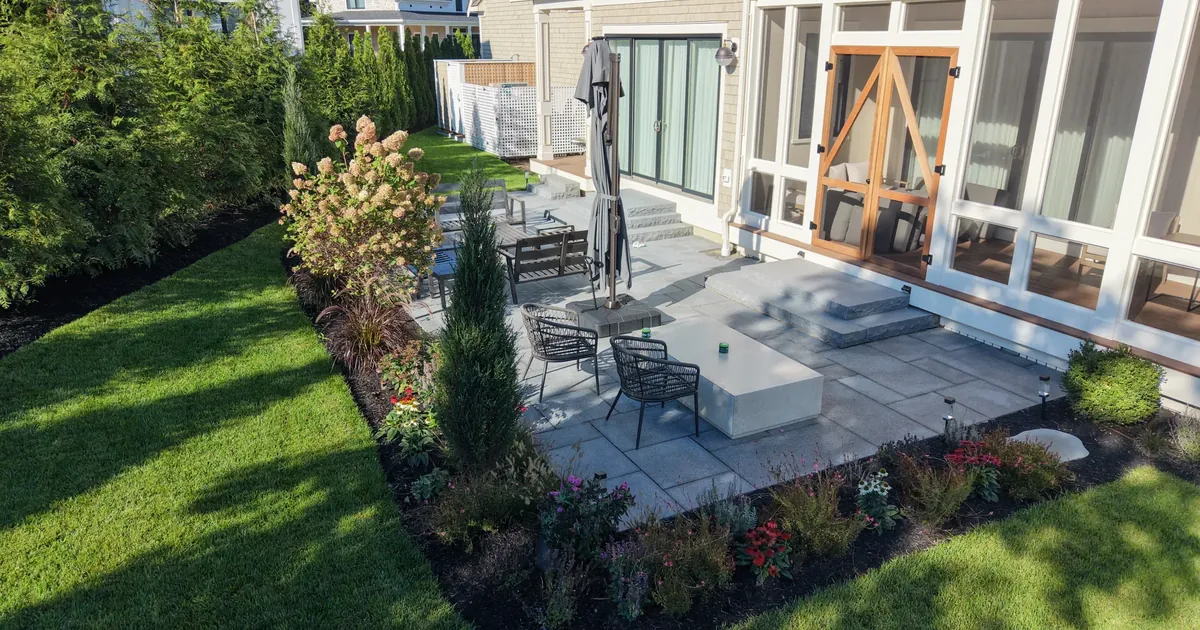
TL;DR: Landscaping vs hardscaping comes down to living versus built. Landscaping, also called softscape, covers lawns, plants, beds and the soil they grow in. Hardscaping covers patios, walls, walkways, steps and driveways. Most Martha’s Vineyard properties need both, built in the right order: grading and stonework first, then irrigation, planting and lawn. Island soil, salt air and deer decide which materials and plants will last.
Landscaping vs hardscaping is the first question on most Vineyard yard projects, and the answer shapes the whole plan. One side grows and changes every season. The other is built once and should stay put for decades.
The two words get mixed up all the time, even by contractors. That confusion leads to real problems: a patio poured where the lawn needed to drain, or a planting bed squeezed in after the stonework left no room for roots.
This guide explains the difference in plain terms. It compares the two side by side, shows what counts as each, and explains why island conditions matter. You’ll also find a decision guide at the end that points you to the right kind of project.
Infinity Landscaping, a Martha’s Vineyard landscaping and hardscaping company, builds both sides under one roof. Most island properties need a bit of each.
What Is the Difference Between Landscaping and Hardscaping?
Landscaping is the living part of a property: lawn, trees, shrubs, perennials, garden beds and the soil under them. Hardscaping is the built, non-living part: patios, walkways, retaining walls, steps, driveways and edging made of stone, brick, concrete or gravel. Landscaping grows and needs ongoing care. Hardscaping is installed once and mostly needs upkeep.
In everyday speech, “landscaping” often means the whole yard, stone and plants together. Designers split it more carefully. They call the living layer softscape and the built layer hardscape, and a full landscape is both.
The split matters because each side follows different rules. Softscape depends on soil, water, sun and season. Hardscape depends on base, drainage, load and frost. A good plan respects both sets of rules at the same time.
Here’s a simple test. If it needs water to stay alive, it’s softscape. Anything that needs a compacted base to stay level is hardscape.
Landscaping vs. Hardscaping Compared Side by Side
The table below compares the two on the points homeowners ask about most. There are no prices here; the budget row lists what moves it, because every property is different.
| Criteria | Landscaping (softscape) | Hardscaping |
|---|---|---|
| What it is | Living plants, lawn, beds and soil | Built surfaces and structures |
| Typical materials | Sod, seed, shrubs, trees, perennials, compost, mulch | Bluestone, granite, brick, pavers, fieldstone, gravel, concrete |
| Main purpose | Color, shade, privacy, habitat, soil health | Access, gathering space, grade changes, structure |
| Lifespan | Changes every season; plants mature over years | Built to last decades when the base is right |
| Maintenance | Mowing, watering, pruning, feeding, mulching | Joint sand, sealing, resetting heaved stones, snow care |
| Best time to install | Spring and early fall planting windows | Most of the year, whenever the ground is workable |
| Main budget drivers | Plant size and count, soil prep, irrigation, access | Material, base depth, excavation, slope, drainage, access |
| Main island risk | Deer browse, salt spray, dry sandy soil | Frost heave, poor drainage, salt on mortar and metal |
Our recommendation for most Vineyard homes is simple. Spend first on the hardscape you’ll use every day, such as a walkway or a patio, and build it on a proper base. Then spend on plants chosen for your exact exposure, so the softscape doesn’t need replacing in two years.
What Is Considered Hardscaping?
Hardscaping is any permanent, non-living feature built into the ground or onto a property. On Martha’s Vineyard that usually means bluestone patios, stone or cobblestone walkways, retaining walls, granite steps, cobblestone driveway aprons, fire pits, outdoor kitchens, stone veneer and edging. Gravel and shell driveways count too.
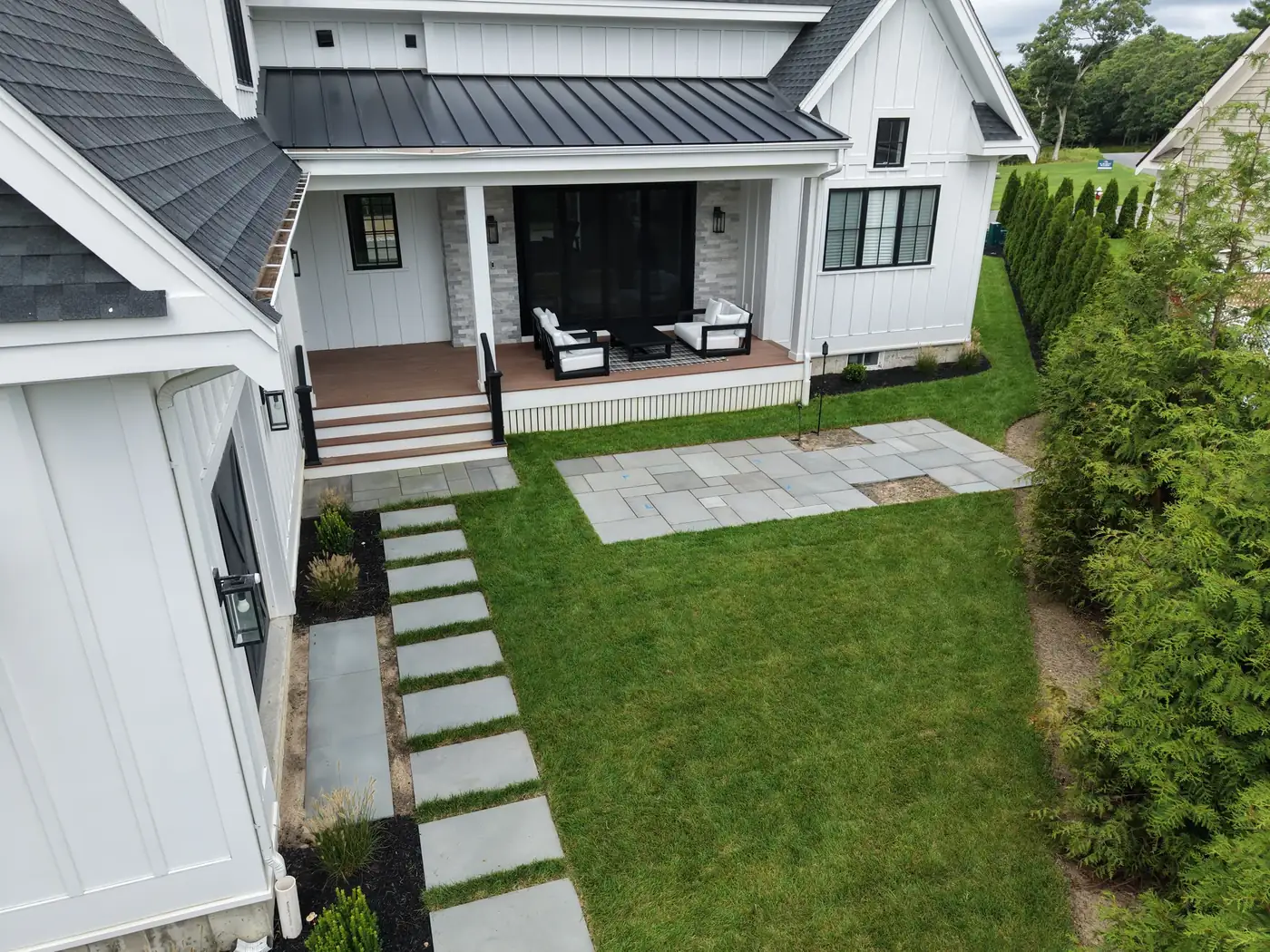
Every one of them is built. Each sits on a prepared base of excavated soil, compacted gravel and a setting bed. You can’t see that base once the job is done. Still, it decides whether a patio stays flat for decades or starts to rock after a few winters.
Hardscape also includes the quiet structural pieces people forget. Steel or stone edging that holds a bed line counts. So do drainage swales lined with stone and the low walls that turn a slope into usable lawn.
You can see the full range on our hardscaping services page, from patios and walkways to walls, steps and fire pits. Each of those is a different build, but they share the same rule: the base matters more than the surface.
What Counts as Landscaping, or Softscape?
Softscape is every living element of a property and the soil that supports it. That includes lawns, trees, shrubs, hedges, perennials, groundcovers, garden beds, mulch and compost. On the Vineyard, irrigation and planting design belong with the softscape because they exist to keep plants alive through dry island summers.
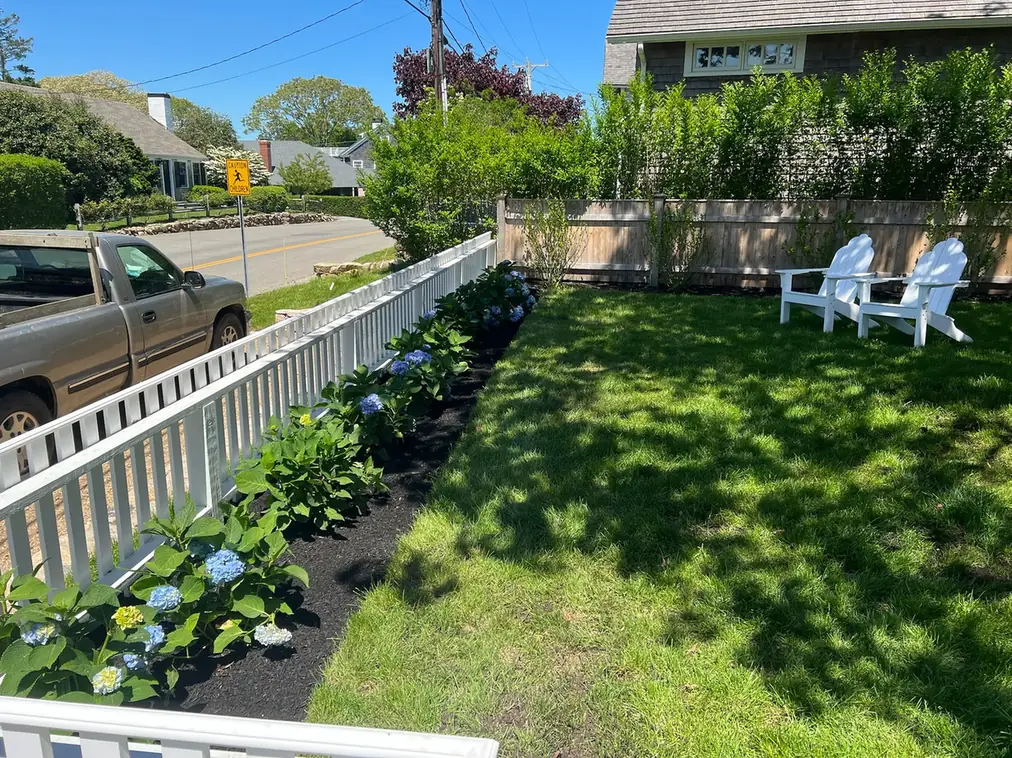
Lawn is softscape, even when it frames a patio or walkway. Grass is a living plant that needs soil, water and mowing. It’s also the piece most affected by what gets built around it, since a patio can change where water flows after a storm.
Garden beds, hedges and screening plants make up the next layer. On island properties these often do real work. They block wind, soften a wall, or give privacy along a road. Lawn care and planting both sit on this side of the line.
Irrigation and landscape lighting are a gray area. The pipes and fixtures are hardware, but they serve the plants and the evening view. We plan them with the softscape and install the lines before planting, so nothing gets dug up twice. Our irrigation services cover design, installation and repair.
Island Conditions That Shape Both on Martha’s Vineyard
Martha’s Vineyard isn’t one kind of ground. Glaciers built the up-island hills from clay-rich moraine that holds water, while the meltwater spread sandy outwash plains across the center and south of the island that drain fast. The same article notes that up-island has far more stone walls because the glacier dropped its heaviest boulders there.
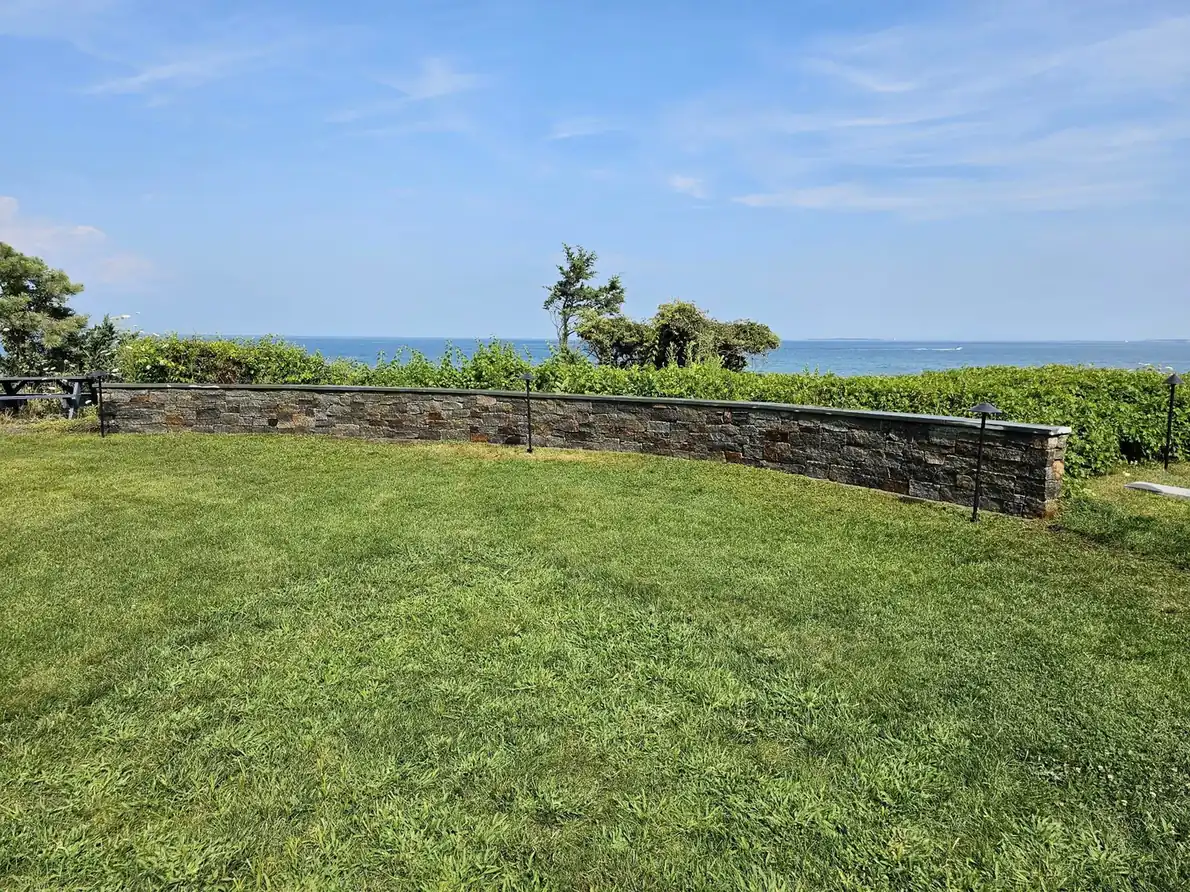
That split changes both sides of the project. On sandy down-island lots in Edgartown or Oak Bluffs, water drops straight through, so lawns and beds dry out fast. Clay-heavy ground in Chilmark or Aquinnah does the opposite. Water can sit under a patio base there and heave it in a hard freeze.
Soil prep is where softscape wins or loses on sand, and UMass Extension’s guide to plants and soil for coastal landscapes recommends working at least 3 inches of compost or other organic matter into a sandy planting area. For new lawns on poor, sandy soil, it calls for at least 6 inches of topsoil before seed or sod.
Salt spray and wind narrow the plant list near the water. The same UMass guide suggests a tough outer screen of rugosa rose and bayberry, with evergreens behind it, to shelter less tolerant plants. It also flags a permit rule. Work within 100 feet of a wetland, dune or coastal bank falls under the town Conservation Commission and usually needs a permit.
Deer are the other island factor. MassWildlife reports that on Martha’s Vineyard and Nantucket, where hunting is limited and there are no natural predators, deer densities can exceed 100 per square mile. A planting plan that ignores browse pressure gets eaten.
Hardscape can help with drainage too. The EPA explains that permeable pavers let rain and snowmelt seep through to the soil and gravel below, which cuts runoff, and on a clay up-island lot that can mean less standing water at the edge of a new patio.
Should Hardscaping Be Done Before Landscaping?
Yes, in almost every case hardscaping should be built before landscaping. Grading, drainage, walls, patios and walkways need heavy equipment, deep digging and material deliveries that would crush new plants and lawn. Building the stonework first protects the planting budget and lets irrigation and lighting lines go in before beds are planted.
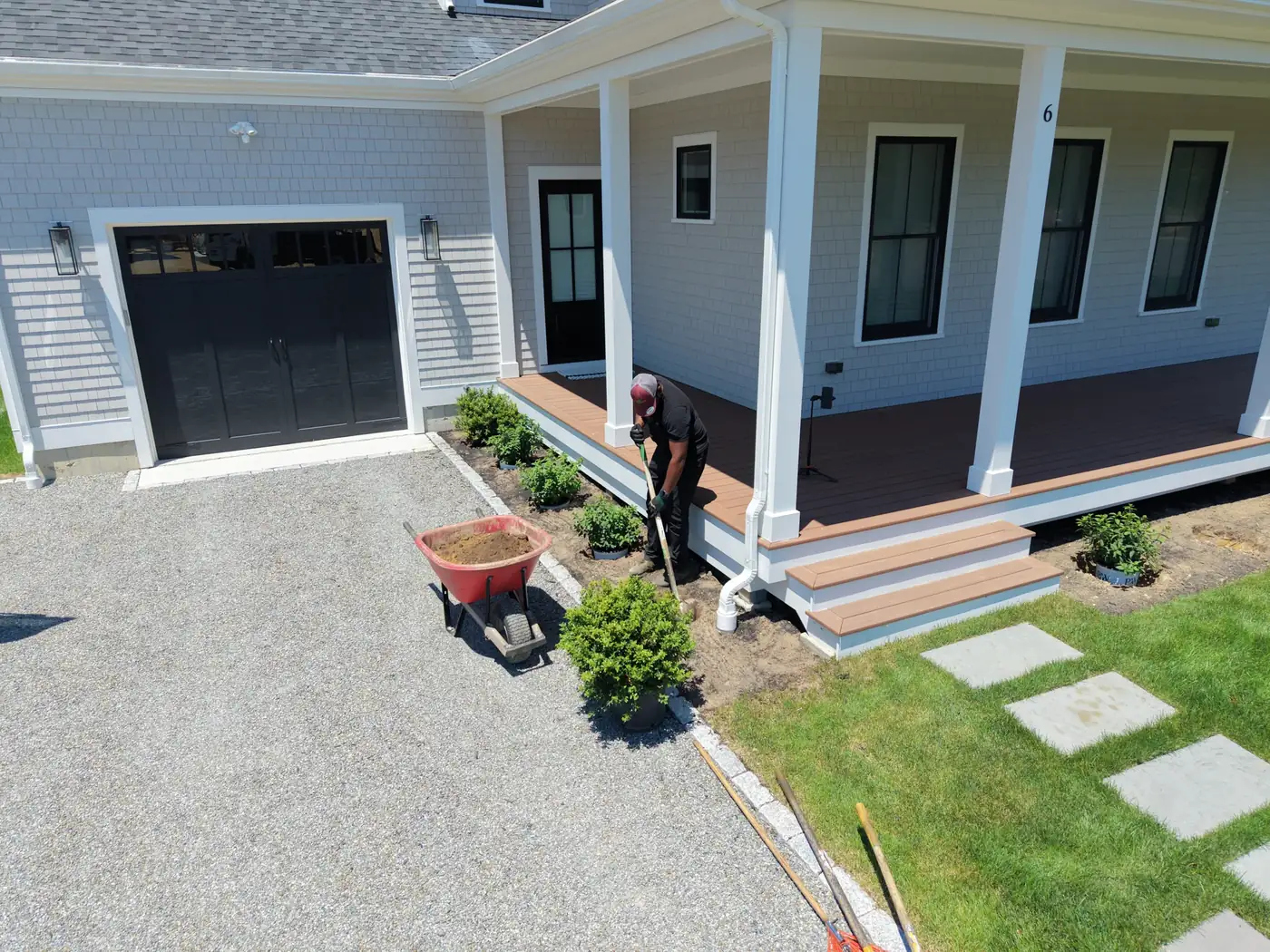
Here is the order we follow on most full-property projects:
- Design the whole site first, hardscape and planting together, so walkways, beds and drainage fit one plan.
- Rough-grade the property and set the drainage, so water moves away from the house and future patios.
- Lay sleeves under any future paving for irrigation pipe and lighting wire.
- Build the hardscape: excavate, compact the base, then set patios, walkways, walls, steps and edging.
- Run irrigation lines and lighting cable through the sleeves and out to the planting areas.
- Prepare the beds with compost and plant trees, shrubs and perennials.
- Install the lawn last, by sod or seed, once traffic across the yard is done.
- Mulch the beds and set the irrigation schedule for the first season.
Skipping step 3 is a costly mistake. Without sleeves, someone ends up cutting through a finished bluestone patio to run a single water line. Our landscape design process maps all of this before the first machine arrives.
There are exceptions. If a tree is the centerpiece of the design and needs a crane, it may go in before the patio. Small projects, such as a single walkway through an established lawn, can be built without disturbing the planting around them.
Decision Guide: Match Your Goal to the Right Project
Start with the goal, not the material. The table below matches common goals on Vineyard properties to the type of work that usually solves them.
| Your goal | Usually needs | Why |
|---|---|---|
| A place to sit, eat or gather outside | Hardscaping first | A level, drained surface is the base for any outdoor room |
| Safe access from driveway to door | Hardscaping | Walkways and steps need a compacted base to stay trip-free |
| A sloped yard you can actually use | Hardscaping with planting | Walls and steps create level ground; plants hold the slope |
| A thicker, greener lawn | Landscaping | Soil, seed or sod, feeding and watering solve this |
| Privacy from a road or neighbor | Landscaping | Screening hedges and layered planting do the work |
| Less wind and salt damage near the water | Landscaping with structure | Tough outer plants, sometimes backed by a low wall |
| Water pooling after storms | Both | Grading and drainage first, then planting that tolerates wet spots |
| A finished look for a new house | Both | A full design covers stonework, planting, lawn and irrigation |
If your goal lands in the “both” rows, plan the whole property at once even if you build in phases. A single design keeps the drainage, the walkways and the planting from fighting each other later.
Real projects make this clearer than any table. Our lawn paths and patio installation shows stone set into lawn. The full project portfolio shows how patios, walls and planting come together on finished island properties.
Plan the Whole Property With One Team
The difference between landscaping and hardscaping is simple once you see it: softscape is alive, hardscape is built. The hard part is getting them to work together on island ground.
Three points matter most. Build the hardscape first, on a base sized for your soil. Choose plants for your exposure to salt, wind and deer. Plan irrigation and lighting before anything gets planted or paved.
Infinity Landscaping handles design, stonework, planting, lawn and irrigation on Martha’s Vineyard properties from Edgartown to Aquinnah. We can manage the whole project while you’re off-island. Request a free quote or call (508) 333-1071 to talk through your property.
Frequently Asked Questions
Is a lawn landscaping or hardscaping?
A lawn is landscaping, because grass is a living plant that needs soil, water and mowing. It belongs to the softscape side even when it sits right next to a patio or walkway. Lawns are usually installed last on a full project, after the heavy stonework is done.
Is gravel considered hardscaping?
Yes, gravel is hardscaping because it is a non-living material placed to make a surface. Gravel and crushed shell drives and paths are common on the Vineyard, but they still need a compacted base and a firm edge, or the stone migrates into lawns and beds.
Is landscape lighting part of landscaping or hardscaping?
Landscape lighting sits between the two. The fixtures and cable are hardware, but the lighting plan follows the planting and the walkways it shows off. Plan it with the whole design so cable runs under paving before the stone goes down.
Which adds more value to a home, landscaping or hardscaping?
Neither wins on its own. The value comes from how well they work together. A patio with no planting looks unfinished, and a garden with no paths gets trampled. On the Vineyard, a solid walkway and patio plus plants that survive salt and deer usually make the strongest first impression.
Do I need a permit for hardscaping or landscaping on Martha’s Vineyard?
It depends on where the work is. UMass Extension notes that any work within 100 feet of a wetland, dune or coastal bank falls under the local Conservation Commission and usually requires a permit. Town bylaws can add their own rules, so check with your town before you start.
Can one company do both landscaping and hardscaping?
Yes, and on a full project it usually saves time and rework. A design-build company plans the drainage, stonework, irrigation and planting together, so each crew isn’t undoing the last one’s work. Infinity Landscaping handles both on Martha’s Vineyard with its own crews and equipment.