
A finished lawn and planted boundaries
An evergreen screen follows the lawn boundary.
See the finished detailsBlock unwanted views and coastal winds. We design and plant dense evergreen hedges and living privacy fences using healthy, wind-adapted, and deer-resistant cultivars.
Privacy hedge installation on Martha's Vineyard plants dense, wind-adapted evergreen screens between properties. Infinity Landscaping uses deer-resistant species like Green Giant arborvitae, American holly, eastern red cedar, and salt-tolerant bayberry: set with proper soil prep, anchoring, mulch, and drip irrigation. Every hedge is quoted per project after a site review.
Documented work from a complete landscape installation on Martha’s Vineyard. Follow the project to see how these spaces connect.
An evergreen screen follows the lawn boundary.
See the finished details
The rear lawn connects the planted beds and terrace.
See the finished details
The completed front lawn and planting around the porch.
See the finished detailsWe select the right species for your property's specific microclimate. From classic Green Giant arborvitae and American holly to native eastern red cedar and salt-tolerant bayberry, we build screens that stay dense and green all year.
Immediate privacy requires mature trees. We source and plant large-caliper specimen evergreens (6 to 12+ feet tall) using proper root-ball handling and anchoring techniques, providing instant visual barriers from day one.
Coastal properties face heavy wind exposure. We design tiered windbreaks that combine tall evergreens with mid-sized salt-tolerant shrubs. This structure diffuses harsh ocean winds, protecting delicate inner gardens and seating areas.
Newly planted evergreens require deep, consistent watering to survive. We install dedicated drip irrigation lines along the hedge row, ensuring water reaches the root balls directly without wasting runoff.
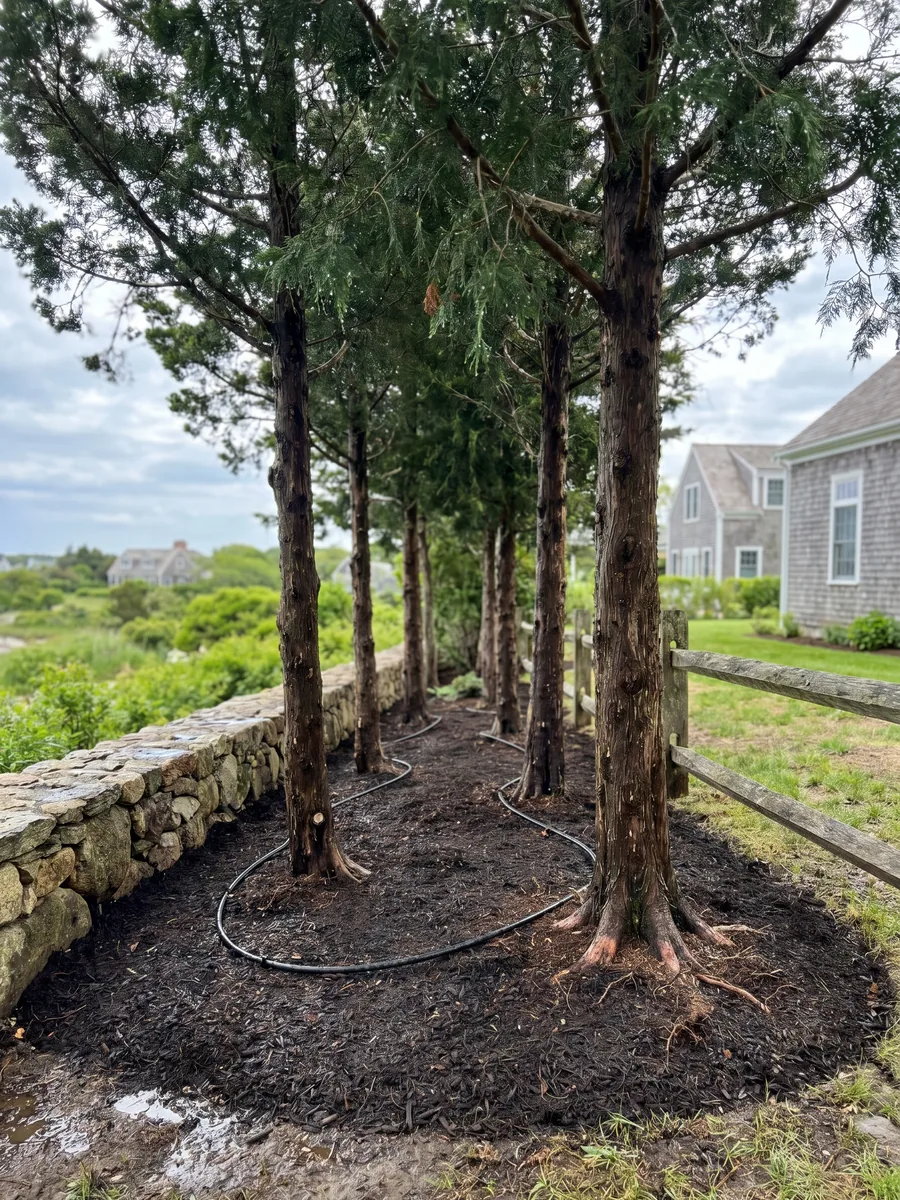
With growing property density and strict local limits on tall wooden fences, living privacy screens are the preferred choice for Vineyard homeowners. A well-designed evergreen hedge provides year-round screening, softens property lines, and dampens street and neighbor noise.
However, planting hedges on the Island requires careful planning around deer pressure and winter winds. White-tailed deer will quickly strip standard arborvitae (like Emerald Green) up to six feet tall during winter months. To prevent this, we prioritize deer-resistant evergreen cultivars, install seasonal deer netting where necessary, and recommend organic repellent spray programs to protect your investment during the first critical winters.
Clean, uniform rows of Green Giant arborvitae or Leyland cypress for formal borders and tight spaces.
Tiered groupings of holly, cedar, spruce, and laurel for a more natural, woodland-style screening boundary.
Salt-tolerant combinations of eastern red cedar, bayberry, and beach plum for exposed coastal waterfronts.
Upright, columnar boxwoods, hollies, or arborvitae designed to fit narrow side yards and property line corridors.
A few details help us understand the work before the first conversation.
Identify the outdoor spaces you want to use and what is missing from the current landscape.
Share photographs, any available site plans and details of building work that needs coordination.
Discuss paving, planting, lawn and practical access together before agreeing on the sequence of work.