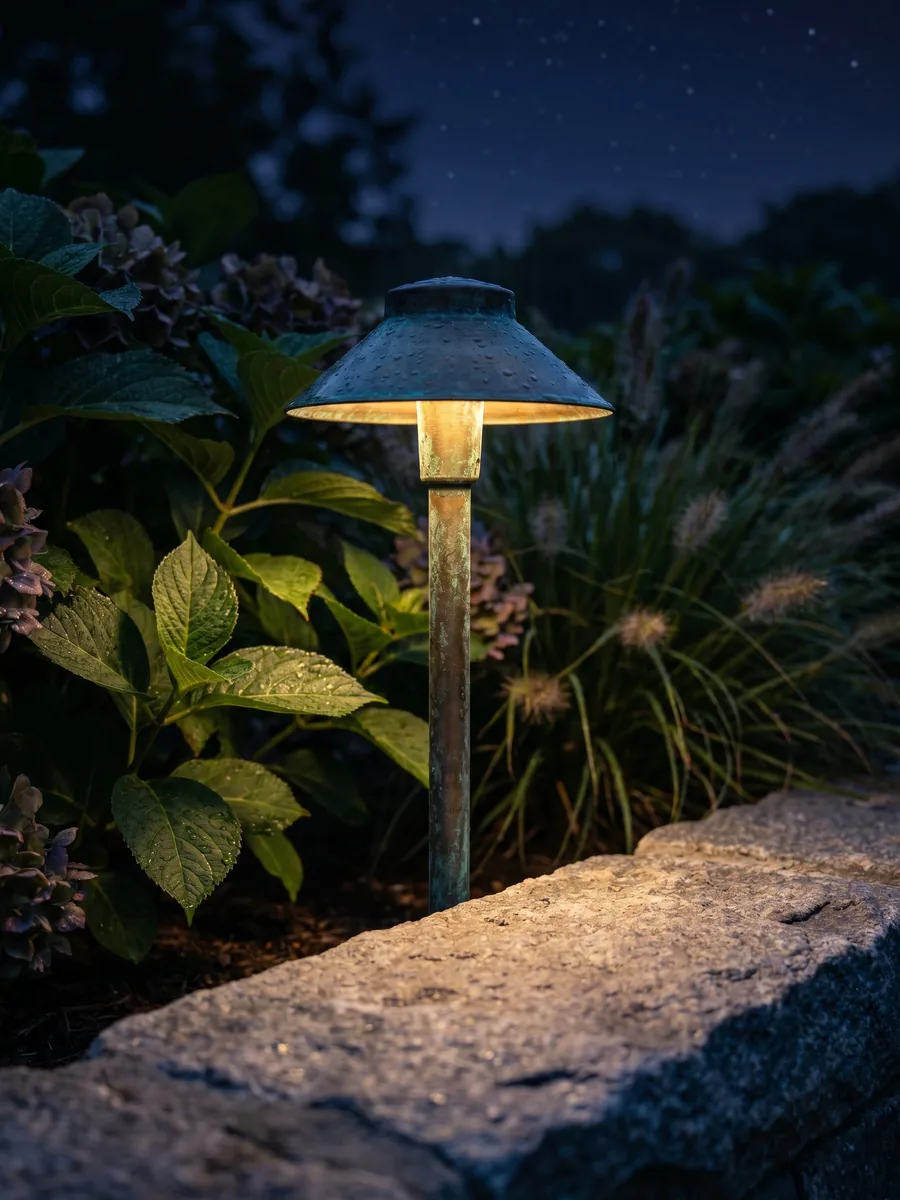
Dark-sky-aware landscape lighting begins with a simple question: where is light genuinely needed? The goal is to support movement, entries, and outdoor use while limiting glare, upward light, excessive brightness, and spill beyond the area being served.
This guide focuses on design decisions. Project-specific requirements should always be confirmed for the property and town before fixtures are selected or installed.
Light the task, not the entire property
A successful residential plan usually starts with the most important nighttime tasks:
- Finding the entry and house number
- Moving safely along primary walks and steps
- Using a patio, grill, or gathering area
- Identifying changes in grade or the edge of a path
- Supporting arrival from parking without shining into windows
Once these needs are addressed, a limited amount of accent lighting can add depth and orientation. Lighting every tree, facade, and bed often creates visual clutter and makes truly important areas harder to read.
Control glare at the source
Glare occurs when the bright lamp or LED source is visible from a normal viewing position. A fixture can be technically pointed downward and still be uncomfortable if the source is exposed to a person approaching a step or sitting on a patio.
Shielded fixtures, careful mounting height, appropriate beam spread, lower output, and field aiming all help. The design should be reviewed from neighboring properties, windows, road approaches, and seated eye level, not only from directly behind the fixture.
Use warm, restrained light
Warm light generally feels more compatible with residential architecture, wood, stone, and planting than a cooler blue-white appearance. Color temperature is only one part of the result: brightness, optics, surface reflectance, spacing, and fixture visibility matter just as much.
Instead of choosing the highest available output and dimming later, select fixtures and lamps appropriate to the task. Bright paving, pale walls, water, and light-colored gravel can reflect more light than expected.
Direct light downward where practical
Path and step lighting should place useful light on the walking surface. Downlighting from a suitable structure or tree can create a soft pool of light, but mounting, access, plant health, and future growth need to be considered. Uplighting should be used selectively, with narrow control and a clear target so light is not sent past the feature into the sky.
Avoid evenly spaced rows of fixtures when a smaller number of carefully positioned lights can define the route. Alternating pools of light and shadow can guide movement without turning a path into a runway.
Plan by zone and purpose
Separating the system into logical zones gives the owner more control. Arrival lighting, paths, entertaining areas, and selected accents may not need to operate for the same hours. Timers, astronomical scheduling, dimming, and smart controls can reduce unnecessary runtime while keeping essential routes available.
A clear control plan is particularly useful for seasonal properties. The owner or property manager should know which lighting is used for arrival, security coordination, entertaining, and normal overnight conditions.
Coordinate lighting before hardscape is finished
Fixture locations are only part of the design. Cable routes, transformer location and capacity, sleeves below walks, conduit for masonry-integrated lights, switching, and power coordination should be resolved early. This is especially important for steps, walls, outdoor kitchens, patios, and new construction.
Planning ahead protects the finished work and allows future zones to be considered without installing every fixture immediately.
Review the system at night
Plans and daytime fixture placement cannot fully predict glare and contrast. Final aiming and adjustment should happen after dark from the actual viewpoints people use. Review the approach from the driveway, primary walks, patio seating, interior windows, and neighboring sightlines.
The review should confirm that steps and transitions are legible, fixtures are not shining into eyes, accent lights hit their intended targets, and no area is brighter than it needs to be.
Maintenance is part of dark-sky performance
Plant growth can block a beam or redirect it into an unintended direction. Fixtures can tilt during gardening or winter weather, lenses collect dirt, and schedules drift as seasons change. Periodic maintenance should include cleaning, re-aiming, checking cable and connections, pruning around fixtures, and reviewing controller settings.
A restrained system can become glaring over time if these details are ignored.
Martha’s Vineyard considerations
Night-sky character, neighboring properties, seasonal occupancy, exposed coastal conditions, and town-specific requirements all affect a responsible lighting plan. Before installation, confirm any applicable zoning, permitting, conservation, association, or property restrictions with the appropriate authority. The design should respect both the immediate task and the wider nighttime setting.
Related services
Continue with the service page that matches the stage of your project: